How Srila Visvanatha Cakravartipada Preserved the Soul of Gaudiya Vaishnavism
- Chinmayi Devi Dasi

- Jan 24
- 4 min read
Who was Srila Visvanatha Cakravartipada? Read his powerful life story, spiritual journey, and how he defended Sri Chaitanya Mahaprabhu’s teachings.

Srila Visvanatha Cakravartipada is one of the greatest acharyas in the history of Gaudiya Vaishnavism. He appeared at a very sensitive time, when pure bhakti was under threat from misunderstandings, false practices, and pride based on birth and position. Through his deep scholarship, pure devotion, and fearless defense of truth, he protected the legacy of Sri Chaitanya Mahaprabhu and the Gosvamis of Vrindavan. His life is not just a biography, but a spiritual journey that teaches us discipline, humility, and devotion.
The Spiritual Background After Sri Chaitanya Mahaprabhu
After the disappearance of Sri Chaitanya Mahaprabhu and the six Gosvamis of Vrindavan, the flow of pure devotion continued through three great saints: Srinivasa Acharya, Thakura Narottama Dasa, and Syamananda Prabhu. Among them, Thakura Narottama Dasa played a major role in spreading the deep mood of bhakti and madhura-rasa.
In the disciplic line of Thakura Narottama Dasa, Srila Visvanatha Cakravartipada appeared as the fourth generation acharya. At that time, many people misunderstood advanced devotional topics. Some mixed material enjoyment with spiritual rasa. Others believed that birth alone could make someone a guru. This created confusion among devotees. Srila Visvanatha appeared as the protector and guide of Gaudiya Vaishnava dharma during this middle historical period.

Srila Visvanatha Cakravartipada: Birth, Family, and Early Education
Srila Visvanatha Cakravartipada was born around 1638 AD in Radha-desa, in the Nadia district of present-day West Bengal. He was born in a respected brahmana family known as Radha-sreniya vipra-kula. From childhood, he showed sharp intelligence and a deep interest in spiritual learning.
He had two elder brothers named Ramabhadra and Raghunatha. His childhood was spent in Deva-grama, where he studied Sanskrit grammar, known as vyakarana. His strong foundation in grammar later helped him write clear and powerful commentaries on sacred texts.
Guru and Disciplic Succession
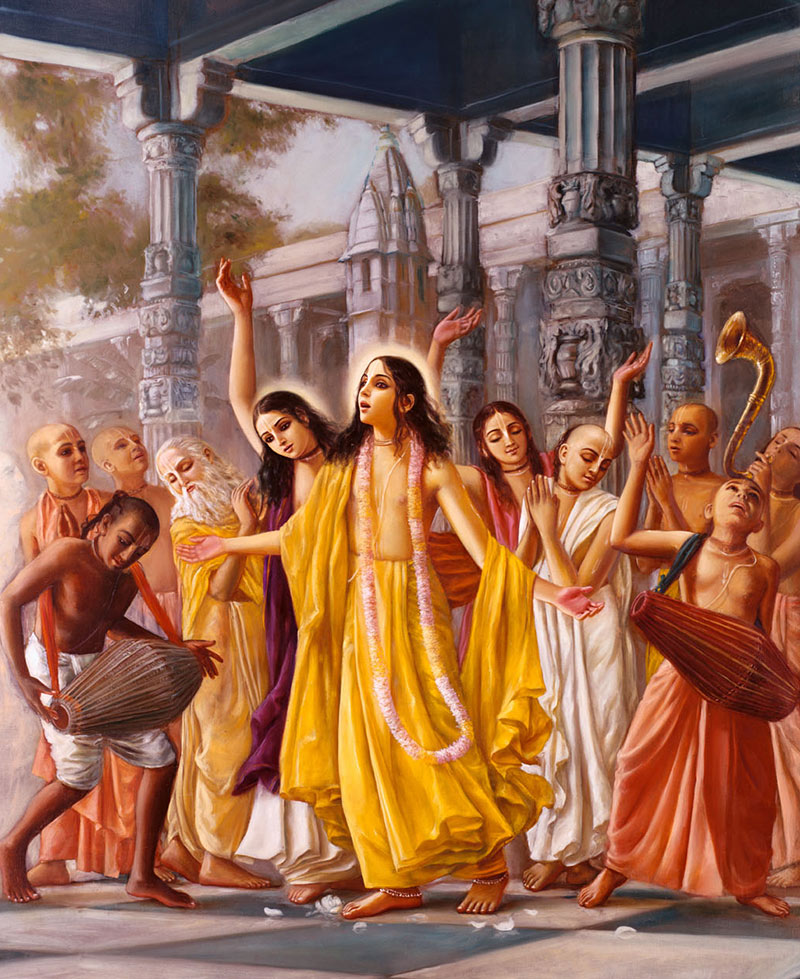
After completing his basic studies, Srila Visvanatha moved to Saiyadabad village in Murshidabad district. There he lived in the house of his spiritual master, Sri Radha-ramana Cakravarti. Under his guidance, Visvanatha studied the bhakti-shastras deeply.
His guru Sri Radha-ramana Cakravarti was a disciple of Sri Krishna-carana Cakravarti, who was the disciple of Sri Ganga-narayana Cakravarti. Sri Ganga-narayana was a direct disciple of Thakura Narottama Dasa. In this way, Srila Visvanatha was firmly connected to the pure disciplic succession coming from Sri Chaitanya Mahaprabhu.
Out of deep gratitude, Srila Visvanatha later composed beautiful Sanskrit prayers glorifying his gurus. These prayers are collected in his famous book Sri Stavamrita-lahari, which shows his humility and devotion.

Life in Vraja Dhama and Spiritual Practices
By the mercy of his guru, Srila Visvanatha Cakravartipada went to Vraja Mandala, the land of Sri Krishna’s pastimes. Vraja became the center of his spiritual life. He lived in many sacred places such as Govardhana, Radha-kunda, Yavata, and Vrindavan.
Sometimes he lived near Radha-kunda, absorbed in deep remembrance of Radha and Krishna. Sometimes he stayed in Vrindavan, near the temple of Sri Gokulananda. His movements show that he was fully detached from comfort and fully attached to bhajana.
In these holy places, he wrote many important books. Most of his works are very deep and require serious study. Even today, Gaudiya Vaishnavas consider his writings as priceless spiritual wealth.

His Famous Writings and Scholarly Glory
Among Vaishnavas, there is a popular saying that three books are their real wealth. These are Ujjvala-nilamani-kirana, Bhakti-rasamrita-sindhu-bindu, and Bhagavatamrita-kana. In these books, Srila Visvanatha explained the teachings of the Gosvamis in simple and clear ways, without changing their meaning.
His commentary on Srimad Bhagavatam, called Sarartha-darshini, is one of his greatest achievements. He also wrote deep explanations on Bhagavad Gita, which are still followed by Gaudiya acharyas today. His writing style is simple, direct, and full of devotion.
Because he showed the residents of the world the true path of bhakti, he was called Visvanatha. Because he always stayed within the circle of pure devotees, he was called Cakravarti. This meaning is celebrated in a famous Sanskrit verse sung by devotees even today.
Defending the Glory of Thakura Narottama Dasa
Thakura Narottama Dasa was known as Rasika-raja, the king of those who understand spiritual rasa. However, some material-minded people, known as prakrita-sahajiyas, misunderstood his pure devotion. They tried to bring him down to the level of material enjoyment and falsely called him a leader of cheap imitation.
Srila Visvanatha Cakravartipada strongly opposed this thinking. He clearly explained that Narottama Dasa’s devotion was completely pure and spiritual. By doing this, he saved the Gaudiya tradition from serious misunderstanding and protected the honor of his param-guru.

Refuting False Philosophies and Practices
During his time, a person named Rupa Kaviraja spread wrong ideas in the name of devotion. He said that only renounced monks could be gurus and that householders could not become spiritual masters. He also rejected rules of devotion and promoted uncontrolled practices.
Srila Visvanatha strongly refuted these ideas in his Sarartha-darshini commentary. He showed, using scripture, that bhakti must be guided by discipline and humility. He followed the conclusions of Srila Jiva Gosvami and protected the true path of devotion.

Opposition to Caste Gosvamis
Another major problem of that time was the rise of caste Gosvamis. Some people claimed the title of Gosvami only because of birth, not because of character or devotion. They used this title to gain wealth and followers.
Srila Visvanatha Cakravartipada clearly stated that spiritual authority comes from purity and behavior, not from birth. He warned that such false pride destroys devotion. His strong words helped reform the Vaishnava society.
The Jaipur Victory and His Last Major Contribution
One of the most important events in his life was the challenge faced by Gaudiya Vaishnavas in Jaipur around 1706 AD. Followers of the Ramanuja sampradaya questioned the authority of Gaudiyas and their right to worship Govindadeva.
Because Srila Visvanatha was very old, he sent his top disciple, Srila Baladeva Vidyabhushana. With Visvanatha’s blessings, Baladeva wrote the Govinda-bhashya, a Gaudiya commentary on Vedanta-sutra. This defeated the challenge and established the Gaudiya sampradaya firmly.
This event shows how Srila Visvanatha guided the movement even in old age, through his disciples.

Final Years and Eternal Glory
Srila Visvanatha Cakravartipada left this world around 1708 AD, at the age of about seventy. His entire life was dedicated to service, writing, and protecting pure devotion. He is remembered as the guardian, reformer, and teacher of Gaudiya Vaishnavism.
Even today, his words guide sincere devotees. His life teaches us that true devotion requires knowledge, humility, discipline, and courage. Srila Visvanatha Cakravartipada stands as a shining example of how one saint can protect an entire spiritual tradition.


Comments