Why Is Gaur Purnima 2026 So Special? The Golden Avatar’s Appearance & Rare Eclipse Connection
- Chinmayi Devi Dasi

- Mar 1
- 8 min read
Planning to observe Gaur Purnima 2026? Here’s your complete guide to date, lunar eclipse timing, Sutak rules, fasting method, and the divine story of Sri Chaitanya Mahaprabhu.

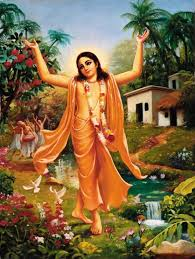
Gaura Purnima is the celebration of the divine appearance of Sri Krishna Chaitanya Mahaprabhu, who took birth on this full moon night in Sridham Mayapur, West Bengal, in 1486 AD (the year 1407 of the Shakabda era). The word "Gaura" means golden, referring to His luminous golden complexion — which is why He is also lovingly called Gauranga, the Golden-Limbed One.
For Gaudiya Vaishnavas, followers of the devotional school rooted in Chaitanya Mahaprabhu's teachings, this is the most auspicious day in the entire spiritual calendar. It marks not just a birthday, but the descent of the Supreme Lord in a compassionate, hidden form to freely distribute what He had previously reserved only for the most elevated souls: pure love of God, or prema-bhakti.
Gaur Purnima 2026
Date: Tuesday, March 3, 2026
Tithi: Phalguna Purnima (Full Moon of Phalguna month)
Purnima Begins: March 2, 2026 at 5:56 PM IST
Purnima Ends: March 3, 2026 at 5:08 PM IST
Moonrise (IST): ~6:22–6:29 PM (varies by city)
Fast Broken: After moonrise, post-eclipse end at 6:46–6:47 PM IST
The Divine Story of Sri Chaitanya Mahaprabhu's Appearance
The story of Chaitanya Mahaprabhu's birth carries both earthly warmth and cosmic weight. His father was Sri Jagannath Mishra, a pious and humble brahmana from Mayapur in the district of Nadia, Bengal. His mother was Srimati Sachidevi, known throughout the region for her devotion, patience, and extraordinary grace. Together, they had already lost eight daughters before the birth of their son Vishwarupa, and they prayed deeply for another child.
On the full moon evening of the month of Phalguna, in the year 1486, the sky above Navadvipa lit up with a lunar eclipse. Townspeople flooded the riverbanks, chanting the holy names in the time-honoured tradition of bathing and prayer during the Chandra Grahan. It was precisely in this spiritually charged moment — with thousands of voices rising in the name of the Lord — that Srimati Sachidevi gave birth to a child of exceptional beauty and radiance.
The infant's golden skin glowed like molten sunlight. He was born in the courtyard of the family home, under a neem (Nimba) tree, and so his parents named Him Nimai. The entire neighbourhood seemed to be caught in a wave of joy. Women began singing auspicious songs. Neighbours brought offerings. Even the night air, they said, felt different — charged, warm, alive with something they could not name but could feel in their bones.

It is worth pausing here to reflect on this: the very moment this child was born, thousands of people were already chanting the holy names of God because of the lunar eclipse. The scriptures teach that this was no coincidence. The Lord arranged His own appearance to coincide with a Chandra Grahan so that the world would greet Him with the sankirtana the congregational chanting that He would later preach as the highest dharma for the age of Kali.
Scriptural Prophecies Foretelling Chaitanya Mahaprabhu's Advent
One of the most remarkable aspects of Sri Chaitanya Mahaprabhu's appearance is that it was foretold across multiple ancient scriptures. The Vayu Purana, the Garuda Purana, and the Narasimha Purana all carry clear references to the coming of a golden avatar in Kali-yuga. This is not mythology invented after the fact. These texts predate Mahaprabhu's birth by centuries, and their descriptions match His life with extraordinary precision.
पौर्णमास्यां फाल्गुनस्य फाल्गुनी-ऋक्ष-योगतः
भविष्ये गौर-रूपेण शची-गर्भे पुरन्दरात्॥
"On the full moon day of the month of Phalguna, conjoined with the star Phalguni, I will appear in a golden form, begotten by Purandara in the womb of Shachi."\
— Vayu Purana
अहं पूर्णो भविष्यामि युग-संध्यौ विशेषतः
मायापुरे नवद्वीपे भविष्यामि शची-सुतः॥
"In the first part of Kali-yuga, I will appear in my complete spiritual form in Mayapura, Navadvipa, and become the son of Shachi."
— Garuda Purana
Who Was Sri Chaitanya Mahaprabhu? The Life Behind the Legend
Even to someone approaching this purely from a historical and cultural standpoint, Chaitanya Mahaprabhu's life is extraordinary. Born Vishvambhara Mishra and called Nimai in childhood. He was brilliant from an early age. By his teenage years, He had mastered Sanskrit grammar and logic and was running His own school in Navadvipa. Scholars came to debate Him and left humbled. His intellectual sharpness was matched only by His love of devotion.
The turning point came when He visited Gaya at the age of around twenty-two and had a profound spiritual awakening at the lotus feet of His guru, Ishvara Puri. When He returned to Navadvipa, He was transformed. The debate-loving scholar became a kirtan-intoxicated bhakta. He would weep while chanting, faint in divine ecstasy, and spend entire nights in devotional rapture with His companions Nityananda Prabhu, Gadadhara, Srivasa, and others who form what is called the Panca-tattva.
At the age of twenty-four, He took sannyasa, renouncing household life and spent the rest of His years in Puri, Odisha, at the feet of Lord Jagannatha. From there, He travelled across South India, blessing pilgrims and transforming hard hearts through the sheer grace of His presence. His eighteen years in Puri were marked by intense devotional absorption, deep philosophical discussions with scholars, and an overwhelming compassion that accepted everyone regardless of caste, background, or past sins.

His central teaching was remarkably simple and strikingly radical for the time: the holy names of God, particularly the Hare Krishna Maha Mantra, are the supreme means of spiritual liberation in this age. Caste does not determine eligibility. Ritual perfection is not required. All that is needed is a sincere, humble heart willing to call out to the Divine.
Spiritual Significance of Gaur Purnima 2026
Every year, Gaur Purnima arrives as a kind of spiritual reset, a day when the accumulated grace of Chaitanya Mahaprabhu's compassion feels especially accessible. The tradition holds that on this day, the Lord is particularly inclined to bestow blessings upon those who remember Him with devotion, observe a fast, and engage in nama-sankirtana.
For Gaudiya Vaishnavas, this is also the beginning of the New Year, the Gaurabda calendar. The day carries a sense of beginning, renewal, and fresh resolve. Temples around the world stay open through the night. Devotees take vows of deeper practice. And the sankirtana the communal chanting of the holy names, flows without interruption from dusk to dawn.
How to Observe Gaur Purnima 2026: Puja Vidhi Step by Step
Whether you are at an ISKCON temple, a local Gaudiya Math, or simply at home, here is how devotees traditionally observe this most sacred day:
Wake up in Brahma Muhurta (around 4 AM) and take a bath — preferably in a river or with Ganga water added to your bathwater. This purifies the body and mind ahead of the day's observance.
Mangala Arati and morning prayers — attend or perform the early morning worship of the Lord. In 2026, complete all cooking and significant rituals before Sutak begins (before 9:39 AM for general public).
Observe Nirjala Upavasa — a complete fast, including water, until moonrise. This fast is considered very meritorious on Gaur Purnima and is observed by the vast majority of committed devotees. Those with health conditions may observe a partial fast.
Chant the Hare Krishna Maha Mantra throughout the day — Hare Krishna Hare Krishna Krishna Krishna Hare Hare / Hare Rama Hare Rama Rama Rama Hare Hare. There is no restriction on chanting even during Sutak or the eclipse. This is Mahaprabhu's supreme gift.
Listen to or read the Chaitanya-charitamrita and Chaitanya Bhagavata — the two primary scriptures narrating the life and teachings of Sri Chaitanya Mahaprabhu. Many temples hold discourses and readings throughout the day.
Sankirtan through the evening — as the Chandra Grahan unfolds, devotees gather for continuous, joyful kirtan. This mirrors the very moment of Mahaprabhu's birth, when the town was chanting because of the eclipse.
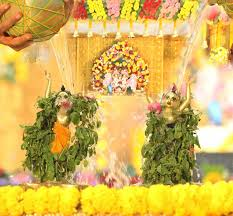
Main Abhishekam and Deity worship after 6:47 PM IST — once the eclipse ends and moonrise is confirmed, temples perform a grand abhishekam of Sri Nitai-Gaura deities with panchamrita, fruit juices, and flower offerings.
Break the fast with prasadam — the fast is broken with simple, sattvic food offered to the Lord. Many temples celebrate the Jagannath Mishra Feast, a recreation of the feast Sri Jagannath Mishra held when Nimai was born with great devotional joy.
Bathe again after the eclipse ends — traditional practice calls for a purifying bath after the Chandra Grahan concludes, washing away the spiritual effects of the Grahan period.
Sutak Kaal Rules — What to Avoid and What to Do
Sutak is the pre-eclipse period during which certain activities are traditionally restricted. Since the March 3, 2026 Chandra Grahan is visible in India, Sutak rules apply. Here is what most traditional guidelines recommend:
During Sutak, avoid cooking fresh food, beginning new auspicious activities, or performing deity worship rituals that involve physical offerings. Sleeping during the eclipse is also traditionally discouraged. Pregnant women, young children, and elderly individuals follow a modified Sutak that begins closer to the eclipse itself (3:28 PM IST).
What is fully encouraged — indeed, what is considered especially meritorious during both Sutak and the eclipse itself — is chanting the holy names, reading scriptures, meditating, and performing charitable acts. Donating food, clothing, or money on Chandra Grahan during Gaur Purnima is considered to multiply the spiritual benefit many times over.
How Gaur Purnima is Celebrated Across India and the World
The grandest celebration in the world happens at ISKCON Mayapur in Nabadwip, West Bengal — the exact birthplace of Sri Chaitanya Mahaprabhu. The Mayapur Gaura Purnima Festival 2026 runs from January 31 through March 5, drawing tens of thousands of devotees from every corner of the globe. There are daily kirtans, parikramas (circumambulation of the sacred sites), yajnas (Vedic fire ceremonies), cultural performances, and the climactic appearance day celebration on March 3. If you have ever dreamed of experiencing this festival in person, Mayapur is the beating heart of it.
In Odisha, the celebration takes on a flavour rooted in Mahaprabhu's deep connection with Lord Jagannatha of Puri, where He spent the final eighteen years of His life. Temples in Puri and Bhubaneswar hold special programs linking His appearance to His devotion for Jagannatha.

In Bengal and throughout the state of West Bengal more broadly, Nagar sankirtana processions — groups of devotees singing and dancing through the streets — fill neighbourhoods with the sound of mridanga drums and kartala cymbals.
Beyond India, ISKCON temples in more than a hundred countries celebrate Gaur Purnima with full festival programs. From ISKCON Bangalore, ISKCON Vrindavan, and ISKCON Ahmedabad to temples in London, New York, Sydney, and beyond — the appearance day of Sri Chaitanya Mahaprabhu is observed with a love that crosses every boundary of geography, language, and culture.
On Gaur Purnima 2026, as the moon rises into a sky still touched by the last glow of a lunar eclipse, there is something quietly profound happening. The same celestial canvas that attended this great soul's arrival 540 years ago is being drawn again — as if to say: the invitation is still open. The name is still there. The grace is still flowing. All that is required is to chant.
तृणादपि सुनीचेन तरोरपि सहिष्णुना।
अमानिना मानदेन कीर्तनीयः सदा हरिः॥
One who is humbler than a blade of grass, more tolerant than a tree, who gives all respect to others and expects none for himself, is qualified to always chant the holy name of the Lord.— Sri Chaitanya Mahaprabhu, Sikshashtakam

Final Thoughts
Gaur Purnima 2026 is not an ordinary festival. The convergence of Phalguna Purnima, the appearance anniversary of Sri Chaitanya Mahaprabhu, and a total lunar eclipse exactly mirroring the cosmic conditions of His original birth makes this a once-in-a-generation moment for spiritual practice. Whether you observe a full fast or simply pause for an hour of chanting, whether you visit a temple or sit quietly at home with a lamp and a prayer, the day carries something larger than what any schedule or ritual can fully contain.
Hare Krishna Hare Krishna Krishna Krishna Hare Hare
Hare Rama Hare Rama Rama Rama Hare Hare


Comments