Feeling Lost? Your Mahadasha May Reveal the Temple You Should Visit

Is your Mahadasha affecting your life? Find out which temple may offer spiritual support, peace and divine guidance.
Feeling trapped in the repetitive life pattern even after exploring every possibility? In Vedic astrology, when life is tough, a hard period is often seen under the aspect of Mahadasha—a period ruled by a planet and considered as responsible for the main themes in one's life. For spiritually inclined people, paying a visit to a temple of the ruling planet becomes an important ritual of seeking peace, devotion and strength inside oneself.

What Is a Mahadasha?
In Vedic astrology, a Mahadasha is a major planetary period in the Vimshottari Dasha system. The complete cycle spans 120 years and is divided among nine planetary rulers: Ketu, Venus, Sun, Moon, Mars, Rahu, Jupiter, Saturn and Mercury. Their periods last 7, 20, 6, 10, 7, 18, 16, 19 and 17 years respectively. The starting Mahadasha is determined by the Moon's nakshatra at birth.
The idea is simple: each planet becomes the dominant influence for a particular phase. Depending on its placement and strength in the birth chart, that period may traditionally be associated with growth, opportunities, responsibilities, detachment or obstacles.
For someone exploring Sanatan traditions, understanding the active Mahadasha can therefore offer another spiritual framework for making sense of recurring experiences.
Why Do People Turn to Temples During Difficult Mahadashas?
In case when life puts the same challenges again and again, spirituality gives another point of view on them. Visiting a temple helps to pray, train one’s will and surrender and give a break from the daily routine and stress.
The Bhagavad Gita says:
“श्रद्धावान् लभते ज्ञानं तत्परः संयतेन्द्रियः।” — Bhagavad Gita 4.39
“A person who has faith, is devoted and has control over the senses attains knowledge.”
This verse speaks about the role of shraddha, which means sincere faith. Under this aspect, visiting a temple does not mean that one expects the fast results but works on patience, faith and internal stability in difficult conditions.
Rahu Mahadasha: Seek the Blessings of Lord Subrahmanya
Rahu periods are often seen in Jyotish under the aspect of confusion, unexpected changes, obsession, uncertainties and unusual experiences. Traditional spiritual treatment in case of Rahu Mahadasha includes worshiping Lord Subrahmanya in Kukke Shree Subrahmanya Temple in Karnataka.
One can view the visit as an opportunity for prayer, self-control and clarity as opposed to a panacea to all problems faced by a person.
Ketu Mahadasha: Turn Toward Lord Jagannath
Ketu is often interpreted as a planet of detachment, spirituality, uncertainty and inward transformation. During a Ketu Mahadasha, some traditional practitioners recommend devotion to Lord Jagannath.
Jagannath Temple in Puri, therefore, takes on special spiritual importance for the followers using the traditional methods. The offerings, prayers and charitable acts can be undertaken according to the traditions of one's family and those of the temple itself.
The deeper message of Ketu is often understood as learning to release excessive attachment. In that sense, pilgrimage itself can become an exercise in surrender.
Shani Mahadasha: Patience at Kokilavan Shani Dev Mandir
Saturn, or Shani, is traditionally connected with discipline, responsibility, karma, delays and perseverance. A Shani Mahadasha can therefore be perceived as a period demanding patience and maturity.
Kokilavan Shani Dev Mandir, located in Uttar Pradesh, is an important pilgrimage spot for the believers seeking the blessings of Shani Dev. Traditional followers can offer mustard oil and undertake parikrama as per the local temple traditions.
Instead of seeing Saturn as a cause for pain, Sanatagyan beliefs usually describe Shani as a teacher of responsibility, humility and perseverance.
Mars Mahadasha: Find Balance at Vaitheeswaran Koil
Mars or Mangal stands for the qualities of energy, courage, activity and assertiveness. If this influence becomes difficult, a person may experience anger, irritability and confrontation.
Vaitheeswaran Koil in Tamil Nadu is one of the Navagraha temples and is traditionally associated with Mars (Angaraka). The temple is dedicated to Vaidyanathar, a form of Shiva, and is renowned as a sacred centre of worship and healing traditions.
For devotees, prayer here can symbolise transforming restless energy into courage, discipline and purposeful action.
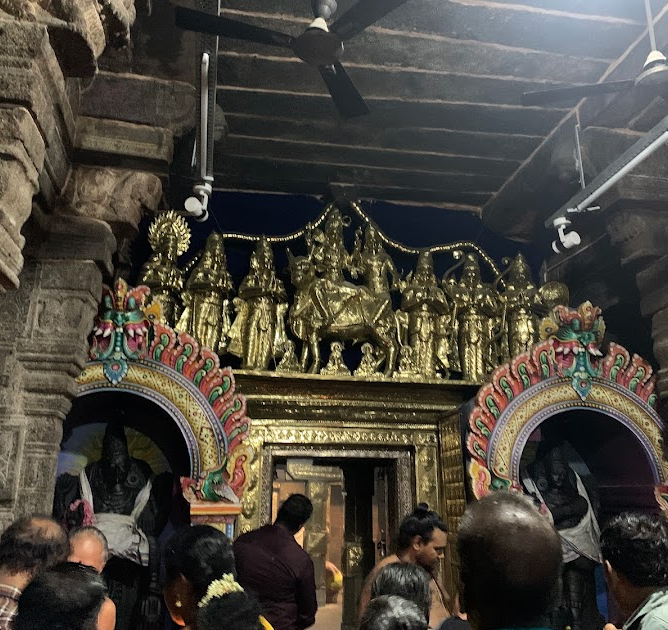
Can a Temple Visit Really Change a Mahadasha?
A temple cannot be presented as a guaranteed solution to planetary problems. Astrology itself is a traditional belief system, and scientific evidence does not establish that planetary periods cause life events.
Yet spiritual practices can have personal meaning. Pilgrimage, prayer, charity, meditation and ritual can give an impression of calmness, purpose and emotional stability. For a believer, such changes can be quite important.
As Bhagavad Gita reminds devotees:
“योगस्थः कुरु कर्माणि सङ्गं त्यक्त्वा धनञ्जय।” — Bhagavad Gita 2.48
“Established in yoga, perform your actions, abandoning attachment.”
In a way, that might just be the most significant meaning of Mahadasha solutions: Not shunning away from all that life throws at you but rather being able to deal with everything with more faith and balance.
While your Mahadasha can provide a spiritual guide on how to choose a temple, the real significance lies in your being able to find faith, peace and inner strength.

Comments