Why Life Feels Unfair: The Hidden Law of Karma

Why do challenges appear without reason? Are they punishment—or karmic lessons for growth? Uncover the hidden law of karma and its powerful impact on your present and future.
Sometimes life just doesn't seem fair, particularly when viewing the plight of innocent people who suffer and the success of those who do wrong. The ancient philosophy of "karma" offers an alternative perspective: every action is followed by only one result (outcome), regardless of whether or not that result is visible immediately or a long time after the action occurs.

Understanding Karma: The Law of Cause and Effect
Karma is based on Vedic teachings and also appears in many traditions around the world. In essence, karma is a representation of how our past actions continue to create our present conditions, and that the choices we make today will have an impact on the kind of future we will create for ourselves. Every thought, word, and action creates a ripple in the subtle world. That ripple eventually returns to its source.
Karma is a foundational philosophy within many cultures and spiritual systems and indicates the relationship between past actions and present and future events. It does not come solely from Eastern teachings or philosophies, but is a universal principle of spirituality.
“कर्मण्येवाधिकारस्ते मा फलेषु कदाचन।” - (Bhagavad Gita 2.47)
“You have the right to perform your duty, but not to the fruits of your actions.”
This verse teaches that actions are in human control, but results are governed by a higher cosmic order. According to Sanatangyan, this understanding reduces frustration and builds inner stability.
Karma is not punishment or reward from an external judge. This is only cause and effect; therefore, a good act of anger or greed cannot bring about peace as a planting of a mango tree would never produce a neem tree.
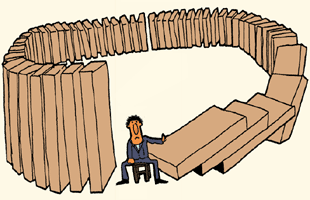
Karma Across Lifetimes and the Cycle of Samsara
In Hinduism, karma is tied to the concepts of samsara aka the cycle of rebirth because in every lifetime we have all lived there are impressions that we have brought into the next life; these impressions are also referred to as sanskaras and are influence the tendencies that we have in the current life including our talents, strengths and weaknesses.
The Upanishads declare:
“यथा कर्म यथा श्रुतम्।” - (Brihadaranyaka Upanishad 4.4.5)
Translation: “As one acts, so does one become.”
This is what we refer to as sanatangyan. Life does not happen by chance, rather every happy or sad event is part of our journey. A sadhu meditating and a father/mother raising a family are all experiencing their past in the present.
The freedom from this cycle is called moksha; liberation as stated by the Vedic Shashtra is achieved through selfless service (known as karma yoga) and devotion, also known as bhakti and wisdom also known as gyan. Once we let go of our selfish attachment we are not bound by karma anymore.

Why Life Feels Unfair
The feeling of unfairness often arises from limited vision. Only a small fragment of the karmic story is visible. When someone suffers despite good intentions, hidden past causes may be unfolding. When someone prospers despite wrongdoing, consequences may simply be delayed.
The ancient shashtra describe three types of karma:
Sanchita Karma – Accumulated karma from past lives.
Prarabdha Karma – The portion currently unfolding in this life.
Kriyamana Karma – New karma being created now.
Understanding these through sanatangyan removes bitterness and replaces it with responsibility. Present choices still matter. While past karma shapes circumstances, current responses determine the future.
The Brihadaranyaka Upanishad states:
“यथाकर्म यथाश्रुतम्।”
“As one acts and as one knows, so one becomes.”
This powerful declaration shows that transformation is always possible.

Living Meaningfully Through Karma Awareness
By being aware of our karma does not help to create fear; rather empowers us because we can see how our actions influence our future. If we create what we will become, then how we live on a daily basis creates our transformation.
The following are small daily activities we can do inline with sanatangyan that will purify our karma:
Speaking truthfully
Serving selflessly
Acting without attachment
Practicing gratitude
Seeking wisdom from a guru
As we continue to perform good acts of dharma to our community, we will experience more and more joy in our lives; we will diminish the amount of negativity that we perceive from cosmic justice because we will build trust in the universe.
Karma is not harsh, it is fair, just, and fundamentally caring; it points a person on his or her spiritual journey toward personal development and enlightenment.
Life appears to be unfair, but when we look through the eyes of karmic justice, everything that happens to us has some significance; every event has a purpose that relates to our spiritual growth. When individuals choose to be responsible, mindful of how they choose to live, and trust in a higher order of life, they stop judging others or blaming their destiny for where they find themselves today, and instead begin to take control of shaping their future through their thoughts and actions. Karma does NOT punish a person; it simply gives them the opportunity to experience growth.

Comments