Breaking Glass and Bad Luck: Myth, Money, or Safety Concern?

Is the fear of broken glass superstition—or a smart safety rule passed down through generations?
The sound of shattering glass often sends a chill through the heart. Many still believe it signals misfortune ahead. The question remains, is this fear spiritual or is it a continuation of long forgotten memories of fear based on economic hardship or safety? This article will examine the evolution of such myths through history, Vedic literature as well as Sanatangyan, to determine if breaking glass is indeed a bad omen or just a combination of superstition and sound judgement.

The Fear That Echoes in Every Home
“This is extremely inauspicious—something bad is about to happen!”
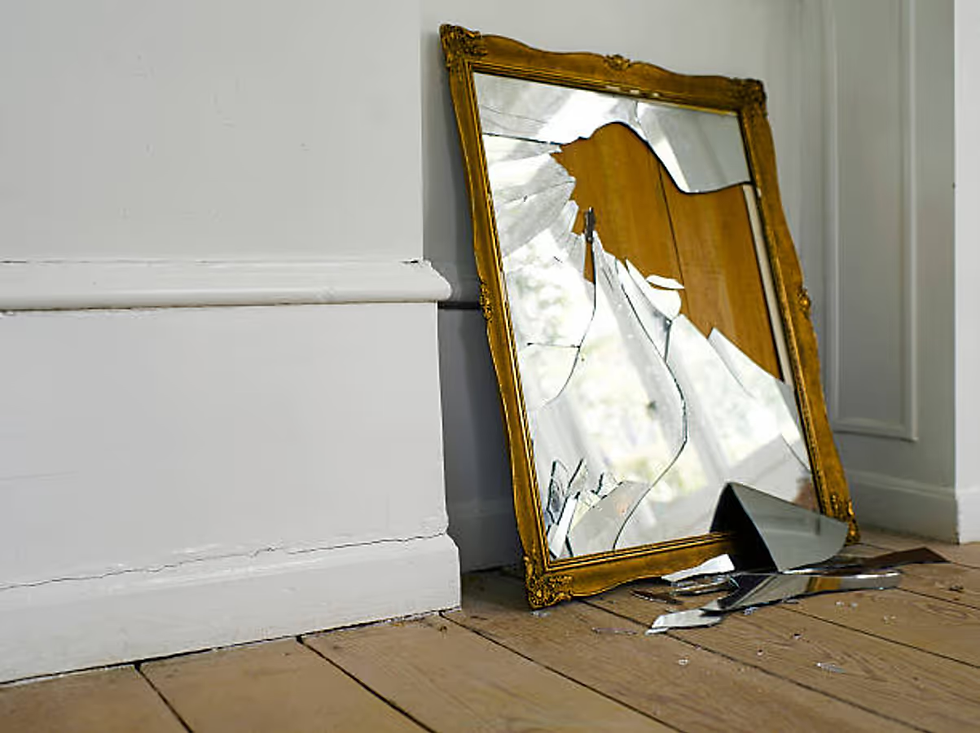
Such words are often heard the moment a glass slips from the hand and shatters on the floor. Hearts skip a beat. Silence spreads. An invisible fear fills the air. But is breaking glass truly a sign of impending trouble, or did ancestors create this frightening belief to protect families from financial loss and physical harm?
When explored through history and Sanatangyan, the answer becomes surprisingly simple.

When Glass Was More Valuable Than Gold
In our past, glass was not merely another household item as we know it today; glassware and mirrors were rare, and often only available by import from far away locations. Only the wealthiest families could afford these products. To break a single decorative or mirrored item could be a serious loss to your finances.
To protect such precious objects, society needed discipline. Older generations gave simple and direct rules regarding breaking glass by using fear as a method of promoting protection instead of lengthy lectures about responsibility and cost.
This approach reflects a deep understanding of human psychology. When a rule is connected with misfortune, people obey it more strictly. In this way, what appears to be superstition may actually have been economic wisdom.
Sanatangyan teaches that actions should be guided by awareness, not ignorance. Many such beliefs were not blind fears but practical systems woven into cultural life.
ईशावास्यमिदं सर्वं यत्किञ्च जगत्यां जगत्।
तेन त्यक्तेन भुञ्जीथा मा गृधः कस्यस्विद्धनम्॥ — Isha Upanishad 1
Everything in this universe is pervaded by the Divine. Enjoy with detachment and do not covet or misuse wealth.
The Hidden Danger Beneath Bare Feet
The second and more serious concern was safety.
In earlier times, people did not constantly wear footwear inside their homes. Floors were often made of mud or uneven stone. There were no vacuum cleaners, no bright LED lights to detect tiny glass shards. Once glass shattered, the smallest fragments would scatter invisibly.
Sharp pieces of glass can penetrate the foot and remain there without being detected for days or weeks causing infection; in an era with no modern medicine, injuries like this were quite dangerous.
With this belief that broken glass is considered “bad luck”, it encouraged people to stop their movements, and proceed with caution and care while cleaning to avoid any future injury from broken glass. The so-called superstition acted as a safety alarm.
Additionally, the teachings found within ancient shashtra all convey healthy principles that promote taking care of your body.
“सर्वे भवन्तु सुखिनः, सर्वे सन्तु निरामयाः”
“May all be happy; may all be free from illness.”

Mirrors, Souls, and Symbolism
In ancient Rome, people believed mirrors reflected the soul. If a mirror broke, they thought it meant the soul was damaged. Though this belief did not originate in Vedic culture, it shows how different civilizations used symbolism to enforce careful behavior.
Within Indian tradition, a sadhu or guru would not encourage blind fear. Instead, guidance would focus on inner clarity.
The Bhagavad Gita offers a timeless reminder:
नासतो विद्यते भावो नाभावो विद्यते सतः
“The unreal has no existence; the real never ceases to be.”
Glass breaking is a physical event. The fear attached to it is psychological. Sanatangyan teaches discrimination between reality and imagination.

Myth, Money, or Safety Concern?
So what truly lies behind the belief?
Economic Value: Glass was rare and expensive.
Health Risk: Shards could cause severe injury.
Social Discipline: Fear ensured caution.
No major Vedic shashtra declares breaking glass as a cosmic omen. No authentic Sanatangyan text labels it spiritually disastrous.
The belief was practical, not mystical.
In the end, breaking glass is less about bad luck and more about forgotten logic. What sounds like an omen was often a warning—protect your wealth, protect your body, and act with awareness. When seen through history and Sanatangyan, the fear fades, and only practical wisdom remains.

Comments