Why Is Manusmriti So Controversial? The Truth Most People Never Read
- Chinmayi Devi Dasi

- Dec 19, 2025
- 4 min read
Manusmriti is controversial, yet deeply influential in shaping ideas of dharma and duty. Understand its good, its limits, and why it must be read critically today.

Manusmriti is one of the most controversial texts associated with Hindu civilization. It is feared, attacked, defended, and politicized, yet rarely read with patience or context. For many people, Manusmriti has become a symbol of oppression. For others, it is treated as an untouchable tradition. The tragedy is that both sides usually speak without deep understanding. Manusmriti deserves neither blind worship nor blind rejection. It deserves fearless thinking.
Manusmriti and Its Historical Purpose
Manusmriti, also known as the Laws of Manu, is one of the earliest texts that attempted to organize social life, ethics, and governance in ancient India. Written in a very different historical and social context, it was meant to function as a Smriti, a time-bound social and legal guide, not as an eternal spiritual commandment.
Its greatest contribution lies in its strong emphasis on dharma, which it presents as the foundation of individual conduct and social harmony. Dharma in Manusmriti is not limited to law or punishment. It includes values such as truthfulness, self-discipline, compassion, responsibility, and moral restraint. These ethical principles continue to influence Indian thought even today, especially in leadership, governance, and business ethics, where balancing power with accountability remains essential.

Why Manusmriti Is Not a Spiritual Scripture
The first truth we must accept is that Manusmriti is not a spiritual scripture like the Vedas, Upanishads, or the Bhagavad Gita. It is a social law book written for a specific historical period. In Sanātan Dharma, Shruti always holds higher authority than Smriti. The tradition itself clearly states:
“श्रुतिरेव गरीयसी”
Shruti is superior to Smriti.
This means social laws were never meant to be eternal or unchangeable. They were designed to maintain order in a particular society, not to define the soul’s journey toward liberation.
Yet, in modern debates, Manusmriti is often treated as if it represents the core philosophy of Hinduism. This isn't very ethical. Hinduism’s spiritual foundation lies in self-realization, freedom of inquiry, and inner awakening, not rigid social control. When Manusmriti is used as the face of Hinduism, both critics and defenders ignore this essential distinction.
The Verses That Clash With Modern Values
To think honestly, we must face the controversial verses without fear or excuses. Manusmriti contains lines that clearly conflict with modern values of freedom, equality, and individual dignity.
One of the most quoted verses regarding women states:
“न स्त्री स्वातन्त्र्यमर्हति।” (Manusmriti 9.3)
This means, “A woman does not deserve independence.”
In today’s moral and ethical understanding, this statement is unacceptable. It denies personal autonomy and reduces a woman’s identity to lifelong dependence. There is no justification for applying such a rule in a modern society that values human rights and freedom of choice.
Similarly, Manusmriti places restrictions on Śūdras regarding education, wealth, and social mobility. These verses have been rightfully criticized because they institutionalize inequality. Any system that limits human potential based on birth cannot be defended in the present age.
Acknowledging this does not weaken Sanātan Dharma; it strengthens its moral clarity.

The Ignored Verses: What Critics Rarely Mention
The debate becomes dishonest when only these verses are quoted repeatedly, while the rest of the text is completely ignored. Manusmriti is not a single-line book. It contains contradictions, complexities, and even ideas that challenge its own harsh statements.
One of the most ignored verses about women appears in Manusmriti itself:
“यत्र नार्यस्तु पूज्यन्ते रमन्ते तत्र देवताः।
यत्रैतास्तु न पूज्यन्ते सर्वास्तत्राफलाः क्रियाः॥” (Manusmriti 3.56)
This means, “Where women are honored, the gods rejoice. Where they are not honored, all actions become fruitless.”
This verse directly contradicts the claim that Manusmriti only degrades women. It recognizes the spiritual and social importance of respecting women. The problem is not that such verses do not exist. The problem is that they are rarely discussed.
What Manusmriti Says About Śūdras Beyond Restrictions
The same selective reading happens in the case of Śūdras. Manusmriti does impose restrictions, but it does not deny their humanity or dharma. It explicitly states:
“शूद्राणामपि धर्मोऽस्ति”
This means, “Śūdras too have their own dharma.”
This single line challenges the idea that Manusmriti viewed Śūdras as outside the moral or spiritual order. The historical degradation of Śūdras came not only from text, but from centuries of social misuse, power politics, and rigid interpretation by those who benefited from hierarchy.

Was Manusmriti Misused or Weaponized?
This leads to an uncomfortable but necessary question. Was Manusmriti altered, selectively preserved, or weaponized?
Manusmriti exists in multiple versions, and scholars acknowledge variations in manuscripts. Colonial translators often highlighted the harshest verses, while traditional elites emphasized those that supported their authority. Over time, a time-bound social manual was frozen into divine command.
Asking whether Manusmriti was misused does not mean denying its existence. It means questioning human intentions behind interpretation. Sanātan Dharma has always encouraged inquiry. Silence on this issue only benefits those who wish to dominate, not those who seek truth.
Why Spiritual Leaders Never Centered Manusmriti
Another important question naturally arises. If Manusmriti is so central, why did no great spiritual leader emphasize reading it? Why did Adi Shankaracharya focus on the Upanishads? Why did Swami Vivekananda speak of strength and freedom? Why did the saints of the Bhakti movement reject caste boundaries altogether?
The answer is simple. Manusmriti is not a moksha-shastra. Liberation does not come from social regulation. It comes from self-realization. That is why spiritual masters turned toward texts that dissolve identity, not enforce it.

Manusmriti and Modern Freedom
Modern freedom and equality are not enemies of dharma. They are natural evolutions of human consciousness. Manusmriti reflects a society that feared disorder more than injustice. Today, we fear injustice more than disorder, and rightly so. Some rules of Manusmriti belong to history, not to the future.
The greatest mistake is to reduce Hinduism to Manusmriti. Hinduism is vast, plural, and deeply philosophical. It contains the Upanishads’ freedom, the Gita’s balance, the Bhakti movement’s equality, and the saints’ rebellion against social rigidity. Manusmriti is one voice in a vast ocean, not the ocean itself.
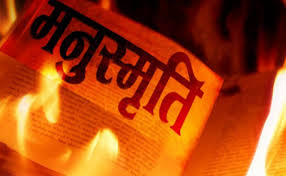
Conclusion: Neither Burn It Nor Worship It
In the end, Manusmriti should neither be burned nor worshipped. Burning it without understanding is ignorance. Worshipping it without questioning is arrogance. True dharma lies in discernment.
Manusmriti should be studied historically, critiqued rationally, and never imposed spiritually. The real danger is not Manusmriti. The real danger is using any text to dominate minds instead of awakening them.
The most important question is not whether Manusmriti is good or bad. The real question is whether we are brave enough to think freely, honestly, and compassionately.
That courage itself is Sanātan Dharma.


Comments