Why Does Lord Jagannath Disappear for 15 Days Before Rath Yatra?
- Chinmayi Devi Dasi

- Jun 20
- 3 min read
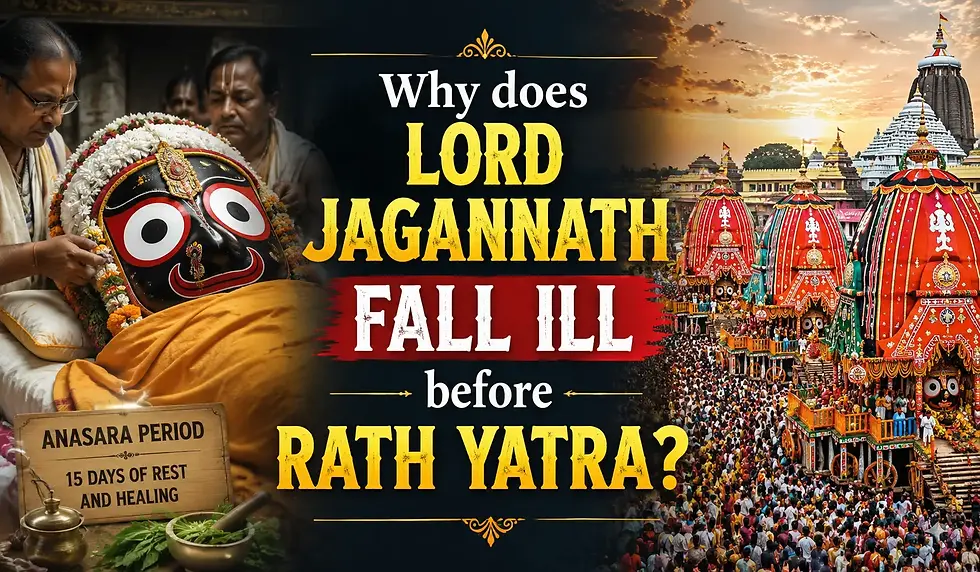
Every year, millions of devotees eagerly wait for the grand Jagannath Rath Yatra in Puri, Odisha. The sight of Lord Jagannath, Lord Balabhadra, and Devi Subhadra coming out of the temple and riding their magnificent chariots fills devotees with joy and devotion.
But before this grand festival begins, something surprising happens.
According to an age-old tradition, Lord Jagannath falls ill and remains away from public view for about 15 days. For many people hearing this for the first time, it sounds unusual. How can God become sick?
Jagannath Rath Yatra 2026 Date
The world-famous Jagannath Rath Yatra will begin on 16 July 2026 in Puri, Odisha.
Before the Rath Yatra, an important ritual known as Snana Purnima is observed. In 2026, Snana Purnima falls on 29 June. This ritual marks the beginning of a unique sequence of events that eventually leads to the Rath Yatra.
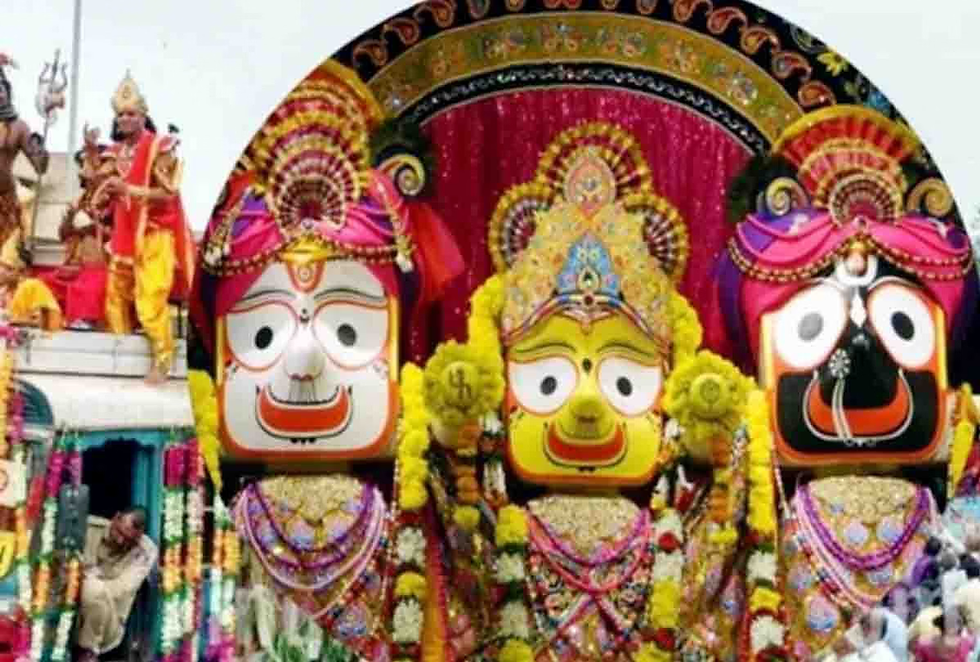
On Snana Purnima, Lord Jagannath, Lord Balabhadra, and Devi Subhadra are brought out from the sanctum and placed on a special bathing platform called the Snana Mandap.
The deities are then ceremonially bathed with 108 pots of sacred water collected from a holy well inside the temple premises.
Thousands of devotees gather to witness this divine bathing ceremony. It is considered one of the most auspicious occasions in the Jagannath tradition.
However, after receiving this grand bath, it is believed that the deities catch a fever.
Why Does Lord Jagannath Become Ill?
According to temple tradition, the extensive bathing ceremony causes Lord Jagannath and His siblings to develop a fever. After the ritual, they are taken to a special resting chamber where they remain secluded from public view for approximately 15 days. This period is called Anasara or Anavasara.

During this time, devotees cannot have regular darshan of the Lord. Instead, temple servitors known as Daitapatis care for the deities just as family members would care for a loved one who is unwell. Special herbal medicines and traditional treatments are symbolically offered to the Lord.
The Deeper Spiritual Meaning Behind This Tradition
The story is not really about illness. Its deeper message is about love and connection.
In the Jagannath tradition, God is not viewed as a distant ruler sitting far away in heaven. Lord Jagannath is treated like a beloved family member. He wakes up, eats meals, rests, travels, and even falls ill.
This beautiful tradition reminds devotees that the Lord willingly participates in human experiences to create a closer bond with His devotees.
It teaches that divinity is not distant. God understands human emotions, struggles, and experiences because He lovingly shares them with His devotees.
The 15-Day Anasara Period
The Anasara period is filled with devotion and anticipation.
Although devotees cannot see Lord Jagannath during these days, their longing and love for Him increase even more.
Spiritually, this period symbolizes separation and remembrance.
Just as a devotee misses the Lord during these days, it inspires deeper devotion and constant remembrance of God. Many saints have said that separation from the Divine often strengthens love more than constant presence.
After completing the period of rest and recovery, Lord Jagannath reappears before devotees in a special ceremony called Nava Jaubana Darshan, meaning "the vision of renewed youth."
Devotees believe that after recovering from His illness, the Lord appears refreshed, radiant, and full of divine energy. This darshan generates tremendous excitement because it comes just before the grand Rath Yatra.
The Spiritual Beauty of Jagannath Rath Yatra
The Jagannath Rath Yatra is much more than a religious procession. It is a celebration of divine love. When Lord Jagannath steps out of the temple and travels among His devotees, it symbolizes that God comes to meet everyone without discrimination. People from all backgrounds, communities, and regions gather together to pull the sacred chariots.
This message of equality, compassion, and devotion has made Rath Yatra one of the world's most beloved spiritual festivals.
Final Thoughts

The tradition of Lord Jagannath becoming ill before Rath Yatra may seem unusual at first, but it carries a profound spiritual lesson.
It reminds us that God is not far away. He is close to His devotees, sharing their emotions, experiences, and journey of life.
As Jagannath Rath Yatra 2026 approaches, devotees around the world will once again wait patiently through the 15-day Anasara period, eagerly anticipating the moment when the Lord returns and blesses His children with His divine presence.
And perhaps that is the greatest message of Jagannath culture — God is not merely worshipped; He is loved like family.


Comments