Jagannath Rath Yatra 2026: History, Rituals, Mysteries and the Divine Story


Jagannath Rath Yatra 2026: Most temples follow a simple tradition—devotees travel long distances to seek the Lord's darshan. Jagannath Rath Yatra is different. Once a year, Lord Jagannath leaves His sanctum and comes out onto the streets to meet everyone. This beautiful tradition carries a powerful spiritual message: the Lord's love is not limited by temple walls. He comes to embrace every soul, whether rich or poor, learned or simple.
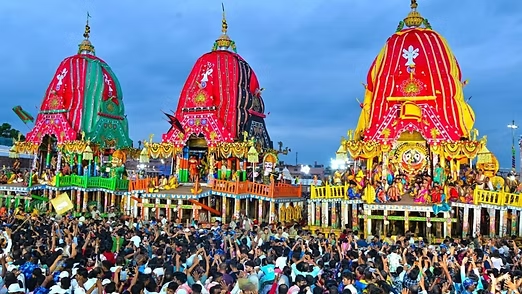
For devotees, Rath Yatra is not just a festival. It is a divine reunion. As the massive chariots move through the streets of Puri, millions of hearts feel the same emotion—that Jagannath is personally coming to bless them. The sight of the Lord seated on His grand chariot often brings tears to devotees' eyes because it reflects a relationship built on pure love rather than ritual alone.
The Sacred Legacy of Jagannath Puri
The roots of Rath Yatra lie in the holy city of Puri, one of the four sacred Dhams of Hinduism. For centuries, saints, sages, and devotees have considered Puri a place where divine grace flows freely. The temple of Lord Jagannath stands as a symbol of universal devotion, welcoming people from different traditions and backgrounds into the embrace of the Lord.
The festival reflects the spiritual culture of Puri, where devotion is expressed not through status or position but through humility and service. Even the Gajapati Maharaja of Puri sweeps the chariots with a golden broom during the festival, reminding everyone that before Jagannath, all are servants.

The Story of Nila Madhava: How Jagannath Appeared
The origins of Jagannath Rath Yatra begin with a beautiful story from ancient scriptures. King Indradyumna was a devoted worshipper of Lord Vishnu. When he heard about a mysterious deity named Nila Madhava hidden deep within a forest, he became eager to have His darshan.
After a long search, a priest named Vidyapati discovered that Nila Madhava was secretly worshipped by a tribal chief named Vishvavasu. The deity was so divine that anyone who saw Him felt overwhelmed with devotion.
When King Indradyumna finally reached the sacred place, Nila Madhava had disappeared. The king was heartbroken and prayed with complete surrender. Moved by his devotion, the Lord promised to appear again in a new form.
Soon, a sacred wooden log washed ashore at Puri. The celestial architect Vishwakarma began carving divine forms from the wood. However, before the work was complete, the king opened the door of the workshop. Vishwakarma vanished, leaving behind the forms of Jagannath, Balabhadra, and Subhadra that are worshipped today.
This story teaches an important spiritual truth: the Lord reveals Himself where there is sincere devotion. Jagannath's form is not a product of artistic perfection but a symbol of divine love responding to a devotee's longing.
Why Lord Jagannath's Form Is So Unique
The form of Lord Jagannath is unlike any other deity in Hinduism. His large eyes, gentle smile, and unfinished limbs have fascinated devotees for centuries.
Many saints explain that Jagannath's wide eyes represent His constant watch over all living beings. He never closes His eyes because His compassion never sleeps. His form also reminds us that God's love does not depend on external appearance. The Lord accepts everyone exactly as they are.
For devotees, Jagannath's face radiates affection. When they stand before Him, they do not see a distant God. They see a loving friend, protector, and companion who understands every joy and every struggle of life.
Rath Yatra: A Journey Filled with Divine Love
The journey from the Jagannath Temple to Gundicha Temple is not merely a procession. Devotional traditions describe it as the Lord's journey to meet His devotees and shower blessings upon the world.
As the ropes of the chariots are pulled by thousands of hands, social differences disappear. People from every walk of life come together in a single act of devotion. The festival becomes a living example of unity, humility, and spiritual equality.
Many devotees believe that touching the chariot ropes or witnessing the Lord's procession brings immense spiritual merit. Yet the deeper blessing lies in experiencing the love of Jagannath. The Lord who governs the universe willingly allows Himself to be pulled by His devotees, showing that pure devotion can attract even the Supreme Being.
The Rituals That Bring the Festival to Life
The Rath Yatra celebrations begin long before the chariots roll through the streets. On Snana Purnima, the deities are bathed with sacred water in a grand ceremony. After this bath, the Lord is believed to rest during a period known as Anavasara.
When Jagannath reappears during Nava Jaubana Darshan, devotees eagerly gather to witness His renewed form. The excitement reaches its peak on Rath Yatra day when the Lord, Balabhadra, and Subhadra emerge from the temple amidst chants, drums, and devotional songs.
The return journey, known as Bahuda Yatra, is equally significant. It symbolizes the Lord's return after blessing His devotees. The celebrations conclude with Suna Besha, where the deities are adorned with magnificent golden ornaments, revealing the divine majesty hidden behind their simple wooden forms.
Jagannath Rath Yatra 2026: Conclusion
At its heart, Rath Yatra teaches that God is accessible to everyone. Jagannath does not wait for devotees to become perfect. He comes out to meet them where they are.
This is why millions feel such a deep connection with the festival. It reminds people that spiritual life is built on love, surrender, and remembrance of the Lord. The moving chariots become symbols of the human heart, and the journey becomes a reminder to bring God to the center of life.
Jagannath Rath Yatra 2026 will once again gather millions of devotees, but its true significance goes beyond the crowds and celebrations. It is a timeless expression of divine compassion—a reminder that the Lord of the Universe is also the Lord of every heart.


Comments