Why Do Krishna Devotees Say “Hare Krishna” Instead of “Hello”?


Have you ever met a Krishna devotee and noticed that instead of saying "Hello," "Hi," or even "Namaste," they greet you with "Hare Krishna"?
For many people, this may seem unusual at first. After all, a greeting is simply a way to acknowledge another person. But in the spiritual world, words carry energy, meaning, and consciousness. For devotees of Lord Krishna, saying "Hare Krishna" is much more than a greeting—it is a prayer, a blessing, and an opportunity to remember God.
Let us explore the deeper spiritual meaning behind this beautiful tradition.
The Power Hidden in a Simple Greeting
In modern society, greetings are often mechanical.
"Hello."
"Hi."
"Good morning."
We say them dozens of times a day without much thought.
But according to Sanatan Dharma, every word influences consciousness. The sounds we hear and speak shape our thoughts, emotions, and spiritual growth.
This is why devotees prefer greetings that contain the holy names of God.
When a devotee says "Hare Krishna," both the speaker and the listener receive spiritual benefit through remembrance of the Lord.
What Does "Hare Krishna" Mean?
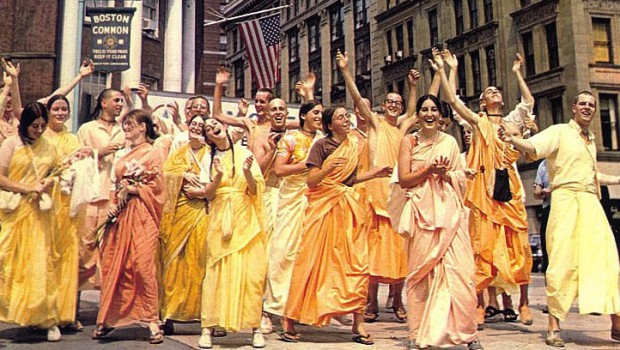
The words "Hare" and "Krishna" have profound meanings.
"Hare" refers to the divine spiritual energy of the Lord, often identified as Srimati Radharani, Krishna's eternal consort.
"Krishna" means "the all-attractive Supreme Personality of Godhead."
Thus, when devotees say "Hare Krishna," they are invoking the presence of both the Lord and His divine energy.
Why Not Just Say Namaste?
Many people ask this question. The word "Namaste" comes from Sanskrit and means:
"I bow to the divine within you."
It is a beautiful and respectful greeting. However, devotees often prefer "Hare Krishna" because it directly includes the holy name of God.
The scriptures repeatedly emphasize the importance of hearing and chanting God's names.
Therefore, devotees naturally choose words that help them remember Krishna throughout the day.
Instead of a secular greeting, they transform every interaction into an act of devotion.
The Teaching of Sri Chaitanya Mahaprabhu
Over 500 years ago, Sri Chaitanya Mahaprabhu spread a simple yet revolutionary teaching.
He encouraged everyone to constantly remember Krishna and share Krishna consciousness with others.

One of His famous instructions is:
"Whomever you meet, speak to them about Krishna."
For devotees, greeting someone with "Hare Krishna" becomes an easy and joyful way to follow this instruction. A simple hello becomes a spiritual exchange.
The Science of Sound in Vedic Wisdom
The Vedas teach that sound is not ordinary. Sacred sound can purify the heart.
This is why mantras occupy such an important place in Hindu traditions.
Among all mantras, the Hare Krishna Mahamantra is considered especially powerful:
"Hare Krishna Hare Krishna,Krishna Krishna Hare Hare,
Hare Rama Hare Rama,Rama Rama Hare Hare."
The scriptures explain that chanting these names cleanses the mind and awakens love for God. Therefore, devotees try to keep these divine sounds present in daily life—not only during worship but also in conversations.
More Than a Greeting
Imagine meeting someone and instead of merely saying "hello," you offer them a spiritual blessing. That is essentially what happens when devotees say "Hare Krishna."
The greeting carries goodwill, positivity, and spiritual remembrance.
It gently reminds both people that beyond careers, possessions, and daily struggles, we are eternal souls connected to the Supreme. In a world full of distractions, this reminder is precious.
Why Some Regions Say "Ram Ram" or "Radhe Radhe"
Interestingly, Krishna devotees are not alone in this tradition.
Across India, many spiritual communities greet one another using divine names.
In parts of North India, people say:
"Ram Ram."
In Vrindavan, one often hears:
"Radhe Radhe."
These greetings serve the same purpose. They keep God at the center of daily life.
Instead of forgetting the Divine while engaging in worldly activities, people remember Him through ordinary conversations.
Conclusion:

Even if someone is not a Krishna devotee, there is a beautiful lesson here.
The quality of our thoughts often depends on the quality of the words we speak.
When our speech becomes sacred, our consciousness gradually becomes sacred too.
The practice of saying "Hare Krishna" teaches us that spirituality does not need to be limited to temples or rituals.
The next time you hear someone say "Hare Krishna," remember that it is much more than a religious phrase.
It is an expression of love, remembrance, and spiritual connection.
For devotees, every meeting is a chance to glorify the Lord and share divine vibrations with others.
In a world where greetings are often routine, "Hare Krishna" carries a deeper message:
May we remember God.May we share spiritual happiness. May every interaction bring us closer to the Divine.


Comments