What Is the Dress Code of a Sanatani — and How It Differs from “HINO” (Hindus in Name Only)
- Chinmayi Devi Dasi

- Oct 25, 2025
- 9 min read
Experience the Dress Code of a Sanatani, where dhotis, sarees, and saffron robes embody timeless dharma and divine tradition.
“Hindu dharma is not worn, it is lived.”
Yet, what we wear often reflects what we revere.

Hinduism — or more precisely, Sanatana Dharma — has always been more than a religion; it’s a way of life. Every action, every word, every fabric we wrap ourselves in carries spiritual meaning. For a Sanatani, clothing isn’t about status or fashion — it’s a visible reminder of purity (saucha), humility, and devotion.
In this blog, we’ll explore the philosophy, symbolism, and spiritual essence behind the dress code of a Sanatani — and contrast it with the rising culture of “HINO” (Hindus in Name Only), where external signs sometimes replace internal sincerity.
Let’s understand how true devotion is worn not just on the body but on the soul.
What Does “Sanatani” Truly Mean?
The word Sanatani comes from Sanatana, meaning “eternal,” and Dharma, meaning “righteous way of living.” A Sanatani, therefore, is someone who follows timeless principles — purity, compassion, truth, and devotion to the Divine — regardless of external trends.
A true Sanatani doesn’t wear dhoti or tilak just to appear spiritual; they do it as an act of alignment with cosmic order. Their dress expresses simplicity, humility, and sanctity — the same virtues taught by sages across millennia.

Understanding “HINO” — Hindus in Name Only
“HINO” stands for “Hindus in Name Only.” It’s a modern term used to describe people who may wear religious symbols or attend festivals but lack the understanding or spirit behind those actions.
Let’s be clear: this term isn’t meant to insult anyone. Many people simply inherit traditions without realizing their depth. A HINO might wear a rudraksha as fashion, use “Jai Shree Ram” as a slogan, or post spiritual quotes online — yet never meditate, perform puja, or live by dharma in everyday conduct.
In essence, the difference between a Sanatani and a HINO is inner intent.
The Sanatani dresses to express sanctity.
The HINO dresses to express identity.
The Philosophy Behind Sanatani Dress
In Hindu philosophy, vastra (clothing) is not just fabric — it’s a medium of energy.
Ancient scriptures describe that clothes can carry guna (qualities): sattvic (pure), rajasic (active), or tamasic (impure).
Clothes influence not just appearance but also thoughts, energy, and mental purity. This is why rishis and sages wore simple, unstitched garments made from natural fibers like cotton and silk.
Scriptural Perspective
The Manusmriti and Smritis mention that clothes should be:
Clean (śuddha) – physically and spiritually pure.
Simple (sarala) – avoiding ego or excess.
Contextual (yukta) – suited to one’s dharma, occasion, and role.
The Bhagavad Gita reminds us:
कर्मण्येवाधिकारस्ते मा फलेषु कदाचन।
“You have the right to perform your duty, but not to the fruits thereof.”
— (Bhagavad Gita 2.47)
This verse teaches that outer acts (like dressing for dharma) matter when the intention is pure, not performative.
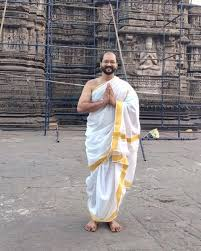
Dress Code of a Sanatani: Core Elements
The traditional Sanatani dress is both practical and symbolic — it embodies simplicity and ritual respect while adapting to India’s diverse climates and customs.
For Men
Dhoti / Veshti / Panche – The Cloth of Purity:
The dhoti—a single unstitched piece of cloth, usually white or cream—is wrapped around the waist and legs. Known as Veshti in South India and Panche in Karnataka, this garment represents Shuddhata (purity) and Vinaya (humility).
White dhotis are worn during rituals and temple visits, symbolizing peace and sanctity.
Silk or colored dhotis are chosen for festivals and joyous occasions to honor the divine with celebration.
In essence, the dhoti is more than clothing—it is a discipline. It reminds a man that his life should be as unstitched and simple as the fabric itself—free from ego and complication.
2. Kurta / Angavastram – Simplicity and Service:
The kurta, usually made of cotton or linen, serves as the upper garment. It represents neatness, modesty, and comfort—qualities essential for spiritual living. Along with it, the angavastram (a long cloth draped over the shoulder) holds deep cultural symbolism. Draped gracefully, it signifies readiness to serve, humility before elders, and respect during rituals. In temples and homes alike, this garment transforms ordinary life into an offering of devotion.

3. Yajnopavita (Sacred Thread) – Reminder of Spiritual Duty:
The Yajnopavita, or sacred thread, is worn diagonally from the left shoulder to the right hip by men who have undergone the sacred Upanayanam ceremony. It is not just a symbol but a lifelong reminder of one’s duties — towards the self, family, and society. The three threads represent the three debts of life (Rishi Rin, Pitru Rin, and Deva Rin), reminding the wearer to live a life of truth, knowledge, and service.
4. Tilak – Mark of Divine Connection:
The tilak or forehead marking is a spiritual signature that identifies one’s path of devotion and inner awareness:
Vaishnavas apply a vertical U-shaped tilak of sandalwood paste, symbolizing surrender to Lord Vishnu.
Shaivas wear three horizontal lines of sacred ash (tripundra), representing purity and the destruction of ego.
Shaktas mark a red dot or line of vermillion (kumkum), signifying the divine feminine energy of Shakti.
Each tilak is a declaration of faith — a small but powerful bridge between the human and the divine.

For Women
1. Saree – Six to Nine Yards of Grace and Dharma:
The saree is perhaps the most divine creation in Indian clothing. Flowing from six to nine yards, it is wrapped elegantly around the body, symbolizing modesty, respect, and womanly strength. Traditionally made of handwoven cotton or silk, each region of Bharat offers its own unique style — from the Kanjeevaram of Tamil Nadu to the Banarasi of Varanasi. The saree is not just attire; it is an expression of devotion (bhava).
Whether a woman stands before her deity, lights a lamp, or nurtures her home, her saree reflects Lajja (grace) and Shakti (power).

2. Dupatta / Odhni – Modesty and Reverence:
The dupatta or odhni, draped over the head or shoulders, symbolizes humility and respect — especially during prayer or in the presence of elders. It acts as a gentle reminder that modesty is not suppression, but strength. Covering the head during temple visits or rituals signifies surrender to the divine will (Ishvararpan bhava).
3. Sindoor & Mangalsutra – Sacred Symbols of Marriage:
The sindoor (vermillion) applied in the hair parting and the mangalsutra worn around the neck are not mere ornaments — they are sacred emblems of a woman’s marital sanctity. They represent Shakti (energy) and Raksha (protection), invoking the blessings of Goddess Parvati for the husband’s long life. These symbols remind society that marriage in Sanatana Dharma is not a contract, but a sacred union of souls.

4. Bindi – The Eye of Consciousness:
The bindi, placed between the eyebrows, marks the Ajna Chakra — the seat of wisdom and intuition. Traditionally made with kumkum, sandalwood, or turmeric, it represents spiritual vision and mindfulness.

For Saints and Priests
Saffron Robes: Symbolize renunciation, sacrifice, and fire of knowledge (jnana-agni).
Shaven Head / Tuft (Choti): Denotes surrender and discipline.
Mala (Rosary): Usually Rudraksha or Tulsi beads, used for japa (mantra repetition).
For Children – Simplicity and Learning
In Sanatana culture, children are seen as divine sparks — Bal Gopalas (little Krishnas) and Kumaris (living goddesses). Their clothing is kept simple, pure, and comfortable, allowing them to play and learn freely.
Most children wear cotton garments, which are light and sattvic, maintaining the purity of their aura.
In many families, boys are gradually introduced to wearing the sacred thread or small tilaks to familiarize them with the sacred customs.
Girls are often adorned with simple bangles or anklets, believed to attract positive energy and blessings.
These early traditions help children grow up with respect for culture and awareness of their spiritual heritage.

Symbolism of Colors in Sanatana Dharma
In Sanatana Dharma, every color and fabric holds deep spiritual significance. Our ancestors didn’t choose their attire randomly—it reflected energy, emotion, and consciousness. Let’s understand the meaning behind the colors and fabrics that define the Sanatani way of dressing:
1. White – The Color of Purity and Peace:
White represents calmness, purity, and inner peace. It is commonly worn during rituals, meditation, and mourning periods. The color symbolizes detachment from material desires and the pursuit of spiritual clarity. Devotees and saints often wear white to express simplicity and purity of thought.
2. Saffron or Orange – The Fire of Renunciation:
Saffron, also known as Bhagwa, is the sacred color of sacrifice, courage, and renunciation. It represents the spiritual fire that burns away ego and attachment. This is why monks, sadhus, and devotees wear saffron robes—it signifies that they have dedicated their lives to the path of dharma and moksha. During holy festivals and pilgrimages, saffron also becomes a mark of devotion and unity.
3. Red – The Color of Energy and Fertility:
Red embodies power, passion, and creation. It is associated with Shakti—the divine feminine energy that sustains life. Married women often wear red sarees or bangles to signify prosperity and vitality, while red also plays a key role in Devi worship. It reminds devotees of the fierce yet nurturing aspect of the Goddess.
4. Yellow – The Color of Knowledge and Auspiciousness:
Yellow is linked to wisdom, positivity, and learning. It represents the radiance of knowledge and is often associated with Lord Vishnu and Goddess Saraswati. During Saraswati Puja or education-related rituals, yellow garments are worn to invite divine blessings for intellect and enlightenment.
5. Green and Blue – The Colors of Life and Devotion:
Green and blue symbolize nature, balance, and bhakti (devotion). Green reflects fertility and harmony with life, while blue represents calmness and divine love, as seen in Lord Krishna’s complexion. These colors are often worn in daily life as they keep the mind peaceful and connected with the rhythm of nature.

Ritual Dress vs Daily Dress
For daily life, the key is cleanliness and simplicity. Sanatanis traditionally keep a separate set of clothes used only for puja or temple visits.
Before puja: Bathe and wear fresh, light-colored garments.
During rituals: Avoid synthetic materials; natural fibers conduct subtle energies better.
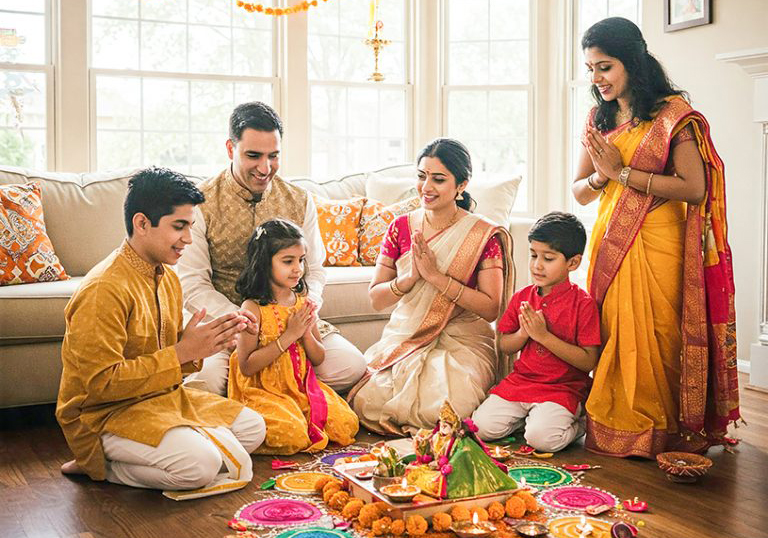
For festivals: Bright silks and jewelry are welcomed, symbolizing divine celebration.
For mourning: White, simple, unadorned clothes — expressing detachment and prayer for peace.
The goal is always the same: to honor the sacred moment through mindful dressing.
HINO — Appearance Without Awareness
In modern times, it’s easy to appear religious without living spiritually. Many wear sacred symbols — the rudraksha mala, tilak, or even saffron clothing — but use them for style, not surrender.
Being a “HINO” isn’t about disbelief; it’s about disconnection.
When symbols are used as identity statements rather than tools for inner transformation, spirituality becomes performance.
Common Traits of “HINO” Culture:
Using religious identity for social approval or political signaling.
Following festivals superficially without understanding their significance.
Flaunting symbols without ethical conduct (ahimsa, satya, seva).
Forgetting the purpose of dharma — self-realization and service.
“To wear saffron without burning ego is like lighting a lamp without oil.”
The true Sanatani, on the other hand, wears meaning, not makeup.
Every garment, every symbol, every color serves a spiritual reminder: “I am a seeker walking towards the Divine.”
How to Move from Symbol to Substance
Understand what you wear. Know the meaning of tilak, mala, or dhoti.
Practice small daily rituals. Morning prayers, meditation, or reading a verse.
Live the values. Kindness, discipline, and compassion are the real uniform of dharma.
Avoid judging others. Dharma is lived differently across regions and stages of life.
Adopting the Sanatani Dress in Modern Life
Many modern Sanatanis live in cities, offices, and universities. It’s not always practical to wear a dhoti or sari daily — and that’s perfectly fine. Sanatana Dharma is flexible; it values bhava (feeling) over form.
Practical Ways to Express Your Faith:
Wear simple, sattvic colors (white, yellow, beige) that reflect calm energy.
Keep a small tilak during morning prayer, even if you wipe it before work.
Use natural fabrics — cotton, khadi, or linen.
Dedicate one clean outfit just for puja or meditation.
On special days or festivals, wear traditional dress fully and consciously.
Even a modern shirt or kurta can be spiritual when worn with humility and awareness.
Modern Adaptations and Sensitivity
Hinduism embraces diversity. From the Himalayas to Kanyakumari, every region has its own sacred style — and all are valid expressions of dharma.
While adopting Sanatani dress:
Be respectful of all castes, genders, and sects.
Don’t gatekeep who “looks” spiritual.
Understand that spiritual clothing is inclusive; devotion has no gender or fashion limit.
The best dress is one that keeps your body comfortable and your mind pure.
Key Takeaway: From Fabric to Faith
The true dress code of a Sanatani is simplicity outside, sanctity inside.
Whether you wear a dhoti or jeans, a sari or salwar, your intention determines its purity.
“Outer cleanliness pleases the world. Inner purity pleases God.”
So before dressing the body, dress the mind — with humility, gratitude, and awareness.
Final Thoughts
The outer dress of a Sanatani is never mere fabric; it is the reflection of a disciplined, devoted soul.
When you wear your dhoti, saree, or tilak with awareness and reverence, each fold, color, and symbol becomes a living prayer — a vibration of dharma in motion.
The problem is not modern clothing, but wearing devotion as a show, as HINO often do — adorning symbols without embodying their meaning. True Sanatanis do not wear saffron, tilak, or sacred threads for applause, trends, or identity; they wear them as a reminder to live dharmically, humbly, and consciously.
Be a Sanatani in thought, word, and attire. Let your dress speak devotion, not display. Let it reflect a heart surrendered to dharma, not a mind chasing appearances. That is the true mark of a Hindu — timeless, aware, and eternally rooted in sacred tradition.
Jai Sanatan! Jai Dharma!


Comments