Ravana Kanwar Yatra: Did Ravana Start This Ancient Tradition?


Every year during Shravan, thousands of devotees take to the roads carrying decorated kanwars filled with sacred Ganga water. Walking long distances, often barefoot, they travel to Shiva temples to offer the water during Jalabhishek. The pilgrimage is known as the Kanwar Yatra, and for many devotees, it is not simply a religious journey but an expression of faith, discipline and devotion to Lord Shiva.
But one question often comes up: Who started the Kanwar Yatra? Many traditions associate its origin with Ravana, while others connect the practice with figures such as Parashurama. However, there is no single, universally accepted account that identifies one person as the founder of the Kanwar Yatra.
What Is the Kanwar Yatra?
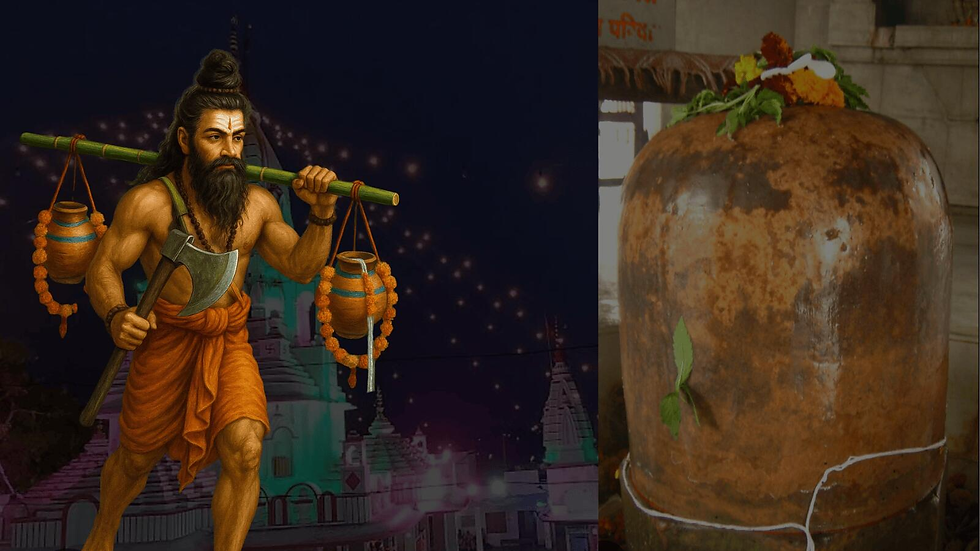
The Kanwar Yatra is a pilgrimage performed mainly during the Hindu month of Shravan. Devotees, known as Kanwariyas, collect sacred water from rivers such as the Ganga and carry it in containers suspended from both ends of a bamboo or similar pole called a kanwar. They then take this water to a Shiva temple and offer it to the Shiva Lingam.
The physical journey is an important part of the practice. Devotees follow a self-imposed discipline while carrying the sacred water, and the effort involved in completing the journey is considered part of their devotion. Haridwar, Gaumukh, Gangotri and Sultanganj are among the important places from where devotees traditionally collect water before travelling to different Shiva temples.
What Is the Connection Between Ravana and Kanwar Yatra?
The connection between Ravana and the Kanwar tradition comes from popular Hindu mythology and regional traditions. According to one widely circulated belief, Ravana was a great devotee of Lord Shiva and carried sacred Ganga water to perform Jalabhishek.
The story is often linked with the Samudra Manthan. According to Hindu mythology, when the cosmic ocean was churned, a deadly poison called Halahala emerged. Its destructive power threatened the universe, so Lord Shiva consumed it to protect creation. The poison remained in his throat, turning it blue and giving him the name Neelkanth.

A popular tradition holds that sacred water was offered to Shiva to soothe the effects of the poison. Ravana, who was known for his intense devotion to Shiva, is believed in some regional traditions to have carried Ganga water and offered it to the deity. This belief is one of the reasons Ravana is sometimes described as an early Kanwariya.
However, this should be understood as a mythological tradition rather than a historically established fact. There is no conclusive ancient text that identifies Ravana as the founder of the modern Kanwar Yatra.
Did Ravana Actually Start the Kanwar Yatra?
There is no definitive evidence to say that Ravana started the Kanwar Yatra in the form in which it is practised today. The tradition appears to have developed through several layers of mythology, pilgrimage practices and regional beliefs.
The Ravana story is important because it connects the act of carrying sacred water with intense devotion to Shiva. But the modern pilgrimage—with large groups of Kanwariyas travelling along established routes during Shravan—is the result of a much longer cultural development.
This distinction matters because many popular accounts present Ravana as the unquestioned first Kanwariya, while the available textual and historical evidence does not establish this conclusively.
How Did the Tradition of Jalabhishek Begin?
Offering water to Shiva is much older and broader than the Kanwar Yatra itself. Jalabhishek is a traditional form of Shiva worship in which water is poured over the Shiva Lingam as an offering of devotion.
Water has a strong symbolic connection with purification and life, while the association with Shiva becomes especially significant in the story of Halahala. After Shiva consumes the poison during Samudra Manthan, traditions about offering cooling substances, particularly water, become connected with his worship.

Over time, bringing water from a sacred river and offering it to Shiva became an important form of pilgrimage-based devotion. The Kanwar Yatra can be understood as a later expression of this broader tradition.
What Does the Skanda Purana Have to Do With It?
References to sacred water and Shiva worship can be found within the wider Puranic tradition, but that does not mean the modern Kanwar Yatra is directly described in the Puranas.
The Skanda Purana contains traditions concerning pilgrimage, sacred places, rivers and the worship of Shiva. These traditions show the long-standing religious importance of travelling to sacred sites and offering water in Shiva worship. However, there is no straightforward Puranic account describing the modern Kanwar Yatra with Kanwariyas carrying decorated vessels over their shoulders during Shravan.
Therefore, it is more accurate to say that the religious foundations behind the practice are ancient, while the organised form of the Kanwar Yatra developed over time.
Why Is Parashurama Also Connected With the Tradition?
Ravana is not the only figure associated with the early practice of carrying sacred water to Shiva. Some regional traditions connect Lord Parashurama with the worship of Shiva Lingams and the offering of sacred water.
One important example is Puramahadev in Uttar Pradesh, where local traditions connect the temple with both Ravana and Parashurama. According to one tradition, Ravana brought water for Shiva worship, while another associates the establishment and worship of the Shiva Lingam with Parashurama.
These stories illustrate how the origin of the Kanwar tradition differs across regions. Rather than pointing to one universally accepted founder, they reflect different local memories surrounding Shiva worship and sacred-water offerings.
Is Shravan Kumar Connected With the Kanwar?
The name Shravan Kumar is sometimes brought into discussions about the Kanwar because of the structure he is traditionally described as carrying while taking his blind parents on pilgrimage.
The Ramayana tradition describes Shravan Kumar carrying his parents using a pole with loads positioned on either side. The basic arrangement resembles the physical design of a kanwar.
However, this similarity does not establish that Shravan Kumar started the Kanwar Yatra. His story is better understood as an example of an older tradition of carrying people or objects using a balanced shoulder-borne structure.
The modern Kanwar tradition has its own religious meaning connected with carrying sacred water to Shiva.
Why Do Kanwariyas Carry Ganga Water?

For Kanwariyas, Ganga water is not simply water collected from a river. The Ganga holds an important place in Hindu religious tradition and is regarded as sacred.
Collecting the water and carrying it over a long distance transforms the journey into an act of devotion. The physical effort, discipline and commitment required to complete the pilgrimage become part of the offering.
The water is eventually offered to Shiva through Jalabhishek, connecting the sacred river with the worship of Mahadev.
Why Is the Kanwar Yatra Performed During Shravan?
Shravan is traditionally considered one of the most important months for worshipping Lord Shiva. Temples across India see increased devotional activity during this period, and offering water to Shiva becomes especially significant.
The monsoon season also plays an important cultural role in the timing of the pilgrimage. Over generations, Shravan became closely associated with Shiva worship, fasting, temple visits and sacred journeys.
The Kanwar Yatra developed within this larger religious atmosphere and gradually became one of the most prominent Shravan pilgrimages in North India.
How Did the Kanwar Yatra Become a Massive Pilgrimage?
The Kanwar Yatra has evolved considerably over time. What may once have been more localised pilgrimage practices have developed into large-scale annual journeys involving devotees from several states.
Haridwar is one of the most important starting points, with devotees collecting Ganga water before travelling back to their respective regions. Sultanganj is another major pilgrimage centre, particularly for devotees travelling to Baba Baidyanath Dham in Deoghar.
The growth of roads, transportation, communication and pilgrimage infrastructure has also made it possible for the tradition to expand on a much larger scale. Today, the Kanwar Yatra is both a major religious pilgrimage and a significant cultural event.
What Is the Spiritual Meaning of Carrying a Kanwar?
At its heart, the Kanwar represents a devotee's commitment to Lord Shiva. The water is collected with a specific intention and carried carefully until it reaches the chosen Shiva temple.
The journey requires patience, physical endurance and discipline. For devotees, these hardships are not separate from worship; they are part of it.
This is why the Kanwar Yatra is better understood not simply as transporting Ganga water from one place to another, but as a journey of devotion in which the physical effort becomes part of the offering.
So, Who Was the First Kanwariya?
There is no definitive answer.
Ravana is regarded as an early devotee associated with carrying sacred water to Shiva in popular tradition. Parashurama is connected with similar practices in regional traditions, while ancient Hindu traditions more broadly establish the importance of pilgrimage, sacred rivers and Jalabhishek.
What can be said with greater confidence is that the modern Kanwar Yatra emerged from a combination of these older religious traditions and evolved over generations into the pilgrimage seen today.
The story of Ravana therefore remains an important part of the mythological understanding of the Kanwar tradition, but it should not be presented as proven historical evidence of who started it.
The Deeper Meaning of Ravana Kanwar Yatra
The Kanwar Yatra ultimately goes beyond the question of who carried the first kanwar. Its enduring significance lies in the relationship between devotion and effort.
A devotee collects sacred water, carries it for miles and finally offers it to Shiva. The distance becomes part of the prayer, the discipline becomes part of the devotion, and the final Jalabhishek becomes the completion of the vow.
That is why the Kanwar Yatra continues to hold such a powerful place in Shravan traditions.
Whether the story is told through Ravana, Parashurama or the millions of Kanwariyas who undertake the journey today, the central idea remains the same: faith is expressed not only through what a devotee offers, but also through the journey they are willing to undertake for it.
Har Har Mahadev.


Comments