Purushottam Maas/Adhik Maas/Malmas 2026: Is This the Hindu Sanatan Leap Year?

What is Purushottam Maas 2026? Learn why Adhik Maas is called the Hindu leap year, its spiritual significance, Vishnu devotion, and sacred rituals in Sanatan tradition.
Purushottam Maas 2026, also known as Adhik Maas or Malmas, is one of the rare and spiritually powerful periods in the Hindu calendar. Many people compare it to a “Hindu Sanatan Leap Year” because an extra lunar month is added to balance time and cosmic calculations. But what exactly is Adhik Maas, why does it happen, and why is it considered so sacred? From fasting and charity to mantra chanting and devotion, Purushottam Maas is believed to multiply the fruits of good karma.

Why Does Purushottam Maas Occur?
The Vedic calendar system is one of the most scientifically interesting calendar systems in the whole world because it brings the solar calendar and the lunar calendar together.
The solar calendar roughly has 365 days in each year and the lunar calendar has roughly 354 days. This results in a gap of almost eleven days a year. This results in almost the gap of a full month after three years have passed.
To balance this gap, an additional lunar month is added. This extra month is called Adhik Maas or Purushottam Maas.
In the English calendar, a leap year adds one extra day in February every four years. Similarly, the Sanatan calendar adds one full month after about every 32 months. This is why many devotees lovingly call it the “Hindu Sanatan leap year.”
The brilliance of this ancient calculation shows how advanced Vedic astronomy truly was. Platforms like Sanatangyan often highlight how deeply scientific and spiritual the Hindu calendar system is.

Why Is It Called Purushottam Maas?
Initially, this extra month was considered spiritually neglected because no major auspicious festivals, marriages, housewarming ceremonies, or worldly samskaras were traditionally performed during this period. Due to this, the month became known as “Malmas,” where “mal” symbolically referred to impurity or neglect.
According to Vaishnava traditions, the presiding deity of this month became sorrowful and approached Lord Krishna for protection and mercy. Due to this gap, Lord Krishna compassionately accepted the additional month and blessed it with His name — Purushottam — which means the Supreme Divine Person.
Therefore, now Adhik Maas is called Purushottam Maas and is considered the most beneficial month for bhakti, chanting, charitable works and devotion.
A beautiful verse glorifies the Lord as Purushottam:
पुरुषोत्तमः परमात्मा सर्वलोकमहेश्वरः।
The Supreme Lord Purushottam is the Supreme Soul and the Lord of all worlds.
This transition to become a Purushottam Maas has given a very important spiritual lesson — that in the grace of God even something that may have been neglected can become divine.

The Narasimha Story Connected to Adhik Maas
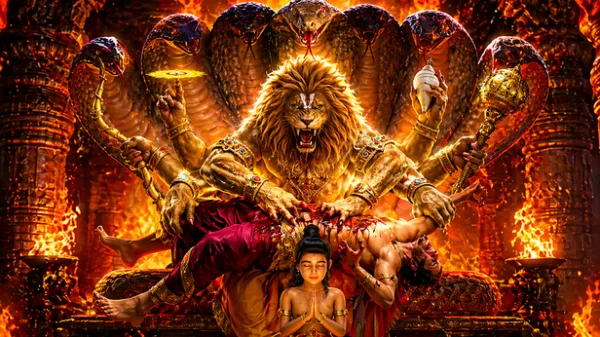
A second significant legend related to the spiritual value of Adhik Maas is that of the Narasimha incarnation of the Lord Vishnu.
According to the scriptures, the demon King Hiranyakashipu received ayagya for protection from Lord Brahma, to prevent him from dying, one request was that he could not die in the months created by Brahma.
For this reason, Lord Narasimha came to maintain dharma and protect Prahalad during Adhik Maas, which is the intercalary thirteenth month, outside of the dharma calendar, to destroy Hiranyakashipu.
This story symbolizes that divine justice always transcends material calculations and ego.
परित्राणाय साधूनां विनाशाय च दुष्कृताम्।
धर्मसंस्थापनार्थाय सम्भवामि युगे युगे॥
The Lord appears age after age to protect devotees, destroy evil, and re-establish dharma.
Why Is Purushottam Maas Spiritually Powerful?
While worldly activities are often avoided during this month, spiritual activities are considered millions of times more beneficial.
The scriptures encourage devotees at this point in time to utterly and specifically dedicate themselves to bhakti, self-discipline, charity and God remembrance during this rare month of Purushottam Maas.
The Padma Purana glorifies devotional practices during this period:
अल्पस्य हेतोर्बहुधा फलप्रदम्
“Even a small spiritual effort during this month gives immense results.”
Because this sacred opportunity comes only once every few years, devotees consider it a divine invitation for inner purification.
According to Sanatangyan traditions and Vaishnava teachings, even the simplest form of devotion offered during the month of Purushottam Maas carries immense spiritual blessings.

How to Observe Purushottam Maas Vrata in 2026
In addition to this, Purushottam Maas is considered to be one of the best periods of time to practice spiritual discipline and devotion. It is also believed that any minor amount of devotional expression made during this month will provide multiplied benefits spiritually.
1. Chant the Holy Names
Devotees are encouraged to chant continuously, especially the Hare Krishna Mahamantra:
हरे कृष्ण हरे कृष्ण कृष्ण कृष्ण हरे हरे।
हरे राम हरे राम राम राम हरे हरे॥
This chanting purifies the heart and increases devotion.

2. Worship Tulsi Devi
Devotees will generally offer water to Tulsi, perform parikrama and pray on a daily basis. The worship of Tulsi during the month of Purushottam Maas is regarded as very auspicious.
3. Read Bhagavad Gita and Bhagavatam
Many devotees take resolution (sankalp), to complete the reading of the scriptures during Purushottam Maas.
4. Give Charity
Giving of donations for spiritual purposes, food distribution, or temple service, is believed to bring tremendous blessings.
5. Take Personal Spiritual Resolutions
Examples include:
Eating only prasada
Avoiding negativity and anger
Attending daily satsang
Increasing meditation and prayer
According to Sanatangyan, the major purpose of Purushottam Maas is to accomplish inner purity and to once again establish a connection with true divine consciousness.

Purushottam Maas 2026 has been described not only as a “Hindu Sanatan leap year,” but also as a rare opportunity for dhaan (Charity), shudhi (Purification), and being ori (spiritually involved). The sacred month of Purushottam Maas is a reminder to all that through even a small amount of bhakti (Devotion), one will receive immense bhagya (Forthunes) by the anugraha (Grace) of Lord Vishnu.

A beautiful card about the jap counting.
Super 🤩