Jhiri Village’s Silent Revolution: How Did Sanskrit Become a Living Language Here?
- Chinmayi Devi Dasi

- Dec 13, 2025
- 4 min read
How did Sanskrit return to daily life in Jhiri village? Explore the silent revolution that turned an ancient language into living speech.

In today’s fast-moving world, languages disappear quietly. Words fade, traditions weaken, and ancient tongues survive only inside books and classrooms. But in the heart of Madhya Pradesh, one small village chose a different path.
Jhiri village did not let Sanskrit die. It brought it back to life.
Located about 45 kilometers from the Rajgarh district headquarters, Jhiri is now known across India as a rare place where Sanskrit is spoken daily by everyone—children, elders, women, and men. This did not happen through government orders or sudden fame. It happened through patience, belief, and one silent revolution.
Jhiri Village Where Sanskrit Is Everyday Speech
In Jhiri, mornings do not begin with “Good Morning.” People greet each other with “Namo Namah.” Simple conversations in homes, fields, temples, and village squares flow naturally in Sanskrit.
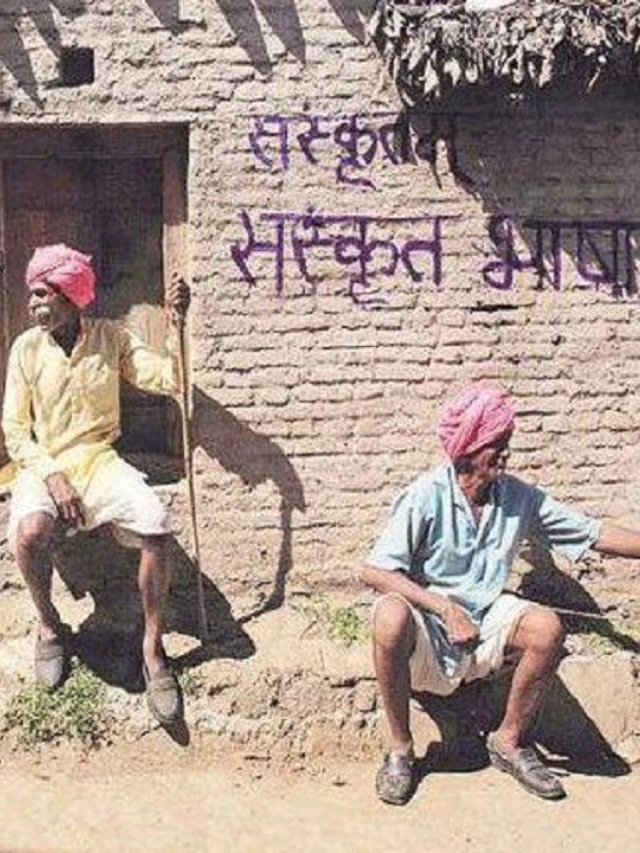
The walls of houses carry Sanskrit words and verses. Many homes proudly display Sanskrit names written at their entrances. During weddings and festivals, women sing songs in Sanskrit. Children speak it while playing. Elders discuss daily matters using the same ancient language.
For the nearly residents of Jhiri, Sanskrit is not a subject to study. It is a way of living and speaking.
The Silent Beginning in 1885
The roots of this transformation go back to the year 1885.
At a time when Sanskrit was slowly becoming limited to scholars and religious texts, a woman named Vimala arrived in Jhiri. She did not come with wealth, power, or authority. She came with a few Sanskrit books and a clear mission: to teach the language to the people.
Her goal was ambitious. She wished to teach Sanskrit to nearly 2,000 villagers. In those days, villagers were busy surviving—farming, managing households, and raising children. Learning a classical language seemed unnecessary and difficult.
Yet, Vimala believed that Sanskrit belonged to the people, not just to books.
Teaching Without a Classroom
Vimala did not open a school or demand attendance. Her method was simple and deeply human.
She spoke to farmers in the fields, teaching them basic Sanskrit words related to farming and daily work. She sat with women in courtyards, introducing simple sentences, greetings, and songs. She gathered children near temples and under trees during the holiday time, turning learning into play and storytelling.
There were no exams, no pressure, and no fear. Sanskrit was introduced slowly, gently, and with respect for village life.
This approach made a difference. The language did not feel foreign. It felt familiar.

One Word at a Time
The change in Jhiri did not happen quickly. It happened one word at a time.
At first, villagers only used Sanskrit greetings. Then they began using short sentences. Gradually, Sanskrit entered homes, fields, and community discussions.
Elders took responsibility for passing the language to children. Groups gathered at the temple or village chaupal, where conversations naturally took place in Sanskrit. Learning became part of a daily routine, not a separate task.
Slow progress created strong roots.
Why the Village Chose to Continue
Even after Vimala’s efforts showed results, the real challenge was continuation. Jhiri succeeded because the villagers themselves chose to protect the language.
They often say that Sanskrit sounds beautiful. It brings calmness and respect into conversation. There is a sense of purity and balance in the words.
More importantly, Sanskrit created equality. Everyone spoke the same refined language. This strengthened unity within the village.
The language became a shared identity.

Women and Children as Keepers of Sanskrit
Women played a powerful role in keeping Sanskrit alive in Jhiri. They used the language while singing, during rituals, and in everyday conversations. Sanskrit became part of family life, passed from mothers to children naturally.
Children grew up hearing and speaking Sanskrit from birth. For them, it was not ancient or difficult. It was normal.
Even daughters who married outside Jhiri carried this habit with them. Many began teaching Sanskrit in their new villages, spreading the influence beyond Jhiri.
A Village That Educates Itself
Jhiri does not depend on formal institutions to protect its language. Education happens through conversation, observation, and practice.
There are no expensive tools. No digital screens. Just people speaking to people.
This self-learning model has kept Sanskrit alive for generations.
Attention Without Pride
Over time, Jhiri became a point of curiosity for tourists and visitors to Madhya Pradesh. People come to witness a village where Sanskrit is not ceremonial but practical.
Visitors are often greeted warmly in Sanskrit, which surprises and inspires them.
Yet, the villagers remain humble. Their goal is not attention or fame. Their hope is simple: to protect Sanskrit for future generations.

What Jhiri Teaches Modern India
Jhiri’s story carries a quiet but powerful message. Languages do not survive only through policies or textbooks. They survive when people choose to use them daily. One woman’s dedication, supported by a community’s patience, changed the destiny of an entire village.
In a world where traditions disappear silently, Jhiri’s silent revolution shows that revival is possible.
Sanskrit lives in Jhiri not because it was forced, but because it was loved.
And as long as it is spoken from the heart, this ancient language will continue to breathe through the lanes of this remarkable village.



Comments