Cleansing the Soul Before Welcoming Light: Sanatangyan Reflections on Narak Chaturdashi
- Chinmayi Devi Dasi

- Oct 18, 2025
- 5 min read
Before Diwali’s glow, learn the real reason we celebrate Choti Diwali or Narak Chaturdashi — the day Lord Krishna freed the world from inner and outer darkness.

As the soft glow of countless diyas prepares to pierce the darkness of Diwali night, one sacred morning arrives quietly before it — Narak Chaturdashi, also known as Choti Diwali. It is not just a festival of lamps but a divine reminder: before we welcome light, we must cleanse the soul. This day whispers the timeless Sanatan truth — light can only dwell where impurity has been washed away.
A Sacred Morning: What Is Narak Chaturdashi?
Narak Chaturdashi falls on the fourteenth day of Krishna Pakṣa in the holy month of Kartik, the day before the great Diwali night. Across India, it wears different names: in the North, Choti Diwali; in the South, Naraka Chaturdashi; and in Bengal, it overlaps with Kali Puja, the worship of the fierce Mother who annihilates darkness.
Though customs differ, the soul of the day remains the same — the victory of divine light over the inner hells of ego, ignorance, and cruelty. Before the bright goddess Lakshmi enters our homes, this day asks us to purify our hearts.
The Krishna Story: How Narakasura Fell
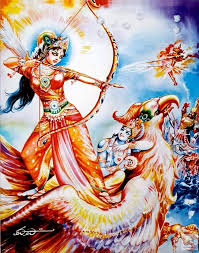
Long ago, a powerful yet arrogant demon-king named Narakasura ruled in Pragjyotishpur. Gifted by the gods, he became cruel: he stole divine earrings, imprisoned 16,000 celestial women, and brought fear to the earth. In response to the suffering, the gods sought the help of Lord Krishna, accompanied by his consort Satyabhāma (an incarnation of Bhūmi Devi, Mother Earth).
Krishna and Satyabhāma mounted their celestial vehicle and confronted Narakasura. After a fierce battle, Satyabhāma delivered the final blow — this fulfilled the prophecy that Narakasura would fall at his mother’s hands. Before dying, he asked Krishna to ensure his death would be celebrated and remembered. Thus the day of his fall became Narak Chaturdashi, the day darkness is destroyed.
Inner Meaning: Map the Myth to the Self
In Sanatan tradition, Narakasura is not only a mythic demon, but a symbol of the darkness that dwells inside every heart.
His arrogance mirrors our ego.
His captivity of 16,000 women represents virtues trapped by our desires — love, compassion, patience, truth.
Krishna is divine consciousness, the higher Self that refuses to give up on us.
Satyabhāma is Shakti, the awakened energy within us that fights wrong.
Together, when consciousness (Krishna) and energy (Shakti) merge, the inner “Narakasura” falls — our ignorance dissolves, our virtues are freed.

Rituals That Purify: From Oil Baths to Diyas
At the heart of Narak Chaturdashi lies the theme of purification — of body, home, and soul.
1. The Pre-dawn Oil Bath (Abhyang Snān)
Traditionally, devotees wake before sunrise, apply fragrant ubtan (turmeric, gram-flour, sandalwood) and oil over their body, and then take a sacred bath. This is no mere hygiene – it is symbolic cleansing: the oil draws out impurities; the bath washes them away. Spiritual meaning: cleansing karmic dust.
Imagine: you pour water over your head, feel every drop washing away your fears, your jealousy, your anger, your laziness. You emerge reborn, ready for divine light.
2. Cleaning and Lighting Lamps
Homes are cleaned, corners scrubbed, gates opened. Lamps (diyas) are lit in every nook. The act is not decorative — it is sacred. Each diya is a flame of the ātman, the individual soul shining again after darkness is removed.
Light one lamp in your prayer-corner, and whisper silently:
“May this flame burn my ignorance and awaken wisdom.”
3. Offering Food and Charity
In Sanatan tradition, dāna (charity) is the most effective cleansing of karmas. Offering food to someone in need, feeding animals, donating clothes — gratitude for what we have, humility before what we receive.
This outward generosity reflects the inner generosity we must cultivate — giving of our best self.
4. Fewer Fireworks, More Consciousness
Traditionally, small anars (sparkling fountains) were lit to mark joy. Today, instead of loud fireworks, you can light an extra lamp, plant a sapling, or share sweets quietly. The essence: light dissipates darkness; noise does not.
A Guided Practice: Cleansing the Soul (Step-by-Step Ritual)
Here’s a gentle, Sanatangyan morning sādhanā you can try this year:
Step 1 – Wake before dawn
Rise before sunrise, when silence is deepest and the world still sleeps. Sit for a moment and breathe in gratitude.
Step 2 – Reflect and Release
Take a notebook. Write three qualities or habits you wish to release this year — perhaps anger, procrastination, or self-doubt. Fold the paper. Keep it near your diya.
Step 3 – Oil and Ubtan
Massage oil (mustard or sesame) gently on your body. As you do, chant silently:
“May this oil draw out my impurities. May I emerge radiant in body and mind.”
Then bathe mindfully, feeling every drop of water as divine grace.
Step 4 – Light the diya and Sankalpa
After your bath, light a diya and make a Sankalpa (sacred resolve):
“On this Narak Chaturdashi I cleanse my heart of darkness and welcome divine light. I choose truth, compassion, and strength.”
Burn the folded paper near the flame (safely) — letting go of what you wrote.
Step 5 – Chant and Meditate (5-10 minutes)
Chant softly:
“Om Namo Bhagavate Vasudevaya”
(“I bow to the Divine Light within and around me.”)
Feel light entering your heart with each breath. Sit quietly in that radiance.

Spiritual Lessons: Why This Day Matters More Than Lamps
We cannot invite light unless we clean the room of the heart first. Narak Chaturdashi is the moment before dawn when the soul chooses to awaken.
Satyabhāma’s role reminds us of the strength of the divine feminine — Shakti rises whenever dharma is threatened.
Every evil dies when awareness and compassion unite. Krishna’s wisdom + Satyabhāma’s courage = awakening.
Freedom of the 16,000 women is more than myth — it is liberation of our virtues that were chained by ignorance.
The oil bath is symbolic rebirth. We begin again — pure, fragrant, light-filled.
Thus, this day isn’t only about defeating outer demons; it is about confronting our own inner Narakasura— jealousy, arrogance, laziness, fear — and surrendering them to the divine flame.
तमसो मा ज्योतिर्गमय
Tamaso mā jyotirgamaya
“Lead me from darkness to light.”
This ancient prayer from the Brihadaranyaka Upanishad perfectly embodies the essence of Narak Chaturdashi. It is a call to the inner Krishna — the light of consciousness — to lift us from tamas (darkness, ignorance) into jyoti (illumination).
Closing Reflection & Call to Inner Light
Before Diwali’s glitter dazzles the eyes, Narak Chaturdashi invites us to turn inward. The outer cleansing of homes is but a reflection of the deeper cleansing within. As diyas glow across the land, remember — the brightest lamp is the one burning in your heart.
Take a moment to reflect:
Which habit or thought has kept you in your own “narak” this year?
What small daily action will help you live in more light?
How will you bring light into someone else’s life today?

This Diwali, do not just decorate your home — sanctify your soul. Let the story of Krishna and Satyabhāma be lived within you. May you awaken the Shakti that destroys ignorance and the Krishna that restores peace.
“When the heart is clean, even a single diya becomes a temple.”
ॐ नमो भगवते वासुदेवाय
Meaning: “I bow to the divine light within and around me.”
Let each repetition burn a little more of your inner shadow.
From the darkness of Narak to the dawn of Diwali, may your soul shine with divine radiance. Tamaso mā jyotirgamaya.
मन के नरक को जीतो, तभी दीपावली पूर्ण बनती है।


Comments