16 Hindu Sanskars: Why These Ancient Rituals Guide a Soul from Birth to Moksha


16 Hindu Sanskars: Sanatan Dharma views human life as a sacred journey rather than a mere biological existence. According to Hindu scriptures, the soul passes through millions of life forms before attaining a human birth. This human life is considered extremely precious because it offers the opportunity to attain Moksha—freedom from the cycle of birth and death.
To help an individual progress spiritually, morally, and socially, our sages established sixteen sacred rites known as the Shodasha Sanskars. The word Sanskar means refinement, purification, and transformation. These rituals purify the body, mind, intellect, and soul while guiding a person through every important stage of life.
Hindu scriptures teach that Sanskars remove the impressions and impurities accumulated from previous births. They help cultivate noble qualities such as righteousness, wisdom, self-discipline, devotion, and compassion. Without Sanskars, a person may struggle with negative tendencies, improper conduct, and lack of spiritual awareness.
1. Garbhadhan Sanskar – The Sacred Beginning
Garbhadhan is the first Sanskar and is performed before the conception of a child. Its purpose is to invite a noble and virtuous soul into the family. Through prayers and sacred rituals, parents seek divine blessings for a healthy, intelligent, and spiritually inclined child.
This Sanskar emphasizes that the creation of life is a sacred responsibility rather than a mere biological process.
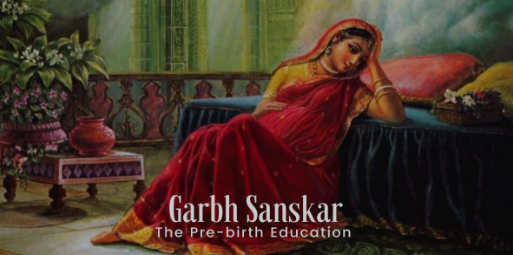
2. Punsavan Sanskar – Blessing the Child in the Womb
Performed during pregnancy, Punsavan Sanskar supports the physical and mental development of the unborn child. Vedic mantras are chanted to invoke divine protection and positive energy.
The ritual reflects the belief that spiritual vibrations and the mother's thoughts influence the growth and character of the baby.
3. Simantonnayana Sanskar – Protecting Mother and Child
This Sanskar is generally performed during the fourth, sixth, or eighth month of pregnancy. It focuses on the well-being of both mother and child.
Since the unborn child absorbs the mother's emotions, thoughts, and behavior, the ceremony encourages the mother to maintain purity in conduct, speech, thoughts, and spiritual practices.
4. Jatakarma Sanskar – Welcoming the Newborn
Jatakarma is performed immediately after the birth of a child. The ritual seeks to remove any impurities associated with birth and life in the womb.
Prayers are offered to family deities and ancestors for the child's protection, health, and long life. Traditionally, a small touch of honey and ghee is given to the infant while sacred blessings are recited.
5. Namkaran Sanskar – The Naming Ceremony
Namkaran is usually performed on the eleventh day after birth. Learned priests prepare the child's birth chart and suggest an auspicious name.
In Hindu tradition, a name is not merely an identity; it carries spiritual vibrations and influences the personality and destiny of an individual.

6. Nishkraman Sanskar – The Child's First Outing
The word Nishkraman means "going out." During the fourth month after birth, the child is taken outside the home and introduced to nature.
The child receives blessings from the five great elements—Earth, Water, Fire, Air, and Space. Prayers are offered for health, strength, and protection throughout life.
7. Annaprashan Sanskar – The First Solid Food
Annaprashan is performed when the child begins consuming solid food, usually around the sixth or seventh month.
The ceremony includes the worship of Goddess Annapurna, the deity of nourishment. It symbolizes gratitude for food and prayers for a healthy and prosperous life.
8. Chudakarma (Mundan) Sanskar – The First Haircut
This Sanskar is generally performed between one and five years of age. The child's hair is shaved for the first time.
According to tradition, this ritual removes negative influences from previous births and promotes physical cleanliness, intellectual growth, and spiritual purity.
9. Vidyarambha Sanskar – Beginning of Education
Vidyarambha marks the child's formal entry into learning and education.
The child seeks the blessings of Goddess Saraswati, the goddess of wisdom and knowledge. It inspires a lifelong love for learning and intellectual growth.
10. Karnavedha Sanskar – Ear Piercing Ceremony
In this ritual, the ears of the child are pierced, traditionally using a gold needle.
Apart from cultural significance, ancient scholars believed that ear piercing stimulates important energy points and contributes to better health, concentration, and memory.
11. Upanayana Sanskar – The Second Birth
Upanayana is one of the most significant Sanskars. During this ceremony, the child receives the sacred thread known as Yajnopavita.
After this initiation, the individual is called a Dwij or "twice-born." The sacred thread symbolizes responsibility, discipline, self-control, and commitment to spiritual learning.
12. Vedarambha Sanskar – Beginning of Vedic Learning
Following Upanayana, the child formally begins the study of the Vedas and sacred knowledge.
The objective is not only academic education but also understanding truth, duty, morality, and the spiritual principles of life.
13. Keshanta Sanskar – Cultivating Self-Discipline
Keshanta is observed during the student's life. It symbolizes self-control and dedication to Brahmacharya, the disciplined stage of learning.
The ritual reminds young individuals to channel their energy toward knowledge, character building, and spiritual growth.
14. Samavartana Sanskar – Completion of Education
Samavartana is performed when a student completes education and returns from the Gurukul.
It marks the transition from student life to responsible participation in society. The graduate receives blessings to use knowledge for the welfare of family, society, and humanity.
15. Vivaha Sanskar – The Sacred Marriage
Marriage is among the most important Sanskars in Sanatan Dharma.
In the presence of the sacred fire, the bride and groom take vows to support each other in fulfilling their spiritual, social, and family responsibilities. Vivaha is not merely a social contract but a sacred partnership dedicated to Dharma.

16. Antyeshti Sanskar – The Final Farewell
Antyeshti, or the last rite, is performed after death. The physical body is offered to the sacred fire, symbolizing its return to the five elements of nature.
This Sanskar honors the soul's onward journey and reminds us that the body is temporary while the soul is eternal. Prayers are offered for peace and liberation of the departed soul.
Spiritual Significance of the Sixteen Sanskars
The sixteen Sanskars are much more than rituals. They are a complete system for refining human life. They guide an individual from conception to the final journey, helping develop noble qualities such as truthfulness, discipline, devotion, wisdom, humility, and compassion.
These Sanskars purify the soul at physical, mental, and spiritual levels. They strengthen family bonds, preserve cultural values, and connect individuals with divine consciousness.
16 Hindu Sanskars: Conclusion
The Shodasha Sanskars represent the timeless wisdom of Sanatan Dharma. They remind us that life is a sacred opportunity for growth, self-purification, and God-realization. Every Sanskar serves as a milestone on the path of spiritual evolution.
In today's fast-changing world, these ancient traditions continue to offer guidance, meaning, and direction. By understanding and respecting the sixteen Sanskars, we preserve a priceless spiritual heritage and move closer to the ultimate goal of life—Moksha, eternal freedom and union with the Divine.


Comments