Why Kanya Pujan Is the Heart and Soul of Navratri 2025: A Tribute to Feminine Divinity
- Chinmayi Devi Dasi

- Sep 30, 2025
- 5 min read
Kanya Pujan: Celebrate Navratri’s finale by worshipping young girls as living goddesses of strength and purity.
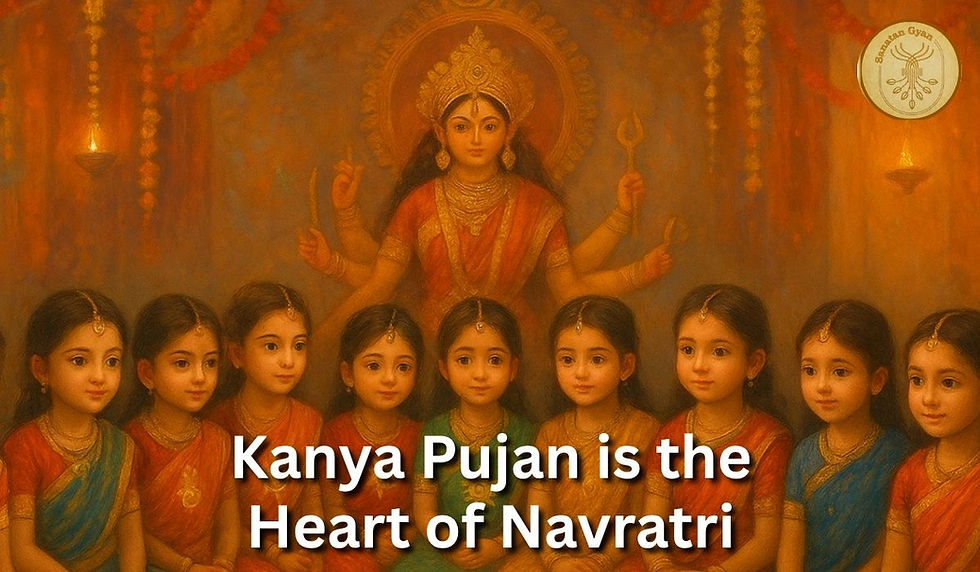
Navratri, the nine-night celebration of Maa Durga, is one of the most spiritually vibrant festivals in Hinduism. Each day honors a unique form of the goddess, from the serene Shailputri to the fierce Kalaratri, representing creation, protection, destruction, and wisdom. As devotees immerse themselves in prayers, fasting, and devotion, the festival builds energy and anticipation. Yet, it is on the tenth day, known as Vijayadashami or simply the last day of Navratri, that the most heart-touching and spiritually significant ritual takes place: Kanya Pujan.
Kanya Pujan is not just a ritual—it is a living celebration of the divine feminine, a reminder that Shakti (cosmic energy) is present in every girl and woman. This sacred practice teaches humility, gratitude, and devotion, encouraging devotees to honor the innocence, purity, and potential embodied in young girls.
The Spiritual Meaning Behind Kanya Pujan
In Sanskrit, “Kanya” means virgin or pure, and “Pujan” means worship. In Kanya Pujan, young girls—typically aged 2 to 10—are worshipped as the living forms of Maa Durga. Their innocence, untainted by the complexities of adulthood, reflects the primal Shakti that flows through all creation.
As the ancient saying goes:
“यत्र नार्यस्तु पूज्यन्ते रमन्ते तत्र देवताः।”
(Where women are honored, divinity dwells.)
Through this ritual, devotees recognize that divinity is not only in temple idols or myths—it lives among us, in every girl, every woman, and in the purity of their hearts. By washing their feet, offering food, and presenting gifts, devotees are not merely performing a ceremony; they are connecting with the essence of the goddess herself.
The Ritual of Kanya Pujan
Kanya Pujan is a beautiful blend of devotion, symbolism, and celebration. The ritual begins with inviting the girls, often dressed in festive attire, into the home or temple space. Devotees wash their feet, an act that symbolizes purification and reverence. Then, they are offered a meal—usually halwa, puri, and chana—each item carrying symbolic meaning:
halwa for sweetness, puri for fulfillment, and chana for strength.
After the meal, devotees present gifts, often clothes, money, or sweets, and seek the girls’ blessings. The little hands, sticky with sweets, are lifted in a gesture of grace. This moment is both devotional and heartwarming, a reminder of how worship is as much about giving as it is about receiving.

Regional variations exist across India. In Bengal, for example, the ritual coincides with Durga Puja, where Kanya Kumaris are worshipped as the final day concludes. In Tamil Nadu, Kanya Pujan is linked to Kanya Kumari, the goddess, symbolizing strength and feminine power. Despite regional differences, the core message remains the same: honor the divine feminine in her purest form.
Nine Girls, Nine Goddesses: The Navadurga Connection
In many households, nine girls are invited for Kanya Pujan, representing the nine forms of Maa Durga (Navadurga). Each form embodies a different aspect of Shakti:
Shailputri – Strength and resilience
Brahmacharini – Wisdom and devotion
Chandraghanta – Courage and protection
Kushmanda – Creation and energy
Skandamata – Motherly nurturing
Katyayani – Warrior and destroyer of evil
Kalaratri – Destruction and transformation
Mahagauri – Purity and peace
Siddhidatri – Spiritual fulfillment and blessings
The number nine itself is sacred in Hindu philosophy, symbolizing completion, eternity, and infinite energy. Even if nine girls are not available, worshipping fewer still honors the goddess, as Shakti is boundless and omnipresent.

Stories That Bring Kanya Pujan to Life
The spiritual depth of Kanya Pujan is best understood through stories and legends:
In the Devi Mahatmya, Maa Durga battles and defeats Mahishasura, a demon representing ego, greed, and negativity. This story symbolizes the victory of divine feminine energy over chaos, much like how Kanya Pujan reminds devotees of the strength inherent in purity and innocence.
A folk tale from North India tells of a poor family that welcomed three young girls for Kanya Pujan. Despite having little to offer, they treated the girls with utmost respect and devotion. Soon, prosperity and blessings followed in their household. The story illustrates that selfless service to the divine feminine attracts spiritual and material abundance.
These stories highlight that Kanya Pujan is more than a ritual—it is a living practice of faith, devotion, and empowerment.
“या देवी सर्वभूतेषु मातृरूपेण संस्थिता। नमस्तस्यै नमस्तस्यै नमस्तस्यै नमो नमः॥”
(To the goddess who dwells in all beings as the mother, we bow again and again.)
These shlokas remind devotees that worshipping women and children as divine vessels is a path to spiritual growth, peace, and inner purity.
The Message of Women Empowerment
Kanya Pujan is a powerful symbol of women empowerment. In honoring young girls as embodiments of Maa Shakti, society acknowledges the strength, potential, and divinity in every female life. It teaches that women are not merely nurturers—they are creators, protectors, and powerful forces of transformation.
By celebrating Kanya Pujan, Navratri becomes more than a festival of lights and rituals—it becomes a spiritual reminder that feminine energy is sacred, omnipresent, and essential for the balance of the universe.

Devotees believe that Kanya Pujan brings prosperity, protection, and peace. It is an act of seva (selfless service), where giving without expectation aligns one with the goddess’s nature—nurturing, unconditional, and abundant.
When a devotee bows to a young girl, washes her feet, offers food, and receives blessings, they are not only performing a ritual—they are transforming their own heart, cultivating humility, gratitude, and devotion. It is a cycle of love, energy, and spirituality that nourishes both giver and receiver.

Conclusion: A Living Celebration of Maa Shakti
Kanya Pujan is the heart and soul of Navratri 2025, a living testament to the power of Maa Shakti, feminine divinity, and spiritual purity. Through this ritual, devotees experience a profound connection to the goddess, the universe, and the sacred feminine within themselves.
In Kanya Pujan, there is a silent but powerful message: women are the pillars of creation and guardians of humanity. Each child we honor represents a world of possibility, resilience, and courage. To revere her is to say, with devotion and conviction, that women deserve protection, empowerment, and unshakable respect. It is a celebration of the feminine not as a side note, but as a dominant force that sustains life, inspires generations, and holds the universe in balance. Every blessing she gives is a reminder that the world flourishes when the feminine thrives.
As Navratri concludes, the final message is clear: honor women, respect innocence, nurture potential, and recognize the divine in everyday life.
This Navratri, may Maa Durga bless all devotees with strength, wisdom, and pure devotion:


Comments