Why Is Shivling Prasad Never Eaten? The Hidden Spiritual Truth

What’s the spiritual reason behind not eating Shivling prasad? Learn how Lord Shiva’s renunciation and cosmic symbolism guide this sacred practice.
Shivling offerings are distinct from other deity offerings in that they cannot be consumed by the devotee. This stems from the teachings of Sanatangyan (eternal religion) and Shaivite scriptures, which are based on Lord Shiva's ascetic nature. It's also based on the principle of tyaga (complete surrender). There are deep spiritual truths behind this practice that transcend (appear to walk past) all ritualistic laws and therefore cannot fully be explained by any one set of rules.
Understanding Prasad in Sanatan Dharma
In India, prasad is more than just the food offered to a particular deity; it represents an element of divinity (pure goodness) that has been transformed into a holy thing when given to a god. Eating of prasad has a number of positive effects on human beings, such as purifying one's karma, creating blessings and enhancing one's spiritual connection to the Creator. But with worshipping Lord Shiva, there is a completely different spiritual path based on renunciation, detachment and transcendence.
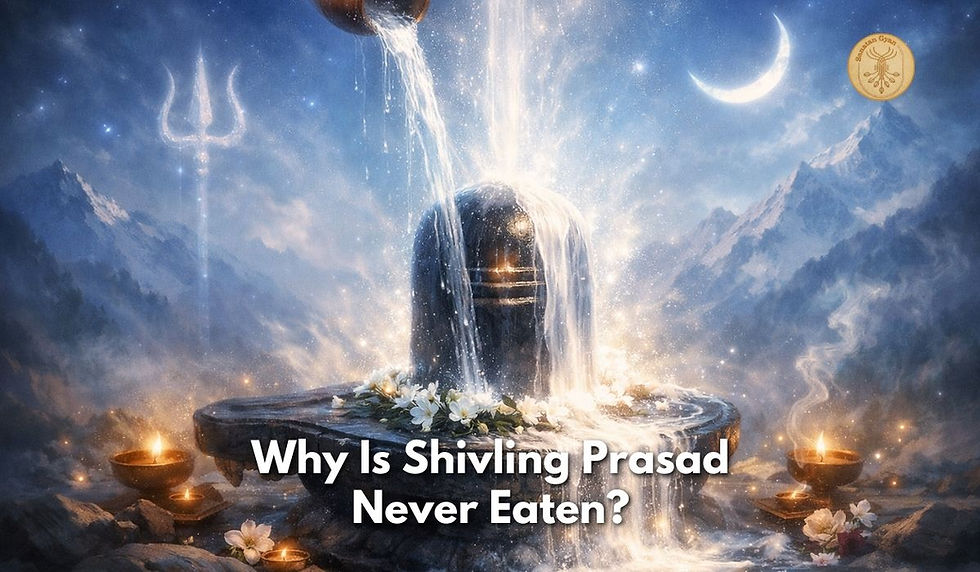
The Shivling is not considered an idol in the conventional sense; rather, it represents a cosmic symbol for creation, dissolution and the infinite consciousness of the universe. As per Sanatangyan, there are a variety of different ways to make offerings to the Shivling than there are for the majority of other gods.

The Shivling: A Form Beyond Form
For the unversed, the Shivling is a symbolic and formless representation of Lord Shiva—beyond attributes, beyond consumption, beyond desire. It represents pure consciousness (Brahman), where creation, preservation, and dissolution merge.
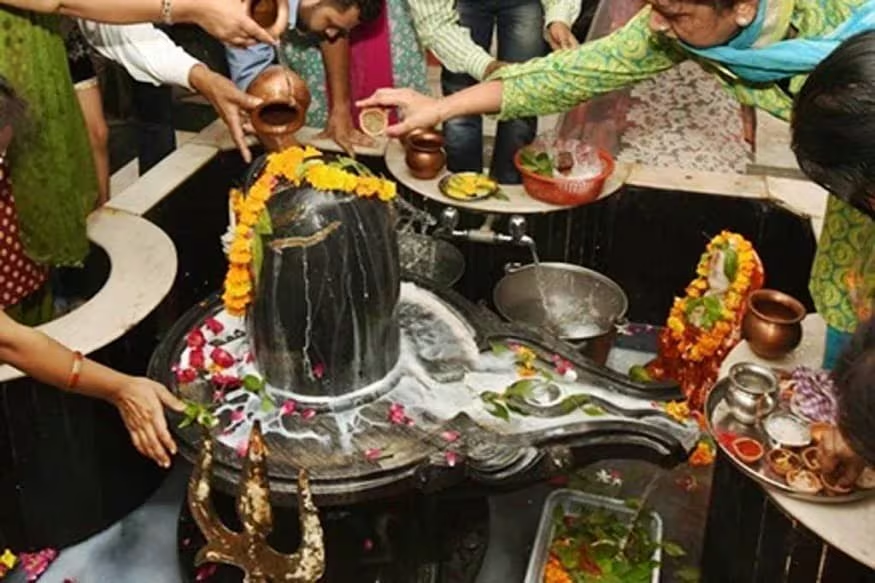
On Sawan and common days of the week, devotees offer water from the Ganges (Gangajal), milk, honey, curd, sandalwood paste, various fruits, and flowers during an Abhishekam (ceremony). Unlike in most temples, the offered items are allowed to be poured away and will not be returned to the devotee as prasad. There is an important spiritual reason for this activity.
निधानं बीजं तमसि परमुच्चैरधिपतिम्। - (Shiva Mahimna Stotram)
Shiva is the supreme source and seed of all existence, beyond darkness and desire.
Thus, anything offered to the Shivling symbolically dissolves the devotee’s ego and ownership. Once offered, it no longer belongs to the human realm.

The Chandeshwar Belief
One famous spiritual rationale behind the above-described practices is in the connection to Chandeshwar, one of the divine attendants of Lord Shiva, and his role as a guard or protector for Lord Shiva. According to legend, Chandeshwar resides near the mouth of Lord Shiva and is the head of the ganas (otherworldly beings).
Anything that touches the mouth of Shiva is believed to belong to Chandeshwar and his clan. Taking it back is seen as spiritually inappropriate.
This concept illustrates modesty and dignity – when anything is presented to Shiva, it remains with him and never comes back to the individual.
“नैवेद्यं शंकरायैव, न पुनर्भोगमर्हति।” — Shaiva Smriti (Traditional Interpretation)
“That which is offered to Shankara is not meant to be taken back for enjoyment.”
Tyaga: The Core Spiritual Principle
Shaivite shashtra states that when the devotee offers food to the Shivling, it indicates a total renunciation of ownership over what was given. Unlike other forms of worship where prasad is consumed to receive divine blessings, worship of Shiva gives priority to eliminating the ego.
This is aligned with Sanatangyan teachings because liberation happens by letting go instead of acquiring.
The Isha Upanishad echoes this idea:
“तेन त्यक्तेन भुञ्जीथा मा गृधः कस्यस्विद्धनम्।” — Isha Upanishad 1
“Enjoy through renunciation; do not covet what belongs to others.”

The Samudra Manthan Connection
In addition, the story of samudra manthan illustrates a deeper principle; during the churning of the ocean, halahal poison was formed and very poisonous to the universe, so Lord Shiva drank this deadly poison to save creation and ultimately became blue-throated (neelkanth).
Shaivite belief holds that the essence of this poison symbolically resides in Shiva’s throat and, by extension, the Shivling. Therefore, offerings that touch the Shivling are not for consumption because they indicate sacrifice and not living (sustenance).
“लोकानां हितकाम्यया विषं पीत्वा नीलकण्ठः।”
“For the welfare of the worlds, he drank poison and became Neelkanth.”
— Shiva Purana

The Hidden Spiritual Message
Not eating Shivling prasad is not about fear or restriction—it is about understanding. Shiva teaches humanity how to renounce, how to sacrifice, and how to transcend attachment.
In this way, the flowing Abhishekam becomes a silent lesson from the shashtra: offer everything, expect nothing.
“शिवो भूत्वा शिवं यजेत्।” — Shaiva Agama
“Only by becoming like Shiva can one truly worship Shiva.”
In general, devotees do not eat Shivling prasad (offering to Lord Shiva) because He practices total renunciation and submission to God, without any involvement of self. There are many teachings within Sanatangyan and shaivite shastra that provide a strong spiritual foundation for the act of tyaga (offering without attachments) and remind devotees that true devotion can only be achieved through the act of giving.

Comments