Why Is Rath Yatra Celebrated? The Divine Meaning Behind the Festival of Chariots
- Chinmayi Devi Dasi

- Jul 4
- 5 min read
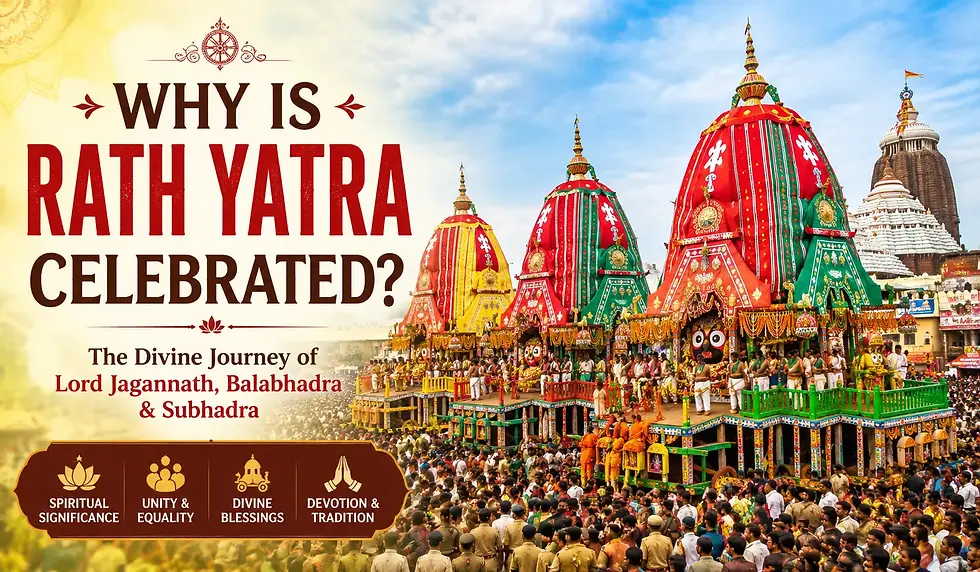
Every year, when the gigantic wooden chariots begin rolling through the streets and thousands of voices echo with chants of "Jai Jagannath!", something extraordinary happens. It is not merely a religious procession. It is not just another festival on the Hindu calendar. Rath Yatra is a moment when the Divine Himself comes out of the temple to meet His devotees.
But have you ever wondered why Lord Jagannath leaves His magnificent temple? Why are there three enormous chariots instead of one? Why do millions of people risk the scorching sun just to pull a rope attached to a wooden chariot?
The answers are far more fascinating than most people realize.
Behind Rath Yatra lies a beautiful story of love, family, equality, compassion, and one of the deepest spiritual messages in Sanatan Dharma. Every ritual, every song, every flower offered during the festival carries centuries of wisdom that continues to inspire millions today.
Rath Yatra: When God Comes to His Devotees
In most temples, devotees travel long distances to seek the blessings of God. Rath Yatra reverses this beautiful tradition.
During this sacred festival, Lord Jagannath, accompanied by His elder brother Lord Balabhadra and His beloved sister Goddess Subhadra, leaves the sanctum of the temple and travels among ordinary people.
This simple act carries an extraordinary spiritual message.
It reminds us that God does not wait for perfection before showering His grace. Whether someone is rich or poor, educated or illiterate, young or old, everyone receives the opportunity to have the Lord's darshan.
Perhaps this is why Rath Yatra is often called the festival where God comes to meet humanity.
The Beautiful Story Behind Rath Yatra
According to ancient Hindu traditions, Lord Jagannath, Lord Balabhadra, and Goddess Subhadra visit the Gundicha Temple every year, which is believed to be the home of their aunt.

This journey represents much more than a family visit.
It symbolizes love, affection, reunion, and the importance of relationships. Even though the Lord is the Supreme Being, He also demonstrates the beauty of family bonds, reminding humanity that love and togetherness are sacred values.
The deities remain at Gundicha Temple for nine days before returning to the Jagannath Temple during the Bahuda Yatra.
Spiritually, this journey represents the soul's movement from worldly life toward divine consciousness and then returning with greater wisdom and blessings.
Why Does Lord Jagannath Come Out of the Temple?
This is perhaps the most touching aspect of Rath Yatra. Traditionally, not everyone had the opportunity to enter temples. Many people were unable to travel due to age, illness, poverty, or social barriers.
Lord Jagannath removes every barrier. Instead of expecting devotees to come to Him, He steps outside His temple.
This powerful act teaches that divine compassion has no boundaries. God's grace belongs to everyone.
It is no coincidence that Lord Jagannath is often called "Patita Pavana," meaning the Savior of all, especially those who feel forgotten or left behind.
Why Are There Three Chariots?
One of the first things visitors notice during Rath Yatra is that there are three magnificent chariots instead of one.
Each chariot belongs to a different deity:
Lord Jagannath
Lord Balabhadra
Goddess Subhadra
Each travels separately while remaining together throughout the journey.
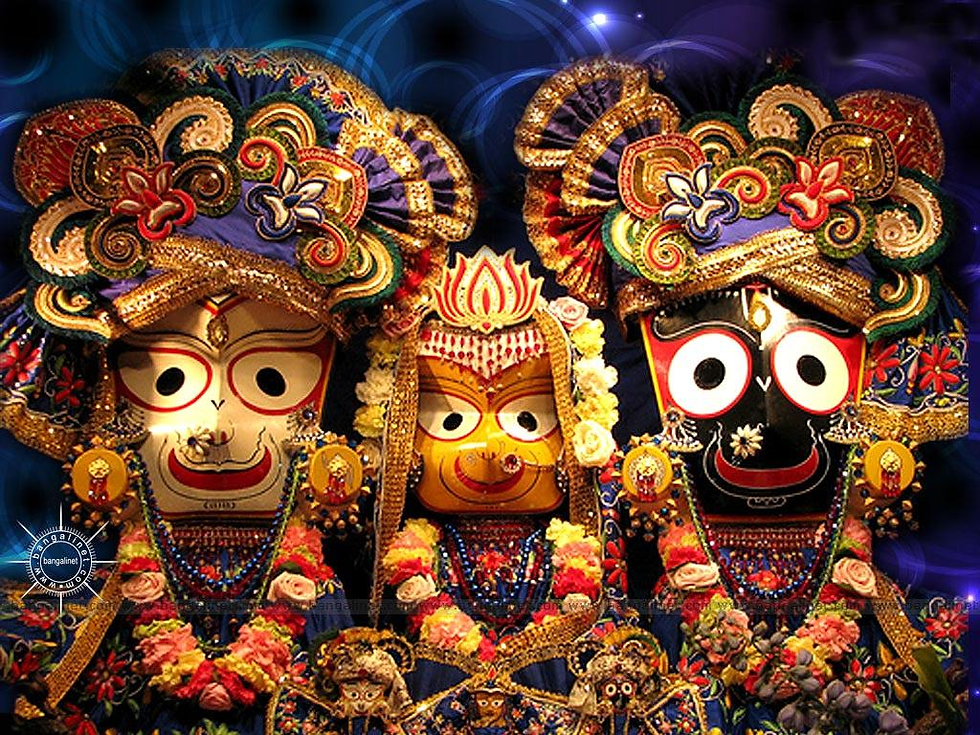
This tradition beautifully reflects the sacred relationship between siblings.
It also reminds devotees that although every individual has a unique identity and purpose, true harmony comes through unity.
The sight of the three chariots moving together has become one of the most iconic symbols of Sanatan Dharma.
Thousands of devotees pull these chariots while singing bhajans, chanting the Lord's names, and expressing pure devotion.
The Powerful Lesson of Equality: Chhera Pahanra
Among all the rituals performed during Rath Yatra, one stands above the rest in its social message. Before the procession begins, the King of Puri comes before the chariots carrying a golden broom.
He respectfully sweeps the platform around the chariot in a ceremony called Chhera Pahanra.
Why would a king perform the work of a servant? Because before Lord Jagannath, no human being is greater than another. Power, wealth, titles, and status disappear before God.
This timeless ritual teaches humility in one of the most beautiful ways imaginable.
Even today, it reminds society that true greatness comes through service, not authority.
Rath Yatra Is Also a Celebration of Odisha's Rich Culture
While Rath Yatra is deeply spiritual, it is equally a magnificent celebration of India's cultural heritage.
The streets come alive with traditional music, devotional songs, Odissi performances, colorful decorations, ancient rituals, and vibrant processions. Generations of artisans dedicate months to building the enormous wooden chariots using traditional methods that have remained unchanged for centuries.
Every wheel, every carving, every piece of wood reflects devotion rather than craftsmanship alone.
The festival brings together people from every corner of India and across the world, making it one of the largest public celebrations of faith and culture.
Major Highlights of Rath Yatra Mahotsav 2026
The eleven-day festival offers a spiritually enriching experience through several sacred events.
15 July – Netra Utsav and Nabajauban Darshan
16 July – Grand Rath Yatra
20 July – Hera Panchami
24 July – Bahuda Yatra
25 July – Suna Besha
26 July – Adhara Pana
27 July – Niladri Bije
Apart from the religious ceremonies, visitors can also enjoy devotional music, cultural performances, competitions, free bhandara, medical camps, volunteer opportunities, and a grand lucky draw with exciting prizes.
These activities beautifully combine spirituality, community service, and cultural celebration under one divine festival.
The Eternal Message of Rath Yatra
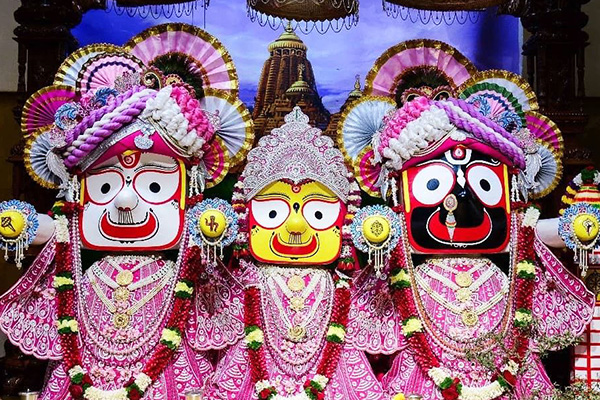
At first glance, Rath Yatra may appear to be a festival of massive wooden chariots and colorful processions. But if we look deeper, we discover something timeless.
It teaches that God belongs to everyone.
It reminds us that humility is greater than pride. It celebrates family, unity, compassion, and equality.
Most importantly, it assures every devotee that the Divine never remains distant. Sometimes, He Himself steps out to walk beside us.
Perhaps that is why millions wait every year with folded hands as Lord Jagannath begins His sacred journey.
Because Rath Yatra is not merely about moving a chariot. It is about moving the human heart toward love, devotion, and spiritual awakening.
As the wheels of the Rath continue to roll through the streets, they also inspire millions to move forward on their own journey—one guided by faith, humility, and the boundless grace of Lord Jagannath.
For those who wish to experience the celebrations or learn more about the 2026 Rath Yatra Mahotsav in Delhi, the official festival website provides complete schedules, seva opportunities, and event details.


Comments