Why Hindus Touch the Feet of Elders: The Spiritual Science Behind This Tradition

Why do Hindus touch the feet of elders? Is it just respect or something deeper? Discover the spiritual science, Vedic wisdom, and blessings behind this sacred tradition.
One of the most highly regarded customs in Hinduism is the act of humility of bowing at the feet of elders (चरणस्पर्शः). This act is not just used to show respect but is considered an act of spiritual practice with ancient roots. Vedic literature as well as the traditional shastras of India teach that touching the feet of elders enables the individual performing it to receive blessings, wisdom, and positive energy. The sacredness of this gesture is reflected by the following three concepts: humility, gratitude, and the continuity of generations' knowledge (the continuity of gnana and spirituality in Hinduism).

The Tradition of Touching Feet in Hindu Culture
The Hindu culture is rich in tradition and customs. Very often people participate in the various traditions without even really understanding the substance behind them, as they are passed down through generations and therefore become second nature.
One such custom is the act of Charan Sparsh (touching the feet of elders).
When children are raised in Indian families, they are taught from an early age to Charan Sparsh their parents, grandparents, teachers, and all other elders who they look up to. Three of the ways in which children wake up for school, begin a new journey, and celebrate various holidays is through the auspicious nature that is associated with charan sparsh.
Touching an elder's feet may appear to be simple respect for that person, but through shashtra and sanatangyan, it is actually much more than that. It possesses powerful spiritual meaning.

What Do the Hindu Scriptures Say?
Ancient shashtra and Vedic teachings emphasize the importance of honoring elders and teachers. In Sanatan Dharma, elders are considered living sources of wisdom and experience.
Manusmriti provides a perfect verse about respecting your elders:
अभिवादनशीलस्य नित्यं वृद्धोपसेविनः।
चत्वारि तस्य वर्धन्ते आयुर्विद्या यशो बलम्॥
For one who always respects and serves elders, four things increase: life span, knowledge, fame, and strength.
This verse beautifully highlights the four blessings mentioned by ancient Rishis—strength, intellect, knowledge, and fame.
Touching the feet shows the respect that you have for your elders, but Sanatangyan goes a step further and teaches about energy transfer and blessings.
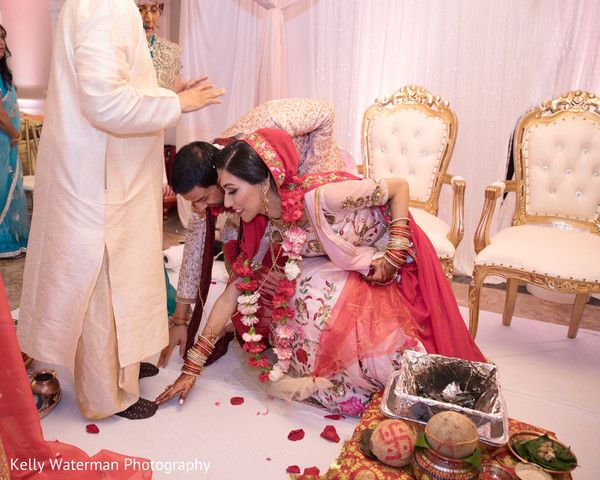
The Spiritual Science Behind Touching Feet
According to the wisdom preserved in Sanatangyan, touching the feet of elders is not just symbolic — it also has a spiritual and energetic meaning.
In Hindu spiritual understanding, the human body carries subtle energy channels. When a person bows down and touches the feet of elders with humility, a connection of positive energy is believed to occur.
The elder responds by placing their hand on the head and giving आशीर्वादः (blessings). This gesture symbolizes the flow of positive vibrations and good wishes.
According to the ancient rishis, the four blessings that are given to a person who touches the feet of an elder are:
Strength (बल)
Intellect (बुद्धि)
Knowledge (विद्या)
Fame and reputation (यश)
These four blessings are thought to help guide an individual toward leading a balanced and successful life.

Different Ways of Touching Feet
Sanatan traditions describe different ways of showing respect through bowing.
1. Simple Charan Sparsh
The most common method is bending slightly and touching the feet of elders with the hands. This is practiced in daily life among family members.
2. Panchanga Pranam
This form involves kneeling and bowing forward to touch the feet. It is usually performed before a guru or spiritual teacher.
3. Sashtanga Dandvat Pranam
A devotee lays flat on the ground, arms outstretched in front of them and head on the ground as an indication of their complete surrender; this shows the level of sacrifice and submission that may occur when men worship in temples to offer their respects to an idol or deity or as a sign of respect for an elder.
Each of these forms expresses humility, devotion, and respect.

Elders are touched on the feet is less a custom than an act of reverence; This is an ancient custom that comes from the Santan custom of touching the feet of a teacher (or saint or someone older than you). In that act of humility, you are able to get blessings, knowledge and energy from teachers. These are acts that keep the knowledge of the Sanatana dharmas alive.

Comments