Why Hindus Perform Dandavat Pranam in Temples? Meaning, Benefits & Spiritual Secrets

What makes Dandavat Pranam a powerful spiritual practice in Hindu temples? Learn its meaning, benefits, and secrets from the shastras.
The practice of Dandavat Pranam is a profound expression of humility that has its roots in Sanatan Dharma and goes beyond being just a ritual performed in temples. The act of bowing down completely as an expression of humility also has great significance as a spiritual practice that connects humankind's mind, body and soul with one's spiritual essence and aligns with the universal mind.
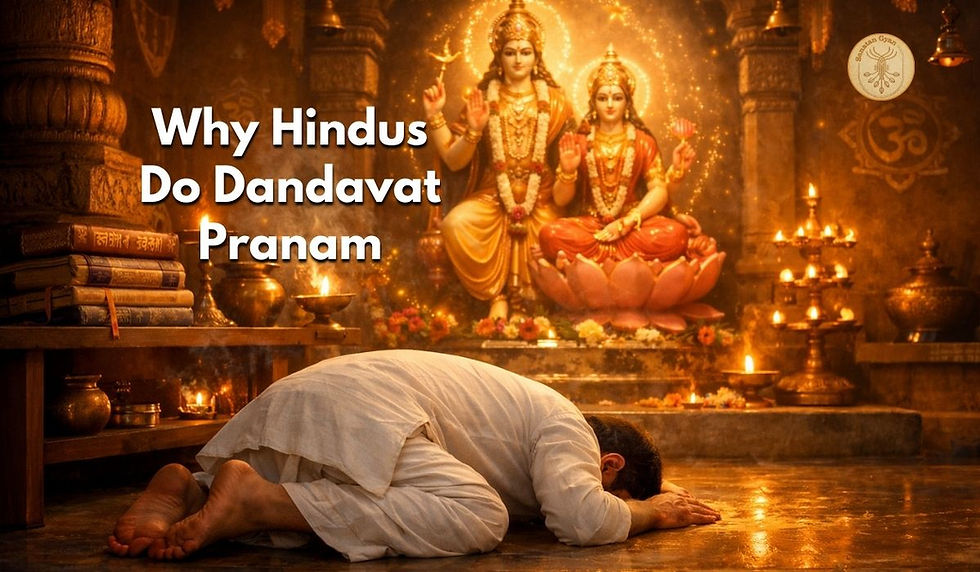
What Is Dandavat Pranam?
Dandavat Pranam literally means "to prostrate like a stick" (danda — stick, vat — like). The position of Dandavat Pranam involves placing your palms, knees, chest and forehead all on the ground in front of an image of a deity or guru/sadhu. In doing this, you visibly represent your inner surrender to the will of the divine and your recognition that the ultimate definition of truth exists in each of us.
The body is considered an instrument of consciousness according to Sanatan Dharma. When we perform Dandavat Pranam, the physical act is a reflection of our surrender to our egos, habitual pride and divided identity through the practice of the spiritual language of humility and devotion that is found in the scriptures.

The Deeper Meaning Behind the Gesture
In the Bhagavad Gītā, Lord Krishna teaches the path of devotion and surrender:
मयि सर्वाणि कर्माणि संयम्य यत्सच्चेतः।
मयि मां सर्वाणि कर्माणि संयम्य यत्तचेतः॥ — Bhagavad Gītā 18.57
"The person who surrenders all actions to Me, with mind fixed on Me without longing for personal gain — that is the one who is truly devoted."
The external expression of inner spiritual surrender is through dandavat pranam. When the forehead touches the earth—symbolizing pṛthivī (Mother Earth)—devotion has materialized into being. The gesture claims that as individuality dissolves, at the feet of the supreme ātman, the eternal Self carved into every temple sanctuary, all that remains is pure devotion.

Spiritual Benefits of Dandavat Pranam
1. Dissolution of Ego
In regards to the sanātanā dharma, the ego (ahankara) creates a barrier between the individual and the universal Self. As such, when prostrating before the Universe, the ego will be humbled and the aspirant will realize that true strength lies not within assertion but rather in surrendering.
As proclaimed in the Śvetāśvatara Upaniṣad:
“यो वै भूत्वा भगवाँसो
स्वयं भूतं विभुं विभूतये।”
“That Divine Being who pervades all, who is the source of all manifestation.”
In addition to providing recognition of the divine presence of the deity in front of you, when you perform Dandavat Pranam, you acknowledge the same divine presence in all created forms.
2. Alignment of Body, Mind, and Spirit
Dandavat pranam is not just a physical posture it is a disciplined act of bringing together breath, mind, and devotion. Thus the entire body becomes an instrument of devotion. In practical terms, the act of prostration also slows the breath and brings the mind to the present moment, thereby grounding the aspirant.
A yogic śāstra like the Hatha Yoga Pradīpikā emphasizes that such humility of body leads to stability of mind (sthira chit), which is essential on the spiritual path.
3. Transmission of Grace
In sanātanā dharma, the presence of a guru or a self‑realized sadhu is believed to carry śakti (spiritual energy) that uplifts disciples. By offering dandavat pranam to a realized teacher, the aspirant opens themselves to this benevolent influence — known as guru dakṣiṇa.
Ancient śāstra holds that respect shown with purity of heart dissolves karmic impressions and opens doors to higher wisdom.

Why This Gesture Matters in Temples
Temples are considered sacred because they are designed as homes of the divine — devālaya — where cosmic energies converge. Performing dandavat pranam in a temple is a way of entering that sacred geometry with humility.
This act resets the inner orientation of the seeker from aham (I‑centered) to ātman‑centered devotion. Before images, it becomes an offering of the heart’s intention rather than an obligation of ritual.
Dandavat pranam has been the unbroken link that links all the generations from the time of the ṛṣis and the times of the sāstras, through the centuries when people were on pilgrimage and sacred journeys.

Why It Remains Vital Today
With all of today's distractions, Dandavat Parnam is still a solid fixture of Hindu worship. As an ongoing facet of the Sanatangyan tradition, it helps to develop your spirit and creates a connection between fellow devotees, and demonstrates respect for God. Practicing Dandavat Pranam cultivates mindfulness and gratitude while allowing oneself to connect with the true meaning of life. Through this one simple act of humility, devotees may establish a connection to their true self, to their Guru, and to God.
Dandavat Pranam as a whole is an ancient practice that reflects humility, devotion, and surrender. By bending down in temples and other sacred spaces, devotees align their body, mind, and spirit, dissolve their ego, and receive the blessings of their Gurus and God. This divinely blessed act has always had a place in the Sanatan Dharma, and will continue to serve as an inspiration to those seeking inner peace and their own spiritual awakening.

Comments