Why Devotees Believe Thrikkakara Temple Holds the True Secret of Onam 2025 Rituals

Onam 2025 ends today with sacred rituals at Thrikkakara Temple. What makes this temple the heart of Kerala’s grand festival? Find out here.

Onam is more than just a festival of Kerala; it is a festival of the soul of India. Every year, as the Malayalam month of Chingam begins, Kerala blossoms into a land of lamps, flowers, and devotion. Today, on Thiruvonam (September 5, 2025), the final day of Onam, the heart of celebration beats strongest at the Thrikkakara Vamana Temple in Kochi, where rituals, legends, and community life merge into one timeless experience. Many devotees believe that Thrikkakara is not just a temple, but the true home of Onam, for here the festival is celebrated with a devotion and grandeur that reveals its deepest secrets.
The Legend of King Mahabali and Lord Vamana
The story of Onam begins with King Mahabali, the asura king who ruled Kerala with justice, love, and equality. His reign was remembered as a golden age where no man knew hunger, no woman feared dishonor, and no child cried for food. Yet, as power grew, the cosmic balance demanded humility. Lord Vishnu, the preserver, incarnated as Vamana, a humble Brahmin dwarf.
When Mahabali offered him three paces of land, Vamana grew to cosmic size as Trivikrama, covering earth and heaven in two strides. For the third, the king humbly bowed his head. Vishnu, moved by his humility and generosity, blessed him with immortality in memory and granted him a boon: once every year he may return to see his people. That homecoming is celebrated as Onam, when the people of Kerala welcome their beloved king with flowers, feasts, and rituals.

“परित्राणाय साधूनां विनाशाय च दुष्कृताम्।
धर्मसंस्थापनार्थाय सम्भवामि युगे युगे॥” (गीता 4.8)
Meaning (English): “To protect the righteous, to destroy evil, and to re-establish dharma, I manifest in every age.”
The incarnation of Vamana is a reminder that God does not punish goodness; He protects it, reshaping pride into humility, and power into surrender.
Thrikkakara Temple: The Spiritual Heart of Onam
The Thrikkakara Vamana Temple, dedicated to Lord Vamana, is one of the 108 Divya Desams, sacred shrines sung by the Tamil Alwars. Its sanctum, built in the traditional Kerala style, houses Lord Vamana in a pyramid-shaped Sreekovil, symbolizing cosmic order. Around it lie the Balikkal, the Namaskara Mandapam, and the sacred temple pond where the deity is ritually bathed during Onam.
It is believed that Thrikkakara is the very place where Mahabali offered his head to Vamana, and thus every Onam, the rituals here are seen as re-enactments of that divine moment. Unlike elsewhere in Kerala, where Onam is largely cultural, at Thrikkakara it is deeply spiritual, with each ceremony marking the stages of Vamana’s blessing and Mahabali’s eternal return.

Ten Days of Rituals: From Atham to Thiruvonam
The Thrikkakara Mahotsavam begins on the day of Atham and continues for ten days, culminating in the sacred Thiruvonam.
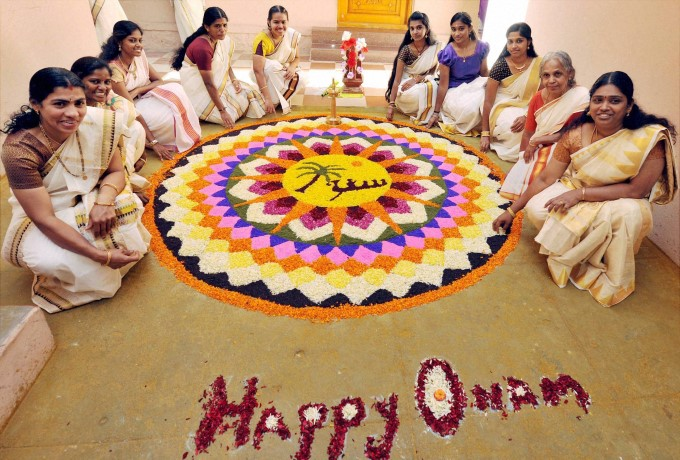
On Atham, the festival flag is hoisted in the Kodiyettu ceremony, invoking divine blessings. Each day the idol of Lord Vamana is ceremonially adorned, known as Chaarthu, often representing Vishnu’s different avatars. Devotees offer prayers, chant mantras, and prepare Pookkalam, floral carpets that expand each day to welcome Mahabali.

By Uthradam, the penultimate day, the temple is alive with rituals like Ana Yootu (feeding elephants) and Uthradasadya (a special feast). In the evening, the temple glows with thousands of lamps in the Chuttuvilakku, and the Pallivetta ritual reminds devotees of the Lord’s divine hunt to protect dharma.

Finally comes Thiruvonam — today — the day of climax. At dawn, the idol is carried to the pond for Aarattu, a sacred bath symbolizing purification. The Seeveli procession follows, with the deity mounted on a caparisoned elephant, accompanied by Panchavadyam music and fellow elephants. The sight fills the heart with reverence and the spirit of Mahabali’s return. The festival ends with the grand Onasadya, a feast that feeds tens of thousands, breaking all barriers of caste and creed.
“तमसो मा ज्योतिर्गमय” (बृहदारण्यक उपनिषद्)
“Lead me from darkness to light.”
The Chuttuvilakku, when thousands of lamps light up Thrikkakara, is a living form of this prayer — moving from ego to humility, ignorance to wisdom.
The Soul of Kerala: Culture Woven Into Faith
Onam is not only a temple festival; it is Kerala itself in celebration. The Athachamayam procession, with decorated elephants and folk performances, reminds us of the days when kings led their people to Thrikkakara. The Pookkalam competitions across villages and towns turn devotion into art, as people shape flowers into prayers of beauty.

The cultural nights bring out Kerala’s heritage — Kathakali retelling epics, Chakyar Koothu preserving Sanskrit theatre, Thiruvathirakali dancing around lamps, and Pulikali, the tiger dance, filling streets with joy. The Vallamkali, or snake boat race, is another living ritual, where synchronized oars move like a hymn upon rivers.

This blending of art and devotion is what makes Onam unique. It is not only remembered as Mahabali’s homecoming but as Kerala’s identity — a reminder that culture, when rooted in spirituality, becomes eternal.
The Feast That Teaches Equality
No Onam is complete without the Onasadya, the grand vegetarian meal served on banana leaves. From banana chips and pappadam to avial, olan, kaalan, rasam, and payasam, the meal is both rich and simple. The saying goes: “Kaanam vittum Onam unnanam” — even if you must sell your belongings, celebrate Onam with a feast.
At Thrikkakara, the Sadya becomes a living dharma, where thousands eat together, without discrimination. It is the true picture of Mahabali’s rule, where all were equal and joyous.
“वसुधैव कुटुम्बकम्”
“The world is one family.”

This spirit of unity is not limited to Kerala. Across India, Hindu festivals echo the same message — whether it is Diwali’s lamps in the north, Durga Puja’s celebrations in Bengal, Rath Yatra’s procession in Odisha, or Makar Sankranti’s kites in Gujarat. Each festival teaches us to live as one family under the eternal sky of Sanatan Dharma.
Onam 2025: Pride of Being Indian
Onam at Thrikkakara is more than Kerala’s festival. It is India’s strength — the ability to keep traditions alive while embracing unity. When we light lamps at Chuttuvilakku, it is not only Kerala’s temple that glows; it is the entire Indian soul. When Mahabali is welcomed, it is not only Kerala’s king who returns; it is the spirit of righteousness that returns to every Indian heart.
In Hindu culture, festivals are not merely days of joy; they are lessons in dharma. They remind us of humility, sacrifice, unity, and love. Onam, with its rituals at Thrikkakara Temple, shows that when people come together with devotion, the divine truly walks among us.
“ॐ नमो भगवते वामनाय”
“Salutations to Lord Vamana.”
This mantra is the heartbeat of Thrikkakara, of Onam, and of every devotee who bows in humility.

Conclusion: The Secret of Onam Lives in Rituals and Hearts
As the festival of Onam concludes today, thousands leave Thrikkakara Temple carrying more than memories. They carry Mahabali’s humility, Vamana’s balance, and Kerala’s unity in their hearts. Onam is not just about flowers, feasts, or processions; it is about remembering that the ideal kingdom is possible when people live with truth, love, and respect.
Being Indian means being part of this grand culture — where every state has its rituals, every temple has its story, and every festival carries the fragrance of Sanatan Dharma. Onam is Kerala’s pride, but it is also India’s light. Thrikkakara Temple keeps its flame burning, year after year, reminding us that the true secret of Onam is simple: where there is humility and unity, there is the presence of God.
Onam Ashamsakal. Jai Hind.


Comments