Why Ananta Chaturdashi 2025 Is the Most Auspicious Day to Worship Lord Ananta
- Chinmayi Devi Dasi

- Sep 2, 2025
- 4 min read
Ananta Chaturdashi 2025 brings Lord Vishnu’s eternal grace — learn the date, timings, rituals, and the powerful story of Ananta Dev that transforms lives.

Ananta Chaturdashi is one of the most spiritually powerful days in the Hindu calendar, celebrated with deep devotion to Lord Vishnu in His infinite form, Ananta Padmanabha. This sacred occasion also marks the conclusion of Ganesh Chaturthi, when devotees bid farewell to Lord Ganesha with visarjan and then turn their hearts toward the eternal shelter of Lord Vishnu.
According to the Vedic Panchang, the Ananta Chaturdashi tithi begins on September 6, 2025, at 3:15 AM and ends on September 7 at 1:42 AM (midnight). Based on the Udaya Tithi (sunrise calculation), the vrata will be observed on Saturday, September 6, 2025.
Ananta Chaturdashi brings Lord Vishnu’s Eternal Grace
Ananta Chaturdashi is a quiet, powerful doorway into the infinite mercy of Lord Vishnu. On this day we remember the endless form of the Lord, tie the sacred Ananta sutra, fast, and recite the Ananta Vrat Katha. The observance brings calm, protection, and blessings that touch both worldly life and the soul’s long journey toward liberation.
शान्ताकारं भुजगशयनं पद्मनाभं सुरेशम्
(“He whose form is peaceful, who reclines on the serpent, with a lotus in his navel — the Lord of gods.”)
This famous śloka paints the heart of Ananta Chaturdashi.
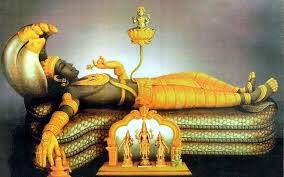
Lord Padmanabha — Vishnu reclining on Ananta Shesha — is the image of perfect rest and infinite power. From his navel springs the lotus on which Brahma is born. That single picture contains creation, care, and the promise of renewal.
When we worship Padmanabha, we bow to the One who holds the universe with ease. The serpent Ananta means “endless.” The lotus means purity and birth. Together they remind us that God’s grace is both infinite and intimate. On Ananta Chaturdashi we re-centre our lives around that gentle, restful power. The heart calms. Fears soften. We feel covered by something larger than our small worries.
In temples and homes, devotees remember this image with lamps, bhajans, and quiet meditation. ISKCON and many family temples sing long kirtans, while simple household pujas focus on repeating a few heartfelt mantras. Either way, the result is the same: the mind opens to the Lord’s protection.
ॐ नमो भगवते वासुदेवाय
(“Salutations to Lord Vasudeva — the Divine in His all-pervading form.”)
This mantra is common on Ananta Chaturdashi and supports the vrata (vow). The day’s rituals are simple and deep. Here is a clear, practical guide anyone can follow:
Morning purification: Begin with a ritual bath. This physical cleansing mirrors inner readiness.
Set up the puja: Place an image, picture, or simple symbol of Lord Padmanabha. Decorate with flowers, fresh fruit, and a small lamp. Keep the place clean and calm.
Tie the Ananta Sutra: Prepare a cotton or silk thread with 14 knots. Each knot represents one of the 14 worlds in Hindu cosmology. Men tie it on the right wrist; women tie it on the left. While tying, recite a short prayer like “Om Anantaya Namah” or “Om Namo Bhagavate Vasudevaya.” The sutra is a constant reminder of the devotee’s vow and the Lord’s protection.
Fasting and focus: Many observe a fast — water, milk, or fruit only. The fast is not punishment; it is a tool to focus the mind and heart on devotion.
Ananta Vrat Katha: End the day by listening to or reading the Ananta Vrat Katha. The story reinforces faith and shows the vrata’s reward.

These steps are simple. Their power comes from sincerity. Even one person tying the sutra with full feeling experiences protection and peace.
अनन्ताय नमो नमः
(“I bow again and again to the Endless One.”)
The Ananta Vrat Story of Devotion and Rescue
The Ananta Vrat Katha is told in many homes. Versions differ, but the heart of every story is the same: a sincere vow calls forth the Lord’s help. In one common telling, a poor but devoted householder kept faith and tied the Ananta sutra exactly as instructed. When calamity came — loss, illness, or debt — Lord Ananta appeared in a dream or vision and delivered the devotee from harm. The family regained peace and prosperity not merely by luck, but by divine shelter earned through faith.
The moral is simple and moving: the vrata is not a magic trick. It is a loving contract. The devotee promises to live with devotion and a mind turned to God. The Lord, in his infinite compassion, accepts that promise and answers in ways both large and small — immediate relief, inner courage, renewed health, or long-term protection across generations.
Honoring the story on Ananta Chaturdashi builds trust that God responds to sincere prayer. It creates a living tradition of gratitude, where people remember stories of rescue and pass them on — so faith grows, not only as belief, but as experience.

Lord Vishnu’s Grace: How Ananta Chaturdashi Changes Life
On a practical level, devotees report calmer minds, better family harmony, and fewer avoidable mistakes after observing the vrata. Spiritually, the vrata helps remove accumulated anxieties and small attachments. It reminds us that life is held by a presence greater than our planning.
The Lord’s grace shows in many forms:
Protection: The Ananta sutra is believed to be a shield against sudden misfortune.
Fulfillment: Sincere vows often lead to practical help — new work, healed bodies, improved relationships.
Moral strength: The vrata trains the heart to choose dharma (right action) over short pleasure.
Liberation: The ultimate promise of Vishnu’s grace is moksha — freedom from repeating life’s painful cycles.
When we combine outward action (puja, sutra, fasting) with inner work (prayer, humility), the change is real. The Lord does not force. He offers shelter to the willing.
श्री अनन्ताय नमः — (“Salutations to the Endless Lord”)

Ananta Chaturdashi 2025: Conclusion
Ananta Chaturdashi is a day to return to silence and trust. It invites us to tie a thread and remember that the universe rests in God’s hands. On September 6, 2025 take a quiet hour. Light a lamp, tie the Ananta sutra with devotion, and say a simple prayer:
This small practice can change a life. It asks nothing extravagant — only sincerity. That is why Ananta Chaturdashi is the most auspicious day to worship Lord Ananta: it is a pure door to the infinite mercy that sustains all things.


Comments