Radha Ashtami 2026: Why Is Radha Rani’s Birthday Celebrated?


Radha Ashtami 2026 will be celebrated on Saturday, September 19, 2026. The festival is dedicated to Shri Radha Rani, who is deeply revered in the Radha-Krishna tradition as the embodiment of divine love and devotion. Radha Ashtami falls on the Ashtami Tithi of Shukla Paksha in the month of Bhadrapada and is celebrated with special devotion in Mathura, Vrindavan, Barsana and other parts of Braj.
The festival comes around 15 days after Janmashtami and is regarded as the appearance day of Radha Rani. Devotees observe fasts, perform Radha-Krishna puja, offer flowers and bhog, sing devotional songs and visit temples to seek the blessings of Radha Rani.

When Is Radha Ashtami 2026?
Radha Ashtami will be observed on September 19, 2026. The Ashtami Tithi begins on September 18 and continues into September 19. According to Panchang calculations for New Delhi, the Ashtami Tithi begins at around 1:00 PM on September 18 and ends at around 3:26 PM on September 19.
Since the Ashtami Tithi is present during the daytime on September 19, Radha Ashtami will be celebrated on this date. The exact ending time can differ slightly from one city to another because Panchang calculations depend on the local sunrise and geographical location.
Radha Ashtami 2026 Puja Muhurat
The main Radha Ashtami worship is traditionally performed during Madhyahna Kala, the midday period. This time has special significance in the traditional observance of Radha Ashtami.
For New Delhi, the Madhyahna Radha Ashtami Puja Muhurat on September 19 is approximately 11:01 AM to 1:28 PM. Devotees planning the puja should remember that the exact muhurat can vary depending on the location. Therefore, people living in cities such as Delhi, Bengaluru, Mumbai, Varanasi or Kolkata should refer to their local Panchang for the most precise timing.
Why Is Radha Ashtami Celebrated?
Radha Ashtami commemorates the appearance of Shri Radha, who holds a central place in several Vaishnava and Braj devotional traditions. According to popular tradition, Radha Rani appeared in Barsana to Vrishbhanu and Kirti.
While Janmashtami celebrates the appearance of Lord Krishna, Radha Ashtami celebrates Radha Rani. In devotional traditions, Radha is regarded as the highest example of prema bhakti, or loving devotion towards Krishna. Her relationship with Krishna is therefore understood not simply as an earthly love story but as a deeply spiritual expression of devotion.

What Is the Significance of Radha Ashtami?
Radha Ashtami is considered an important day for devotees who follow the Radha-Krishna tradition. Radha Rani is associated with unconditional love, devotion, compassion and complete surrender to the divine.
The festival encourages devotees to focus on bhakti rather than material desires. Many devotees spend the day chanting Radha-Krishna names, listening to bhajans, reading devotional texts and visiting temples. For them, remembering Radha Rani is a way of cultivating love and devotion towards the divine.
How Is Radha Ashtami Celebrated?
Radha Ashtami is celebrated with special rituals in homes and temples. Devotees usually begin the day by taking a bath and cleaning the place of worship. An idol or image of Radha Rani or Radha-Krishna is placed in the puja area and decorated with flowers and new clothes.
The puja is generally performed around midday. Devotees offer flowers, fruits, sweets, incense and a diya to Radha Rani. In temples, the celebrations can include ceremonial bathing of the deity, elaborate decoration, devotional singing and special bhog offerings.
In many parts of Braj, Radha Ashtami is celebrated on a much larger scale, with temples decorated beautifully and devotees participating in kirtans and other devotional activities.
Radha Ashtami Vrat 2026
Many devotees observe a fast on Radha Ashtami as an expression of their devotion. The method of fasting differs according to family traditions and religious sampradayas. Some devotees observe a complete fast, while others take fruits, milk or a simple sattvic meal.
The purpose of the vrat is traditionally associated with discipline, prayer and devotion. People who are unable to observe a strict fast can follow a simpler form according to their circumstances and family tradition.
Radha Ashtami Puja Vidhi at Home
Devotees can perform a simple Radha Ashtami puja at home without following an elaborate ritual. After bathing and wearing clean clothes, they can clean the puja area and place an image or idol of Radha Rani or Radha-Krishna.
The puja can begin with a sankalp and prayer, followed by lighting a diya and offering flowers, fruits, sweets and other traditional offerings. Those who follow the practice may also perform a ceremonial abhishekam of the deity using water, milk and other prescribed items.
During the Madhyahna period, devotees can offer bhog and flowers while chanting Radha-Krishna mantras or singing bhajans. The puja can conclude with an aarti and prayer.
What Is Offered to Radha Rani on Radha Ashtami?
Devotees commonly offer flowers, fruits, sweets and sattvic food to Radha Rani. Fresh flowers are especially important in Radha-Krishna worship, and devotees often decorate the deity with garlands.
Some temples prepare elaborate bhog on Radha Ashtami, while households may prepare simple traditional sweets and food according to their family customs. The offering is made with devotion, and there is no requirement that every devotee prepare an elaborate feast.
Radha Ashtami in Barsana and Vrindavan
Radha Ashtami has a special connection with Barsana, which is traditionally regarded as Radha Rani's birthplace. The festival is celebrated with great enthusiasm at temples across Barsana and other parts of Braj.
Vrindavan, Mathura and Barsana witness special temple rituals, devotional singing and gatherings of devotees around this time. The celebrations reflect the deep cultural and religious connection between Radha Rani and the Braj region.
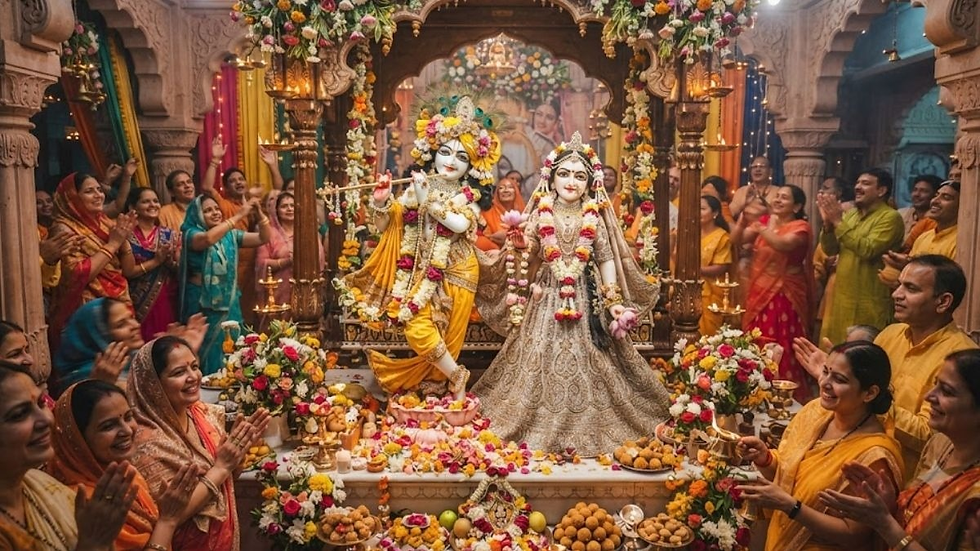
For devotees visiting Braj during Radha Ashtami, the festival is also an opportunity to experience the traditions associated with Radha and Krishna in the places where these stories are believed to have unfolded.
Radha Ashtami 2026 Date and Puja Timing
Radha Ashtami will be celebrated on Saturday, September 19, 2026. The Ashtami Tithi begins on September 18 and continues until the afternoon of September 19. In New Delhi, the Madhyahna Puja Muhurat is approximately 11:01 AM to 1:28 PM on September 19.
The tithi and muhurat can vary slightly according to location, so devotees should check the Panchang for their city before beginning time-sensitive rituals.
The Spiritual Meaning of Radha Ashtami
Radha Ashtami is a celebration of devotion and divine love. In the Radha-Krishna tradition, Radha Rani represents the highest form of love and devotion towards Krishna. Her name is therefore closely connected with bhakti and surrender.
The festival gives devotees a chance to pause from their daily routine and spend time in prayer, remembrance and devotion. Whether through fasting, temple worship, chanting, bhajans or a simple prayer at home, Radha Ashtami is ultimately observed as a day to remember Radha Rani and her deep connection with Krishna.


Comments