Purushottam Maas 2026: The Divine Month to Reset Your Life Spiritually

Discover Purushottam Maas 2026 dates, rituals, significance, vrat rules, and powerful Vishnu mantras to purify karma and transform your life.

Life often feels like a race. We keep running after goals, money, relationships, and responsibilities, but somewhere in between, we forget to reconnect with ourselves. Sanatan Dharma beautifully understands this human condition. That is why every few years, the Hindu calendar gifts us a sacred pause called Purushottam Maas, also known as Adhik Maas. This is not an ordinary month. It is a spiritually elevated time dedicated entirely to self-purification, devotion, and karmic cleansing. In 2026, this rare month will once again arrive as a reminder that life is not only about external success but also about inner awakening.
What is Purushottam Maas?
Purushottam Maas is an additional lunar month added to the Hindu Panchang approximately once every 32 months, 16 days, and 8 hours. The reason behind this lies in astronomy. A solar year has 365 days, while a lunar year is only around 354 days. This difference of nearly 11 days accumulates over time, and after about three years, an extra month is inserted to balance the calendar. This extra month is called Adhik Maas.
Initially, this month was considered spiritually neglected because no major festivals or auspicious ceremonies were associated with it. According to the Padma Purana, Adhik Maas felt insulted and approached Lord Vishnu, asking for dignity and purpose. Lord Vishnu compassionately blessed it by giving His own name, Purushottam, meaning “The Supreme Divine Personality.” From then onwards, Adhik Maas became Purushottam Maas, the holiest month for Vishnu worship.
मासानां पुरुषोत्तमोऽहम्।
This signifies that Lord Vishnu Himself considers this month especially sacred.
Purushottam Maas 2026 Dates and Timing
In 2026, Purushottam Maas will begin on 17 May 2026 and conclude on 15 June 2026. During this period, there will be an extra lunar month in the Hindu calendar, creating a rare 13-month year instead of the usual 12. This particular Adhik Maas will occur in the Jyeshtha month, often referred to as Adhik Jyeshtha or Double Jyeshtha.
These dates are based on traditional Hindu Panchang calculations followed across India. Since sunrise and tithi timings may vary slightly depending on your city, devotees are advised to check their local Panchang for exact vrat timings.
The month is especially significant because spiritual practices performed during this period are believed to yield multiplied benefits. Scriptures say that prayers, charity, fasting, mantra chanting, and scriptural study during Purushottam Maas offer results far greater than those done during ordinary months.

Spiritual Significance of Purushottam Maas
Purushottam Maas is entirely dedicated to Lord Vishnu, the sustainer of the universe. Unlike other months, which may focus on worldly celebrations, this month is a time for inward reflection. It is believed that the energies of this month support deep spiritual growth and karmic cleansing.
This is why traditional Hindu culture avoids material beginnings during this time, such as marriages, housewarming ceremonies, or starting a new business. This is not because the month is inauspicious, but because its vibration is inward-facing. Sanatan Dharma teaches that some phases are meant for expansion, while others are meant for purification. Purushottam Maas belongs to the latter.
The Bhagavad Gita beautifully reflects this idea:
अनन्याश्चिन्तयन्तो मां ये जनाः पर्युपासते।
तेषां नित्याभियुक्तानां योगक्षेमं वहाम्यहम्॥
Meaning:“Those who worship Me with exclusive devotion, meditating on My divine form, I personally preserve what they have and provide what they lack.”
This verse reminds devotees that sincere devotion during Purushottam Maas can bring both spiritual and worldly blessings.
Rituals to Follow During Purushottam Maas
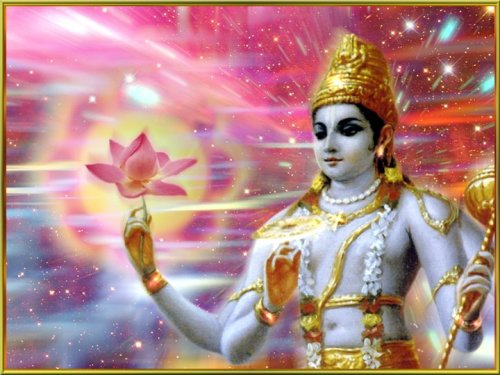
Devotees begin their day during Purushottam Maas by waking up during Brahma Muhurta, roughly between 4:00 AM and 5:30 AM, depending on sunrise timing. After bathing, one should wear clean clothes and offer prayers to Lord Vishnu.
A simple altar can be prepared with an image or idol of Vishnu, Tulsi leaves, incense, ghee lamp, yellow flowers, and fruits. Offering Tulsi Dal is considered highly auspicious because Tulsi is beloved to Lord Vishnu.
Chanting the Vishnu mantra daily is strongly recommended:
ॐ नमो भगवते वासुदेवाय।
Transliteration: Om Namo Bhagavate Vasudevaya
This mantra can be repeated 108 times using a Tulsi mala.
Reading sacred texts such as Bhagavad Gita, Vishnu Sahasranama, Srimad Bhagavatam, or Purushottam Maas Katha is also highly beneficial.
Many devotees observe fasting on Ekadashi or throughout the month by consuming simple sattvic food. Onion, garlic, tamasic food, alcohol, and non-vegetarian items are avoided.
Charity is another important ritual. Donating food, clothes, ghee, grains, or money to Brahmins, temples, or the needy is believed to remove accumulated karmic obstacles.

What Not to Do in Purushottam Maas
Traditionally, certain activities are avoided during this sacred period. Marriage ceremonies, engagement functions, griha pravesh, mundan, and new business launches are generally postponed. This is because the spiritual energy of this month supports contemplation rather than worldly expansion.
People are also advised to avoid anger, gossip, unnecessary arguments, dishonesty, and indulgence in excess pleasures. Purushottam Maas is a month of simplicity, discipline, and sattva.
Story Behind Purushottam Maas
The story of Purushottam Maas carries a profound lesson. According to ancient scriptures, Adhik Maas once felt rejected because people ignored it. No festivals were celebrated during this month, and no auspicious ceremonies were performed. Feeling sorrowful, the month approached Lord Vishnu for help.
Lord Vishnu, moved by its humility, declared:
त्वं मम प्रियतमो मासः।
He gave it His own name—Purushottam—and promised that devotees worshipping during this month would receive immense blessings.
This story teaches a timeless truth: even what the world neglects can become divine through surrender and grace.
Those who sincerely follow Purushottam Maas rituals are believed to gain spiritual clarity, peace of mind, emotional stability, and blessings of Lord Vishnu. Many devotees also experience reduced stress, stronger discipline, and a deeper connection to dharma.
In modern life, this month can act like a spiritual detox. Reducing social media, practicing silence, chanting mantras, and spending time with scriptures can help reset the mind.
Purushottam Maas reminds us that not every season of life is meant for achievement. Some seasons are meant for purification.
Conclusion
Purushottam Maas 2026 is not merely an adjustment in the calendar. It is a sacred invitation from Lord Vishnu to pause, purify, and realign your life. From 17 May 2026 to 15 June 2026, devotees across the world will observe this divine month with prayer, fasting, charity, and devotion.
In a noisy and restless world, Purushottam Maas asks one simple question: when was the last time you truly sat with your soul?
हरे कृष्ण हरे कृष्ण कृष्ण कृष्ण हरे हरे।
हरे राम हरे राम राम राम हरे हरे॥
May Lord Vishnu bless your life with peace, devotion, and spiritual progress.


Comments