Onam 2026: The Untold Story Behind Kerala’s 10-Day Grand Celebration


Onam 2026 is one of Kerala’s most vibrant and culturally significant festivals. Celebrated during the Malayalam month of Chingam, which falls around August–September, Onam is traditionally associated with prosperity, harvest, togetherness, and Kerala’s rich cultural heritage.
The festival is celebrated over 10 days, beginning with Atham and culminating in Thiruvonam. In 2026, Thiruvonam falls on Wednesday, August 26.
Beyond its colourful celebrations, Onam carries a deeply rooted legend about King Mahabali, a beloved ruler whose annual return is believed to be the reason people celebrate the festival with such joy.
Onam 2026: History and Legend of King Mahabali
According to Hindu mythology, King Mahabali was a wise, generous and powerful ruler. His kingdom was believed to have experienced an era of prosperity, peace and happiness.
Concerned about Mahabali's growing influence, the Gods approached Lord Vishnu for help. Vishnu appeared before the king in the form of a dwarf Brahmin named Vamana and asked for land that could be covered in three steps.
Mahabali agreed to the request. Vamana then grew into a gigantic form and covered the Earth with his first step and the sky with his second. With nowhere left for the third step, Mahabali offered his own head.
Vishnu placed his foot on Mahabali's head and sent him to the underworld. However, moved by the king's devotion and generosity, Vishnu granted him a special boon — Mahabali could return to visit his people once every year.
Onam is traditionally celebrated as the annual homecoming of King Mahabali.
Why Is Onam Celebrated?
Onam is closely associated with the harvest season, abundance and prosperity. It is also a celebration of community and cultural identity.
People decorate their homes with colourful Pookalams, wear traditional clothes, prepare elaborate meals, visit temples and participate in cultural activities. The celebrations bring families and communities together, making Onam much more than a religious festival.

The 10 Days of Onam 2026
The traditional Onam celebrations begin with Atham and continue for 10 days until Thiruvonam. Each day has its own significance and customs.
Day 1 – Atham
Atham marks the beginning of the 10-day Onam celebrations.
People begin decorating the entrances of their homes with Pookalams, colourful floral designs created using fresh flowers. Traditionally, a new layer of flowers is added to the Pookalam as the days progress.
Atham is also associated with the colourful Athachamyam procession, which features traditional performances, music and decorated elephants.
Day 2 – Chithira
On Chithira, preparations for Onam continue.
Families clean and decorate their homes, while the Pookalam becomes larger and more elaborate. The day reflects the growing excitement as the main festival approaches.

Day 3 – Chodhi
Chodhi is traditionally associated with shopping and preparations for the festival.
Families purchase new clothes, gifts and other items for themselves and their loved ones. Wearing new clothes during Onam is an important part of the celebrations.
Day 4 – Visakam
By Visakam, preparations become more active.
Families begin arranging ingredients and other essentials for the grand celebrations. Markets become busier as people prepare for the traditional Onam feast and other festivities.
Day 5 – Anizham
Anizham is especially known for Vallamkali, Kerala's famous snake boat races.
Long, traditional boats race through the state's waterways as rowers work together in rhythm. The event is one of the most spectacular cultural traditions associated with Onam.
Day 6 – Thriketa
On Thriketa, celebrations increasingly move into communities and public spaces.
Cultural groups and local communities organise gatherings featuring traditional music, dance and performances, adding to the festive atmosphere.
Day 7 – Moolam
Moolam brings more excitement to homes and communities.
Fresh and increasingly intricate Pookalam designs are created. Traditional celebrations, cultural programmes and local festivities also become more prominent.
Day 8 – Pooradam
Pooradam is associated with creating traditional clay idols known as Ma or Thrikkakara Appan.
These pyramid-shaped figures are placed at the centre of the Pookalam and are traditionally associated with King Mahabali and Lord Vishnu.

Day 9 – Uthradam
Known as First Onam, Uthradam is the final day of preparation before the main celebration.
Families clean and decorate their homes, complete shopping and prepare ingredients for the grand feast. The excitement surrounding Mahabali's arrival reaches its peak.
Day 10 – Thiruvonam
Thiruvonam is the most important and grandest day of Onam.
Families dress in traditional clothes, visit temples and decorate their homes with beautiful Pookalams. The traditional idols associated with Mahabali and Lord Vishnu are also placed as part of the celebrations.
One of the biggest highlights of the day is Onam Sadhya, the elaborate vegetarian feast traditionally served on a banana leaf. It features a variety of traditional dishes and is enjoyed by families and communities together.
Onam Sadhya: The Grand Feast
No Onam celebration feels complete without Onam Sadhya.
The traditional vegetarian feast is served on a banana leaf and includes a variety of dishes representing the rich culinary traditions of Kerala. Depending on the household and tradition, the feast can include numerous preparations such as rice, curries, vegetables, pickles, papad, payasam and other accompaniments.
The Sadhya is not simply a meal. It represents hospitality, togetherness and abundance, which are central themes of Onam.
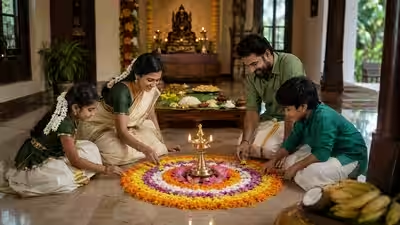
Pookalam: The Floral Symbol of Onam
One of the most recognisable traditions of Onam is the Pookalam, a decorative floral carpet created outside homes.
Families traditionally begin with a simple design on Atham and add flowers and patterns over the following days. By Thiruvonam, the Pookalam becomes a colourful and elaborate centrepiece of the celebration.
It is both a form of decoration and a symbolic way of welcoming King Mahabali.
The Cultural Significance of Onam
Onam brings together different aspects of Kerala's cultural identity — agriculture, food, art, music, traditional clothing and community celebrations.
From the rhythmic Vallamkali boat races to colourful Pookalams and the elaborate Sadhya, the festival showcases Kerala's traditions while bringing families and communities together.
At its heart, Onam celebrates an ideal remembered through the story of Mahabali — a time associated with prosperity, equality, generosity and happiness.

Onam 2026: A Celebration of Tradition and Togetherness
Onam is more than a 10-day festival. It is a celebration of heritage, community and the spirit of togetherness.
As Kerala prepares to welcome Onam 2026, the traditions of Pookalam, Vallamkali, traditional attire, cultural performances and Onam Sadhya continue to keep the festival's rich heritage alive.
With Thiruvonam falling on August 26, 2026, the 10-day celebrations will reach their grand finale as families come together to celebrate the spirit of Onam and the legendary homecoming of King Mahabali.


Comments