Onam 2026: Date, 10-Day Celebration, Muhurat, Rituals & Mahabali’s Story


Onam 2026 will be celebrated on Wednesday, August 26, with the grand Thiruvonam celebrations marking the most important day of the festival. The festivities traditionally begin with Atham on August 16 and continue through the ten-day celebrations leading up to Thiruvonam.
Onam is one of Kerala's most important festivals and is known for its beautiful Pookalam, traditional Onasadya feast, Vallam Kali boat races, Thiruvathirakali, Pulikali, new clothes, cultural performances and family celebrations.
But Onam is more than a harvest festival. At the heart of the celebration lies the touching story of King Mahabali, a ruler remembered for his generosity, equality and love for his people.
According to tradition, Mahabali is believed to return to Kerala once every year to meet his people. Onam is celebrated as a joyful welcome to the beloved king.
When is Onam 2026?
Onam 2026, or Thiruvonam, will be celebrated on Wednesday, August 26, 2026.
The festival begins with Atham on August 16, 2026, and the ten-day celebration culminates with Thiruvonam on August 26.
The four major Onam holiday days in Kerala are:
First Onam – August 25, 2026, Tuesday
Second Onam / Thiruvonam – August 26, 2026, Wednesday
Third Onam – August 27, 2026, Thursday
Fourth Onam – August 28, 2026, Friday

The Thiruvonam nakshatra begins at 10:51 PM on August 25 and ends at 12:48 AM on August 27, 2026. The main festival day is August 26 because Thiruvonam prevails during the relevant daytime period. Exact timings can vary slightly depending on location.
Onam 2026: 10 Days and Their Significance
The traditional Onam celebration begins with Atham and culminates with Thiruvonam.
Day | Date | Name | Significance |
Day 1 | August 16 | Atham | Beginning of Onam celebrations and first Pookalam |
Day 2 | August 17 | Chithira | Homes are cleaned and floral decorations grow |
Day 3 | August 18 | Chodhi | Festive shopping and preparations begin |
Day 4 | August 19 | Vishakam | Preparations for the grand feast begin |
Day 5 | August 20 | Vishakam | Pookalam and festive preparations continue |
Day 6 | August 21 | Anizham | Associated with Vallam Kali traditions |
Day 7 | August 22 | Thriketta | Family gatherings, prayers and cultural activities |
Day 8 | August 23 | Moolam | Early Onam Sadya and cultural programmes |
Day 9 | August 24 | Pooradam | Onathappan/Mahabali figures are traditionally prepared |
Day 10 | August 25 | Uthradam | First Onam and final preparations |
Main Day | August 26 | Thiruvonam | Grand celebration, prayers, Pookalam and Onasadya |
Some calendars may show Vishakam across two calendar dates because the nakshatra transitions during this period. The central observance remains Thiruvonam on August 26, 2026.
What is Onam and Why Is It Celebrated?
Onam is traditionally associated with Kerala's harvest season and the annual homecoming of King Mahabali, also known as Maveli.
The festival falls during Chingam, the first month of the Malayalam calendar. The celebrations combine agricultural prosperity, family unity, cultural traditions and the legend of Mahabali.
During Onam, homes are decorated with flowers, families come together for a traditional feast, people wear new clothes and Kerala's traditional art forms and sporting events become part of the celebrations.
The festival is also known for its inclusive spirit. The story of Mahabali represents an ideal kingdom where people were believed to live with prosperity, equality and happiness.
The Story of Onam: Who Was King Mahabali?
The most famous legend associated with Onam is the story of King Mahabali and Lord Vishnu's Vamana Avatar.
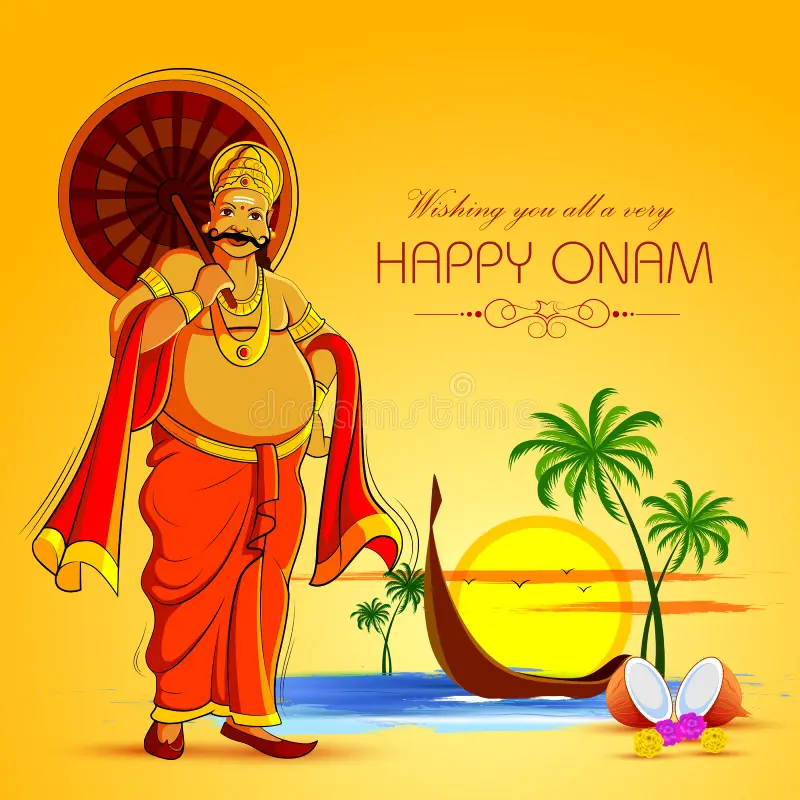
Mahabali was an Asura king and a devoted follower of Lord Vishnu. Despite being born into an Asura lineage, he was known for his generosity, courage and commitment to his people.
His kingdom became prosperous and peaceful. According to popular tradition, there was little inequality and the people lived happily under his rule.
Mahabali became so powerful and respected that his influence began to concern the Devas.
Lord Vishnu Takes the Vamana Avatar
To test Mahabali's generosity, Lord Vishnu appeared before him in the form of Vamana, a dwarf Brahmin.
Vamana approached Mahabali when the king was performing his traditional act of giving gifts and donations.
He asked Mahabali for a surprisingly small gift:
Three paces of land.
Mahabali agreed.
His adviser Shukracharya warned him that Vamana was no ordinary Brahmin and advised him not to make the promise.
But Mahabali had already given his word.

The Three Steps of Vamana
Once Mahabali accepted the request, Vamana revealed his divine form.
With his first step, he covered the earth.
With his second step, he covered the heavens.
There was nowhere left for the third step.
Vamana then asked Mahabali where he should place his final step.
Realising that he had nothing else to offer, Mahabali bowed his head and offered himself.
Vamana placed his third step on Mahabali's head and sent him to Patala, the underworld.
But the story does not end there.
Why Does Mahabali Return Every Year?
Lord Vishnu was pleased with Mahabali's devotion, honesty and willingness to keep his promise. Mahabali requested one final blessing: he wanted to return to his kingdom once every year and meet his beloved people.
Lord Vishnu granted his wish. This annual return of Mahabali is what Onam traditionally commemorates.
That is why Onam is not simply about remembering a king who disappeared. It is about welcoming him home.
Every year, Malayalis decorate their homes, prepare food and celebrate together as a symbolic welcome for Mahabali.
Onam 2026 Muhurat and Thiruvonam Timings
Unlike festivals that have one universally prescribed puja muhurat, Onam observances are closely connected with the Thiruvonam nakshatra and the daytime Thiruvonam celebration.
For 2026:
Thiruvonam Nakshatra begins:10:51 PM on August 25, 2026
Thiruvonam Nakshatra ends:12:48 AM on August 27, 2026
Main Onam / Thiruvonam:Wednesday, August 26, 2026
These timings are based on Indian Panchang calculations and can differ slightly according to the location.
For readers performing temple-specific rituals or following a particular family tradition, it is best to follow the local temple Panchangam or priest because Onam customs can differ across Kerala.

How Is Onam Celebrated?
Onam brings together religious traditions, agricultural customs, food, music, dance and community celebrations.
Some of the most important traditions include:
1. Pookalam – The Traditional Flower Carpet
One of the most recognizable symbols of Onam is the Pookalam.
Pookalam is a colourful floral design created outside the entrance of a home.
The tradition begins on Atham and the design generally becomes larger and more elaborate as the days progress.
Different flowers are arranged in circular patterns to create intricate designs.
The Pookalam is traditionally associated with welcoming King Mahabali.
Beyond its beauty, it also represents togetherness, because family members often work together to create it.
2. Onasadya – The Grand Onam Feast
Food is at the heart of Onam celebrations.
The traditional Onasadya, or Onam Sadya, is a large vegetarian feast served on a banana leaf.
Depending on the household and region, it can include numerous dishes such as:
Rice
Sambar
Avial
Thoran
Kichadi
Pachadi
Olan
Pickles
Banana chips
Papadam
Various vegetable preparations
Payasam
The feast represents abundance, prosperity and the spirit of sharing.
It is particularly associated with Thiruvonam, when families gather for the main celebration.
3. Vallam Kali – The Famous Snake Boat Race
Onam is also famous for its spectacular traditional boat races.
Long snake boats, locally known as Chundan Vallam, race through Kerala's waterways while teams of rowers move in rhythm.
The races are accompanied by traditional songs and energetic cheering.
The Aranmula Boat Race and races around the Alappuzha backwaters are among the well-known Onam-season attractions.
4. Pulikali – The Tiger Dance
Pulikali, meaning "play of the tigers", is one of Kerala's most colourful folk performances.
Performers paint their bodies to resemble tigers and hunters and dance to the rhythm of traditional percussion instruments.
Thrissur is particularly famous for Pulikali celebrations.
The performance brings a completely different energy to the otherwise devotional and family-oriented festival.
5. Thiruvathirakali
Thiruvathirakali is a traditional group dance performed by women, often in a circle around a lamp.
Dancers move rhythmically while singing traditional songs.
It is an important part of Kerala's cultural identity and is frequently performed during Onam celebrations.
6. New Clothes – Onakkodi
Wearing new clothes is another popular Onam tradition.
The new festive clothing is commonly called Onakkodi.
Families purchase new clothes and wear them during the main celebration as a symbol of renewal and happiness.
7. Family Gatherings and Games
Onam is also a time for family reunions. People visit relatives, prepare food together, exchange gifts and participate in traditional games.
Events such as tug-of-war and other local competitions add a playful element to the celebrations.

What Are the Main Rituals of Onam?
The rituals and customs may differ from one family and region to another, but common Onam practices include:
Early morning bath
On Thiruvonam, families traditionally begin the day by taking an early bath and wearing clean or new traditional clothes.
Cleaning and decorating the home
Homes are cleaned and decorated before the main day of celebration.
Creating Pookalam
Fresh flowers are arranged into a colourful floral carpet at the entrance of the home.
Prayer and worship
Families offer prayers according to their traditions. In many households, symbolic representations associated with Mahabali and Vamana, such as Onathappan, are placed and honoured.
Preparing Onasadya
A large vegetarian feast is prepared for family and guests.
Wearing traditional clothes
Traditional Kerala attire is commonly worn during the celebration.
Visiting relatives
Onam is strongly associated with family reunions, hospitality and sharing food.
Cultural celebrations
Dance, music, boat races, folk performances and traditional games form an important part of public celebrations.
What Is the Spiritual Significance of Onam?
The story of Onam carries several deeper messages.
Generosity
Mahabali is remembered for his willingness to give even when the request was difficult.
Keeping one's promise
Even after being warned by Shukracharya, Mahabali refused to go back on his word.
Humility
The king ultimately surrendered his pride and offered his own head when he could no longer fulfil Vamana's request through land.
Love for one's people
Mahabali's greatest wish was not wealth or power. He simply wanted to return to his people.
Equality and prosperity
The traditional image of Mahabali's kingdom represents an ideal society where people were happy, prosperous and treated fairly.
These values help explain why Onam remains meaningful even beyond its religious traditions.
Why Is Onam Called a Harvest Festival?
Onam takes place during the Malayalam month of Chingam and is traditionally associated with Kerala's agricultural cycle.
For generations, agriculture has played an important role in Kerala's culture and economy.
The festival therefore became a time to celebrate nature, agricultural prosperity, abundance and a successful season.
The colourful flowers, traditional food and community celebrations all reflect this connection with the land.
Atham: August 16, 2026Chithira: August 17Chodhi: August 18Vishakam: August 19–20Anizham: August 21Thriketta: August 22Moolam: August 23Pooradam: August 24Uthradam / First Onam: August 25Thiruvonam / Main Onam: August 26Avittam / Third Onam: August 27Chathayam / Fourth Onam: August 28
The extended post-Onam cultural season also includes major events such as Pulikali in Thrissur and the Aranmula Boat Race later in the season. Iris Holidays lists Pulikali for August 29 and the Aranmula Boat Race for August 30, 2026. Event dates can be subject to local programme announcements.

Where Can You Experience Onam in Kerala?
If you want to experience the festival in Kerala, different places offer different experiences.
Thrikkakara
Thrikkakara has a special connection with the Mahabali and Vamana traditions and is considered one of the important cultural centres of Onam.
Thrissur
Thrissur is famous for Pulikali, where performers dressed as tigers fill the streets with music and colour.
Alappuzha
Alappuzha is an excellent place to experience Kerala's backwaters, boat races and traditional Onam atmosphere.
Aranmula
Aranmula is famous for its traditional boat-race culture and the Aranmula Parthasarathy Temple.
Kochi and Thripunithura
These areas offer processions, cultural programmes and the grand opening celebrations associated with Athachamayam.
Onam 2026: Conclusion
Onam 2026 will be celebrated on Wednesday, August 26, with celebrations beginning on Atham, August 16.
From the first flower of the Pookalam to the final serving of Payasam in the Onasadya, the festival brings together Kerala's history, agriculture, mythology, food and cultural traditions.
At its heart is the story of King Mahabali, who is believed to return to Kerala every year to meet his people.
And perhaps that is what makes Onam so special.
It is not simply a festival celebrating the past.
It is a celebration of the kind of home, society and community people hope to welcome back every year — prosperous, united and full of happiness.


Comments