Navratri 2026: The Secret Meaning Behind 9 Days & 9 Forms of Durga

Why do we celebrate 9 forms of Durga during Navratri? Discover how each form of Durga inspires courage, purity, and devotion according to Sanatangyan and sacred shastras.
Navratri, a sacred festival of India, celebrates the Divine Feminine, especially Goddess Durga, over nine nights. Every day of Navratri is dedicated to one of Krishna's nine incarnations or forms and represents the fight of positive energies against negative energies and the soul's path to spiritual growth. Navratri has been celebrated for centuries as a time of prayer, purification of self-identity, connecting with the true self or soul within, through the teachings of Gurus, Sadhus, and the wisdom found in SanatanGyan and religious scripture (Shastras).

The Spiritual Meaning of Navratri
Navratri is more than a celebration of God's creation; it is also a celebration of the journey of the soul. The spring Navratri festival (Chaitra Navratri) occurs during the month of Chaitra (March-April) in the Hindu calendar; spring represents new life and renewal on Earth. For the nine days during this period, the devotee seeks guidance from the teachings of Sanata Gyan, the teachings of the Sages, as well as the teachings found in the Shastras, in order to develop qualities of purity, devotion, and strength within themselves. During this sacred period, devotees also commemorate the Victory of Goddess Durga and her defeat of Mahishasura, representing the destruction of ignorance, negativity, and ego within oneself.
“सर्वेभ्यः पूजयेत् देवताः सच्चराचराः।”
“All beings, sentient and insentient, should be honored.”
The teachings of the Gurus, Sadhus, and the ancestors of the cosmos also remind the devotee to appreciate all life and to see the Divine Lightness in everything.
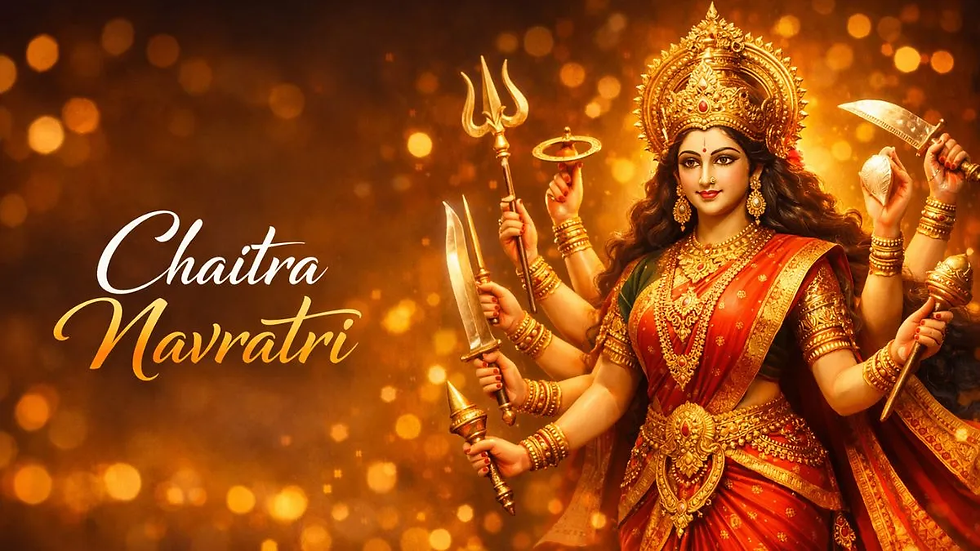
The 9 Forms of Goddess Durga
1. Shailaputri – The Daughter of the Mountain
Worship is done on the first day of the Navratra festival in honour of Shailputri, whose attributes include purity, devotion, and spiritual power. She establishes a solid base for spiritual awakening or Shakti by riding Nandi the bull, and holding a trident and lotus-like flower, both of which have great significance in Hindu mythology. Devotees worship Shailputri to obtain her blessings for a sound mind and to have a good start on their path to self discovery.
2. Brahmacharini – The Goddess of Penance and Devotion
The second day of Navratra is set aside for worshipping Brahmacharini, the goddess who exemplifies self-control, patience, and steadfastness in worship. She provides the inspiration to continue pursuing one's goals by walking on foot and using a japa mala and Kamandalu as examples of how to keep persevering. Brahmacharini's strength of devotion encourages those who are devoted to her to develop the moral strength essential to practice their chosen form of spirituality with discipline (sanatangyan).
3. Chandraghanta – The Goddess of Courage
The third day of Navratra is centred around the goddess Chandraghanta. Chandraghanta is the embodiment of courage and bravery. She rides a tiger and has a crescent moon on her forehead as well as numerous weapons used to destroy evil. Devotees invoke her to assist in overcoming fear, gaining self-confidence, and facing life's trials.
4. Kushmanda – The Creator of the Universe
On the fourth day, Kushmanda is venerated as the cosmic creator. By extending an abundant source of Universal Energy with the eight hands holding all the divine tools and a pot of nectar, Goddess Durga provides the devotee with an experience of abundance and the gift of new life. This abundance is not limited to one's own body, mind, emotions, and spirit; Goddess Durga provides us with the experience of abundance from the divine life force that supports the entire universe.
5. Skandamata – Mother of Lord Kartikeya
On the fifth day of Navratra, worship is given to Skandamata, the goddess who represents motherly love, nurturing activity, and compassion. She rides a lion while holding her baby Skanda on her lap, and through this form of worship, devotees are encouraged to develop the strength to love and care for their family and friends, and create a peaceful home. Her blessings help them to cultivate love and feelings of safety.
6. Katyayani – The Warrior Goddess
Day six is the day of honoring Katyayani, the "warrior form of Durga"; she is depicted as fiercely riding a lion with many arms and many different weapons. Katyayani represents courage, the pursuit of righteous actions, and the destruction of evil. The inner warrior, represented by Katyayani, allows her devout followers to develop self-confidence and strength to overcome life's obstacles.
7. Kalaratri – The Destroyer of Darkness
Day seven is dedicated to the worship of Kalaratri, who represents the total destruction of ignorance and negativity. Kalaratri has long black hair, wild hair, black skin, rides a donkey/lion, and wields a sword. Devotees pray to Kalaratri for courage to face their fears and to be able to love change in their lives that will help them transform.
8. Mahagauri – Goddess of Purity and Peace
The eighth day of the festival is celebrated in honour of Mahagauri, who is the personification of peace, purity and forgiveness. Mahagauri is very beautiful and calm; she rides a bull or white elephant and is said to possess wisdom. When Mahagauri gives her devotees her blessings, she assists them spiritually by cleansing them and giving them a clear moral direction; she will show them how to lead a virtuous life, according to the teachings of sanatangyan.
9. Siddhidatri – The Bestower of Success and Wisdom
Day nine is celebrated as the day for honoring Siddhidatri. Siddhidatri is the goddess who gives her devotees spiritual wisdom, spiritual fulfilment and supernatural powers (siddhis). Siddhidatri blesses her devotees with knowledge of many things, assists them in obtaining prosperity and gives them spiritual enlightenment, when Siddhidatri is worshipped as part of Navaratri, it is the final achievement on the Navaratri journey when the spiritual accomplishment of the devotee (siddhi) is achieved, through the guidance of the guru teachings.
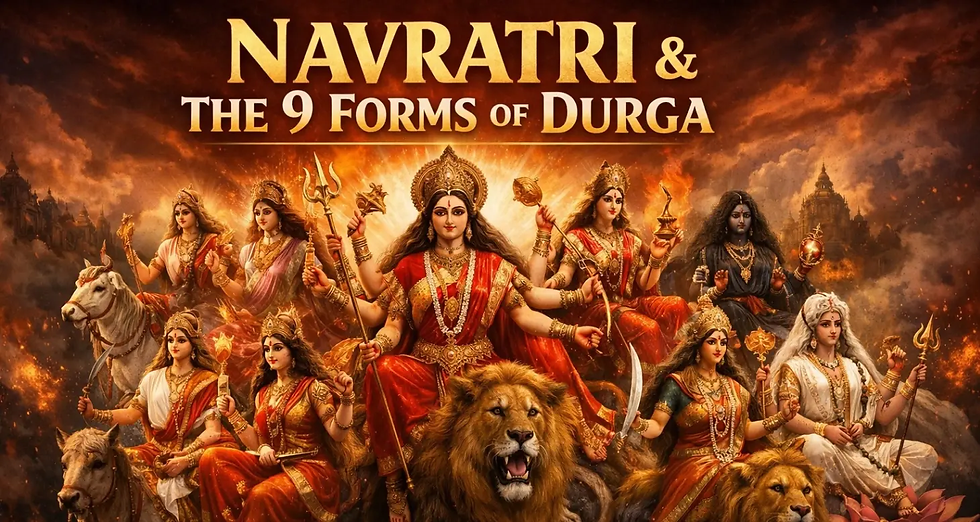
The sacred celebration of Navratri is a journey of devotion and personal transformation. With guidance from the truths of Santangyan, shastra, and the teachings of the Guru's and Sadhu's, these nine days are meant to represent Goddess Durga's nine forms, and to inspire inner purity, bravery, and spiritual enlightenment.

Comments