Nag Panchami 2026: 16 or 17 August? Know the Correct Date, Muhurat & Rituals
- Chinmayi Devi Dasi

- 1 day ago
- 4 min read

Every year during the holy month of Shravan (Sawan), devotees across India celebrate Nag Panchami—a festival dedicated to the worship of Nag Devta, the divine serpent deities. While many associate the day with offering milk to snakes, its deeper meaning is about respecting nature, seeking protection, and honoring the ancient bond between humans and the natural world.
In 2026, Nag Panchami becomes even more special as it falls on the third Sawan Somwar, making it a rare occasion to worship both Lord Shiva and Nag Devta on the same day.
When is Nag Panchami 2o26?
One of the biggest questions this year is whether Nag Panchami falls on 16 or 17 August. The answer is Monday, 17 August 2026.
Although Panchami Tithi begins on the evening of 16 August, it remains active during sunrise on 17 August, which is why the festival is observed on that day according to the Hindu Panchang.
Event | Date & Time |
Nag Panchami | Monday, 17 August 2026 |
Panchami Tithi Begins | 16 August, 4:52 PM |
Panchami Tithi Ends | 17 August, 5:00 PM |
Puja Muhurat | Approx. 5:50 AM – 8:35 AM |
Special Significance | Third Sawan Somwar |
Muhurat may vary slightly depending on your city and local sunrise.
Why is Nag Panchami Celebrated?
Nag Panchami is much more than a festival of snakes. In Hindu tradition, Nagas symbolize protection, fertility, wisdom, and cosmic energy. They are considered guardians of water, forests, and the balance of nature.
Serpents also hold a sacred place in Hindu mythology:
Sheshnag supports Lord Vishnu.
Vasuki adorns Lord Shiva's neck.
Takshak and other Nagas appear throughout the Mahabharata and Puranas.
Rather than celebrating fear, Nag Panchami teaches reverence for life and coexistence with nature.
The Powerful Connection Between Nag Panchami and Lord Shiva
The 2026 celebration is especially significant because Nag Panchami and Sawan Somwar fall on the same day.
In Hindu iconography, Lord Shiva is always depicted wearing Vasuki, the serpent king, around his neck. The serpent represents:
mastery over fear,
control of ego,
and the awakening of spiritual energy.
This is why devotees traditionally perform Jalabhishek, offer Bel Patra, and worship Nag Devta together on this sacred Monday.
Nag Panchami 2026 Puja Vidhi (Step-by-Step Rituals)
A simple home puja can be performed with devotion during the morning muhurat.
1. Begin the day with purification
Wake up before sunrise, take a bath, wear clean clothes, and prepare your puja space with flowers and a clean cloth.
2. Worship Lord Shiva first
Offer:
Water
Bel Patra
Flowers
Akshat (rice)
Fruits
Chant "Om Namah Shivaya" while performing Jalabhishek.
3. Worship Nag Devta
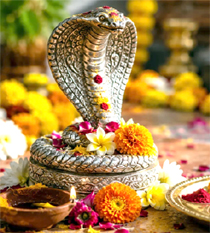
Place a clay idol, silver serpent, or image of Nag Devta and offer:
Haldi
Kumkum
Flowers
Durva grass
Milk (symbolically)
Sweets or naivedya
4. Listen to Nag Panchami Katha
Reading or listening to the traditional vrat katha is considered an important part of the observance.
5. Perform Aarti and seek blessings
Pray for the protection of your family, prosperity, peace, and harmony with nature.

What Does Nag Panchami Symbolize Spiritually?
Every ritual on Nag Panchami carries a symbolic meaning rather than being merely ceremonial.
Ritual | Spiritual Meaning |
Worship of snakes | Respect for nature and all living beings |
Offering milk | Symbolic devotion and gratitude |
Jalabhishek to Shiva | Purification of mind and soul |
Fasting | Self-discipline and inner balance |
Nag Panchami Katha | Protection from fear and negativity |
The festival reminds us that divinity exists not only in temples but also in nature itself.
The Ancient Legends Behind Nag Panchami
Several powerful stories explain the importance of this festival.
The Story of Vasuki
According to Hindu mythology, Vasuki became the sacred serpent around Lord Shiva's neck after offering complete devotion. This symbolizes surrendering ego and living fearlessly.
The Story of Astika
When King Janamejaya performed a great serpent sacrifice to destroy all Nagas, the young sage Astika stopped the ritual and saved the serpent race from extinction. Nag Panchami is also remembered as a celebration of compassion over revenge.
The 12 Sacred Nagas Worshipped on Nag Panchami
Many traditions honor twelve divine serpent deities during the festival:
Ananta
Vasuki
Shesha
Padma
Kambala
Karkotaka
Ashvatara
Dhritarashtra
Shankhapala
Kaliya
Takshaka
Pingala
Chanting their names is believed to invoke protection and blessings according to traditional belief.

The Environmental Message of Nag Panchami
Long before the idea of wildlife conservation became popular, Indian traditions recognized the ecological importance of snakes.
Snakes naturally help control rodent populations, protecting crops and maintaining ecological balance. Nag Panchami therefore reminds us that every creature has a purpose in nature.
The festival beautifully combines faith, biodiversity, agriculture, and compassion into one timeless tradition.
Why Nag Panchami 2026 Is Especially Auspicious
This year's celebration is unique because it combines two powerful observances:
Nag Panchami
Third Sawan Somwar
For Shiva devotees, it is considered one of the most spiritually significant Mondays of Shravan, making it an ideal day for Jalabhishek, Rudrabhishek, fasting, and Nag Devta worship.
Final Thoughts
Nag Panchami is not a celebration of snakes—it is a celebration of respect.
It teaches that even the creatures we fear deserve compassion, that nature is sacred, and that true devotion lies in living harmoniously with every form of life.
As Lord Shiva wears Vasuki without fear, Nag Panchami reminds us that the greatest strength is not domination over nature, but living in balance with it.


Comments