Is Radha Greater Than Krishna? The Eternal Truth of Divine Love
- Chinmayi Devi Dasi

- Jul 6
- 5 min read

When devotees visit Vrindavan, one sound echoes through every street before the name of Krishna is heard—"Radhe Radhe." For many, this raises an intriguing question: Is Radha greater than Krishna? If Krishna is the Supreme Personality of Godhead, why do countless saints and devotees glorify Radha first?
The answer is not as simple as declaring one superior to the other. In Sanatan Dharma, the relationship between Radha and Krishna transcends worldly ideas of hierarchy, power, or authority. They represent the highest mystery of divine existence—where God and His divine love are eternally inseparable.
Why Do People Ask if Radha Is Greater Than Krishna?
The question itself arises from devotion rather than doubt. Krishna is celebrated throughout the scriptures as the Supreme Lord—the creator, sustainer, and protector of the universe. Yet in devotional literature, we repeatedly encounter a fascinating idea: the Lord who attracts the entire universe becomes attracted to Radha.
Krishna is known as Madana Mohana, "the one who enchants even Cupid." However, the saints lovingly call Radha Madana Mohana Mohini, meaning "She who enchants the one who enchants everyone else."
This does not suggest that Krishna loses His supremacy. Instead, it reveals a higher spiritual truth—that God willingly becomes bound by pure love. Unlike worldly power, divine love does not dominate; it melts the heart. Radha's love is so pure, unconditional, and selfless that Krishna Himself delights in becoming conquered by it. This is the beauty of Bhakti, where love becomes stronger than authority.
Radha and Krishna: One Eternal Divine Reality in Two Forms
One of the deepest teachings found in the Brahma Vaivarta Purana and explained by saints like Jagadguru Kripalu Maharaj is that Radha and Krishna are not two separate personalities competing for greatness. They are one eternal divine reality expressed in two forms.

Krishna is known as Shaktiman, the possessor of divine energy, while Radha is Shakti, His eternal spiritual energy. The relationship between them can be understood through simple yet profound examples.
Fire cannot exist without heat.
The sun cannot exist without its light.
A flower cannot exist without its fragrance.
Similarly, Krishna cannot be separated from Radha, and Radha cannot exist independently of Krishna. They are eternally united. Their apparent separation in divine pastimes exists only to increase the sweetness of love and devotion.
Understanding this removes the need to compare them. Asking whether Radha is greater than Krishna is like asking whether heat is greater than fire. Both complete each other.
The Secret of Shakti and Shaktiman
Sanatan Dharma teaches that God expresses Himself through different divine energies. Among these, the highest is called Hladini Shakti, the internal bliss-giving potency of the Supreme Lord. This Hladini Shakti is none other than Srimati Radharani.
She is not an ordinary goddess or a symbolic figure. She is the personification of Krishna's own divine bliss and unconditional love. Every joy Krishna experiences in His eternal pastimes flows through this spiritual energy.
This is why Vaishnava traditions always worship the Divine Couple together. Just as devotees say Sita-Rama and Lakshmi-Narayana, they lovingly say Radha-Krishna. In each case, the divine feminine represents the compassionate energy through which devotees approach the Supreme Lord.
The worship of Radha teaches that God is never distant or inaccessible. His divine compassion reaches every soul through His eternal energy of love.
Why Krishna Himself Is Captivated by Radha
Philosophically, Krishna remains the Supreme Absolute Truth. Yet in the sacred forests of Vrindavan, something extraordinary happens. The all-powerful Lord willingly forgets His majesty and becomes simply a loving companion.

The reason is Radha.
Her love is entirely free from selfish desire. She never seeks power, recognition, or even liberation. Her only happiness lies in Krishna's happiness.
This is why devotional scriptures repeatedly describe Radha as the one who captivates Krishna's heart. She does not control Him through force but through complete surrender.
The famous spiritual principle says:
"Krishna attracts the universe, but devotion attracts Krishna."
Since Radha is the highest embodiment of devotion, she naturally becomes the dearest to Him. Her greatness lies not in authority but in perfect love.
Different Vaishnava Traditions Explain Radha's Position
One of the unique strengths of Sanatan Dharma is its ability to accommodate multiple spiritual perspectives without contradiction.
Gaudiya Vaishnavism
Followers of Chaitanya Mahaprabhu regard Radha as Krishna's supreme internal potency. She is the highest expression of divine love, and without her mercy, devotees cannot fully understand Krishna's sweetness. Radha and Krishna are worshipped as the complete manifestation of the Absolute Truth.
Nimbarka Sampradaya
The Nimbarka tradition also recognizes Radha as Krishna's original Shakti and eternal companion. Their relationship symbolizes the inseparable unity of God and His divine energy. Devotion to both together leads the soul toward complete spiritual realization.
Radha Vallabh Sampradaya
Among all traditions, the Radha Vallabh Sampradaya places the greatest emphasis on Radha's supremacy. Here, she is worshipped as the Supreme Goddess, while Krishna lovingly participates in her divine pastimes. This viewpoint does not diminish Krishna but glorifies the immeasurable power of divine love.
Thus, although philosophical interpretations differ, all traditions agree that Radha occupies the highest place in Krishna's heart.
Radha: The Highest Symbol of Pure Bhakti
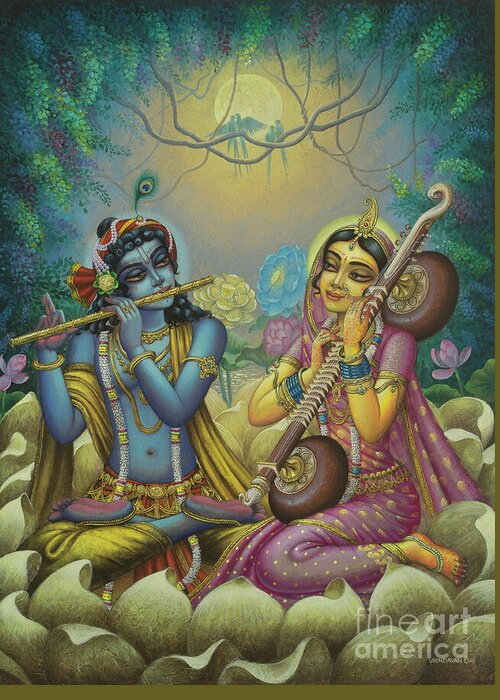
The very name Radha comes from the Sanskrit root Aradhana, meaning worship or complete devotion.
Radha's greatness is not based on divine power but on her limitless capacity to love. Every thought, every word, and every action is dedicated to Krishna's happiness. She never seeks anything for herself.
This selfless devotion becomes the highest ideal for every spiritual seeker.
The Bhagavad Gita teaches surrender to God, but Radha demonstrates what complete surrender actually looks like. She transforms devotion from a religious practice into a living experience of unconditional love.
Her life reminds us that true Bhakti is not asking God to fulfill our desires. Instead, it is offering ourselves completely in loving service.
Why Devotees Chant "Radhe Radhe" Before Krishna
Anyone who visits Vrindavan quickly notices that devotees often greet each other by saying "Radhe Radhe."
This tradition carries profound spiritual meaning.
Many saints explain that Radha is the embodiment of divine compassion. She lovingly recommends every sincere devotee to Krishna. Because she is the highest devotee, her mercy makes Krishna easily accessible.
As explained in the teachings compiled from , devotees first approach Radharani because she is Krishna's eternal pleasure potency and the perfect mediator of divine love. Just as Lakshmi is worshipped with Narayana and Sita with Rama, Radha is worshipped alongside Krishna.
For this reason, countless devotees pray first to Radha, believing that through her compassion, they naturally receive Krishna's grace.
Final Reflection: Is Radha Greater Than Krishna?
The answer depends on the tradition one follows. Philosophically, many schools regard Krishna as the Supreme Absolute Reality, while Radha is His eternal divine energy. In traditions such as the Radha Vallabh Sampradaya and aspects of Gaudiya Vaishnavism and the Nimbarka tradition, Radha is revered as the Supreme Goddess because even Krishna is enchanted by her boundless devotion.
Yet the highest conclusion of Sanatan Dharma goes beyond comparison.
Radha and Krishna are not rivals. They are not two separate divinities competing for supremacy. They are one eternal reality revealed as Shaktiman and Shakti, the Beloved and Divine Love, the Supreme Lord and His eternal blissful energy.
When devotees chant "Radhe Krishna," they are not choosing one over the other. They are honoring the eternal union of God and Love—a union that teaches humanity the greatest spiritual lesson of all:
God is not conquered by power, knowledge, or wealth. He is conquered only by pure, selfless love.


Comments