Falling in Love With Krishna vs Worshipping Him: What Is the Deeper Meaning of Bhakti?
- Sonali Singh
- 10 minutes ago
- 3 min read

Is loving Krishna different from worshipping Him? Discover the deeper meaning of bhakti, where devotion grows through love, surrender, remembrance, and trust.
While worship may start with folded hands, rituals and prayer, bhakti goes even beyond that, making it possible for a devotee to establish a loving connection with Lord Krishna. Why does loving Krishna make such a difference from just worshiping Him? This can be illustrated by the examples of love shown by Yashoda and the relationship with Arjuna and other lessons provided by spiritual masters on the path of bhakti.

Worship and Love: What Is the Difference?
Janmashtami is usually celebrated with fasting, midnight prayers, going to the temple, kirtans and the celebration of birth of Bal Krishna. However, underneath all these rites and rituals is another important question – is Krishna worshipped out of religious obligations or is there an actual love and desire for him?
Worship starts with reverence. Lord Krishna is considered Supreme Lord, who should be respected and revered. Nothing is wrong with that. But bhakti can slowly change reverence into a personal connection.
In the Bhagavad Gita, it is beautifully expressed:
मन्मना भव मद्भक्तो मद्याजी मां नमस्कुरु।
मामेवैष्यसि युक्त्वैवमात्मानं मत्परायणः॥ — Bhagavad Gita 9.34
“Fix the mind on Me, become My devotee, worship Me, and offer obeisance to Me. Thus, being devoted to Me, one will surely come to Me.”
The verse is not merely about performing an external ritual. It points toward keeping Krishna in the mind and heart.
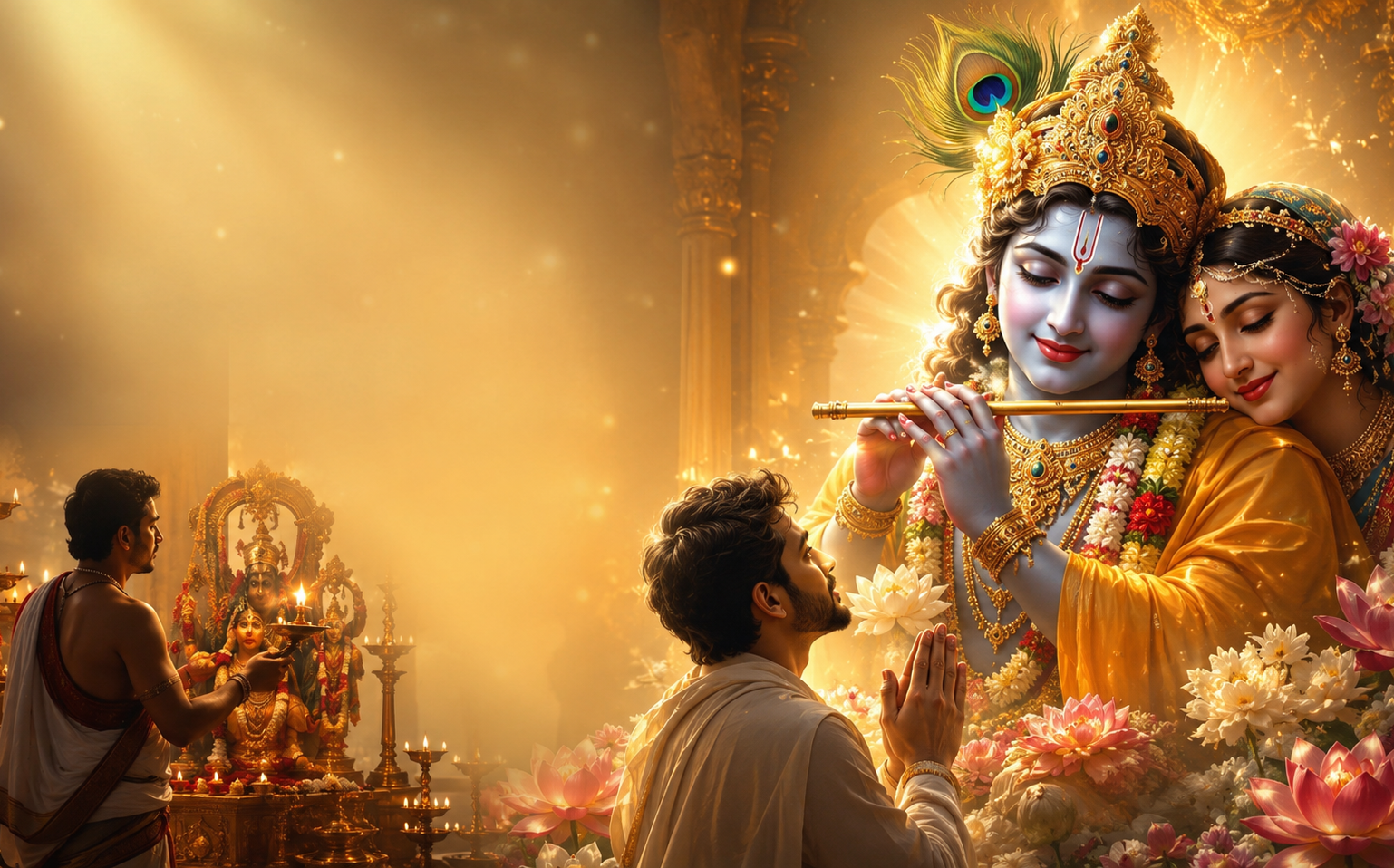
What Does It Mean to Fall in Love With Krishna?
Falling in love with Krishna does not mean romantic love in an ordinary worldly sense. In the bhakti tradition, Krishna-prema points toward a selfless love in which the devotee gradually becomes less focused on personal demands and more absorbed in the Divine.
This is why Krishna is remembered in so many intimate relationships—as a child, friend, beloved, guide, and protector.
The image of Bal Krishna makes this especially easy to understand. A devotee may not look at baby Krishna only with reverence. There can also be affection: wanting to dress Him, feed Him, rock His cradle, sing to Him, and lovingly remember His playful nature.
That emotional closeness is one reason Krishna bhakti feels different from simply performing religious duties.
The Difference Between Duty and Love
There is nothing wrong with worship performed as a duty. Rituals can train the mind and create spiritual discipline.
But bhakti becomes deeper when remembrance of Krishna continues even when there is no ritual to perform.
A person may visit a temple once a week and offer prayers. Another may quietly remember Krishna while working, travelling, eating, or facing difficulties. The second form reflects an important dimension of bhakti: constant remembrance born from affection.
This distinction has often been made in modern spiritual teachings in terms of progressing from asking something of God to just asking God himself.
In light of Sanatangyan’s experience, this is an important point because devotion does not just involve the number of rites that are performed, but also involves the sincerity of one’s heart’s turn toward the divine nature of God.
Explore Further: Janmashtami 2026: Why Does Lord Krishna Wear a Peacock Feather? Know Its Divine Meaning
Jaya Kishori’s Emphasis on Emotional Devotion
The spiritual discourses by Jaya Kishori have been widely known for their Bhagwat Katha and other teachings conveyed through stories, emotions and life experiences. The official website of Jaya Kishori explains her kathas as a combination of devotion, knowledge and storytelling that makes sacred teachings pertinent to our lives in everyday life.
This also clarifies why Krishna bhakti becomes more attractive for the younger generation because instead of understanding devotion in terms of rites, it may become faith and emotional devotion as well as living a spiritual life in practice.
In that sense, waiting for Krishna at midnight becomes symbolic. The question is not simply whether the ritual was completed, but whether the heart felt His absence and longed for His presence.
Premanand Maharaj and the Power of Surrender
For Premanand Maharaj, surrender is closely connected with the heart of bhakti. His teachings describe surrender as letting go of the ego’s constant need to control everything and learning to trust the Divine.
He explains Radha-Krishna bhakti in terms of divine love being selfless and worldly-free.
But that doesn’t mean being passive. It means doing the right thing without worrying about having to control the outcome.
True bhakti is much more than worshiping—rather, it is reverence transformed into love, surrender, memory, and intimate relationship with Krishna. In this case, Krishna resides in the heart of the devotee and makes his devotional life much more than a mere ritual.

Comments