Chida-Dadhi Mahotsav 2026: The Divine Story of Lord Nityananda's
- Chinmayi Devi Dasi

- Jun 27
- 5 min read
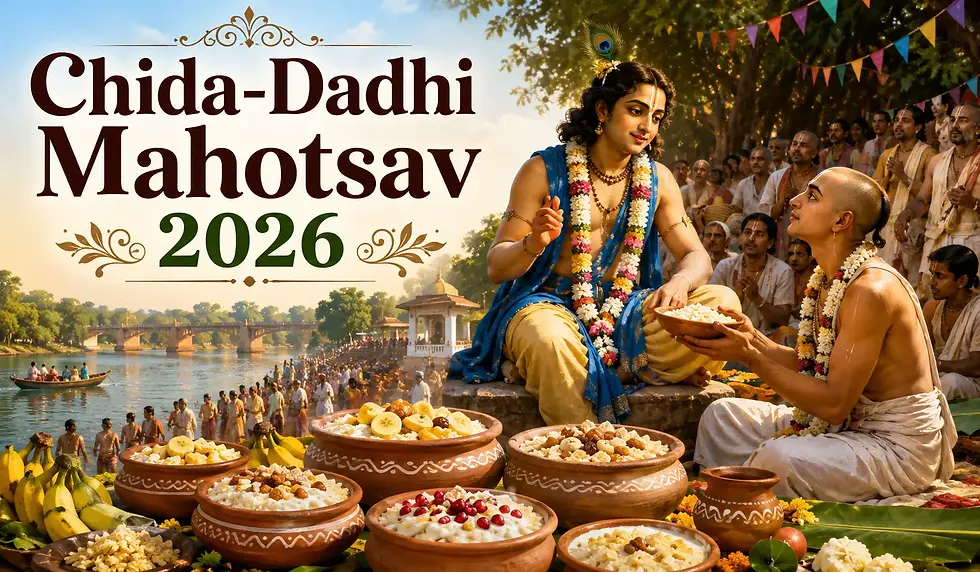
Chida-Dadhi Mahotsav 2026: Every year, countless festivals are celebrated across India, but only a few carry a message that continues to transform hearts even after hundreds of years. Chida-Dadhi Mahotsav, also known as the Panihati Festival, is one such sacred celebration. Observed on 27th June, this festival is not merely about offering chipped rice and yogurt—it is a reminder that the shortest path to God is through humility, selfless service, and devotion.
Imagine standing on the peaceful banks of the holy Ganga in Panihati. The summer sun shines brightly, devotees chant the holy names of Hari, and hundreds of clay pots filled with chipped rice, yogurt, bananas, milk, and sweets are arranged in rows. Smiles replace social differences, and everyone sits together to accept prasadam. This beautiful scene was created more than five centuries ago by Lord Nityananda Prabhu and His beloved devotee, Raghunath Das Goswami. Even today, this divine pastime continues to inspire millions around the world.
What Is Chida-Dadhi Mahotsav?
Chida-Dadhi Mahotsav is one of the most cherished festivals in the Gaudiya Vaishnava tradition. It commemorates the day when Lord Nityananda Prabhu instructed Raghunath Das Goswami to organize a grand feast of chipped rice (chida) mixed with yogurt (dadhi) for thousands of devotees on the banks of the Ganga at Panihati in present-day West Bengal.
At first glance, the festival appears to be a simple community meal. However, behind this humble offering lies a profound spiritual message. Lord Nityananda demonstrated that devotion is not measured by expensive offerings or elaborate rituals but by the sincerity of one's heart. The festival became a celebration of equality, compassion, and divine grace, where everyone—regardless of wealth or social status—shared the same prasadam with love and gratitude.
The Beautiful Story Behind the Festival

The story begins with Raghunath Das Goswami, a young man born into one of the wealthiest families of Bengal. Although surrounded by luxury and comfort, his heart longed only for the lotus feet of Sri Chaitanya Mahaprabhu. Several times he tried to leave his home to dedicate his life to devotion, but each attempt was stopped by his family.
Finally, Raghunath learned that Lord Nityananda Prabhu was staying in Panihati. Filled with hope, he travelled there and humbly offered his obeisances from a distance. Seeing him, Lord Nityananda smiled and jokingly called him a "thief" for trying to receive the mercy of Lord Chaitanya without first approaching Him.
Instead of punishing him, Lord Nityananda gave him a beautiful instruction: organize a grand feast for all the devotees. Raghunath immediately accepted the order with joy. Without hesitation, he arranged huge quantities of chipped rice, yogurt, milk, bananas, sweets, sugar, and hundreds of earthen pots. That simple act of service became one of the most celebrated festivals in Vaishnava history.
Why Lord Nityananda Chose Service Over Rituals
One of the most inspiring aspects of Chida-Dadhi Mahotsav is that Lord Nityananda did not ask Raghunath to perform difficult austerities or complex spiritual practices. Instead, He asked him to serve others.
This teaches a timeless lesson. Spiritual growth does not always begin inside temples or forests. Sometimes it begins by feeding a hungry person, helping another devotee, or serving with genuine humility. When service is offered without pride, it becomes an offering to God Himself.
Raghunath's obedience reflected complete surrender. He did not question the instruction or think about the expense involved. His only desire was to please his spiritual master. That sincere attitude attracted divine blessings and transformed his entire life.
The Divine Miracle on the Banks of the Ganga
As the feast began, thousands of devotees gathered along the banks of the Ganga. There were so many people that many had to stand in the shallow waters while eating their prasadam. Joyful chanting filled the air as everyone received two clay pots—one containing chipped rice mixed with yogurt and another mixed with sweet condensed milk.
During the festival, something extraordinary happened. Lord Nityananda entered deep meditation and invited Sri Chaitanya Mahaprabhu to join the celebration. Although not everyone could perceive His presence, the fortunate devotees witnessed the Lord personally arriving at Panihati.
Lord Nityananda lovingly offered morsels of chipped rice from different pots into the mouth of Sri Chaitanya Mahaprabhu. For those blessed with spiritual vision, the banks of the Ganga became the banks of the Yamuna, reminding them of Lord Krishna and Balarama enjoying picnics with their cowherd friends. This divine pastime transformed an ordinary meal into an eternal spiritual celebration.
The Spiritual Meaning of Chipped Rice and Yogurt
Many people wonder why chipped rice and yogurt became the centre of such an important festival. The answer lies in both practicality and symbolism.
The festival took place during the intense heat before the monsoon season. Chipped rice mixed with cool yogurt was refreshing, nourishing, and easy to prepare for thousands of people. However, its deeper meaning is even more beautiful.
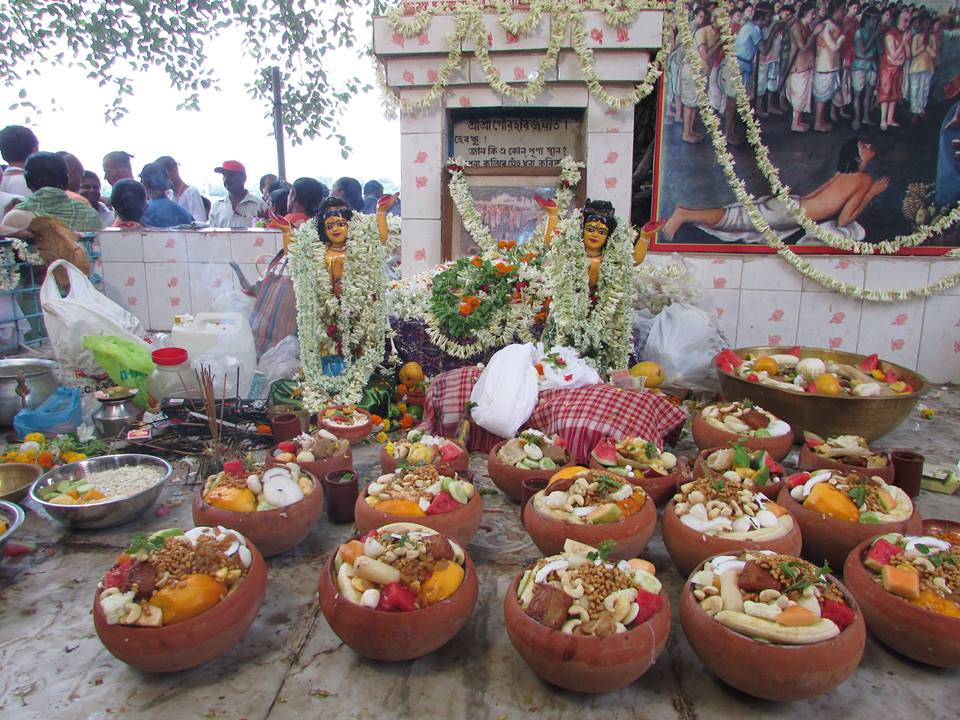
The offering reminds us that God does not seek luxury. A simple meal prepared with devotion is far more valuable than an expensive offering made with pride. Chipped rice represents simplicity, while yogurt symbolizes purity and nourishment. Together, they remind devotees that spiritual life flourishes when the heart remains humble and free from ego.
The Lesson of Humility That Still Inspires the World
One of the most famous verses associated with the teachings of Sri Chaitanya Mahaprabhu beautifully reflects the mood of this festival:
तृणादपि सुनीचेन तरोरपि सहिष्णुना।
अमानिना मानदेन कीर्तनीयः सदा हरिः॥
"One should be humbler than a blade of grass, more tolerant than a tree, free from the desire for personal honour, and ready to offer respect to others. In such a state one can constantly chant the holy name of the Lord."
This verse perfectly describes Raghunath Das Goswami's character. Despite belonging to a wealthy family, he approached Lord Nityananda with complete humility. Instead of seeking recognition, he happily served every devotee. His humility became the doorway through which he eventually attained the shelter of Sri Chaitanya Mahaprabhu.
Why the Message of Panihati Festival Matters Today
Modern society often measures success through wealth, influence, and achievements. Chida-Dadhi Mahotsav offers a completely different perspective. It teaches that the greatest success lies in serving others with a pure heart.
In today's fast-moving world, people often feel isolated despite having material comforts. The Panihati Festival reminds us that happiness grows when we sit together, share a meal, chant God's holy names, and care for one another without expecting anything in return.
The festival also teaches that every person is equal before God. During the original celebration, people from different backgrounds sat together to receive the same prasadam. This timeless message of equality and compassion remains just as relevant in the twenty-first century as it was more than five hundred years ago.
Chida-Dadhi Mahotsav 2026: Conclusion
Chida-Dadhi Mahotsav is much more than a historical event. It is a living example of how humility, service, and devotion can transform an ordinary act into an eternal spiritual celebration.
Raghunath Das Goswami did not receive Lord Nityananda's mercy because of his wealth or social position. He received it because he obeyed with complete faith and served without pride. That simple festival of chipped rice and yogurt became the turning point of his spiritual journey and eventually led him to the lotus feet of Sri Chaitanya Mahaprabhu.
For all of us, the message remains timeless. We may not stand today on the banks of the Ganga in Panihati, but we can still celebrate the true spirit of Chida-Dadhi Mahotsav by offering kindness, sharing what we have, and serving others with love. In the eyes of the Lord, the simplest offering made with a sincere heart is always the greatest gift. That is why this sacred festival continues to nourish not only the body with prasadam but also the soul with the eternal values of bhakti, humility, and divine grace.


Comments