Chaturmas 2026: Why These Four Sacred Months Are Nature’s Spiritual University


Have you ever wondered why Hindu scriptures place so much importance on four particular months of the year? Why do saints pause their travels, why are weddings traditionally avoided, and why do devotees increase their prayers, fasting, and spiritual practices during this period?
The answer lies in Chaturmas, one of the most sacred and transformative periods in Sanatan Dharma.
In 2026, Chaturmas begins on July 25, 2026 (Devshayani Ekadashi) and concludes on November 20, 2026 (Devutthana Ekadashi). These four months are not merely a religious observance. They are an invitation from the Divine to slow down, reflect, purify the mind, and deepen one's relationship with God.
For thousands of years, sages, saints, and devotees have regarded Chaturmas as a spiritual season when even small acts of devotion yield extraordinary results.
What Is Chaturmas?
The word Chaturmas comes from two Sanskrit words:
Chatur = Four
Mas = Months
Thus, Chaturmas literally means "four months."
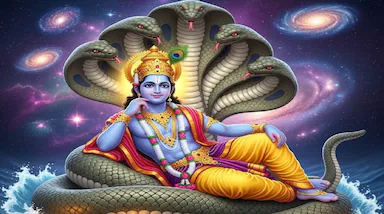
According to Hindu scriptures, Lord Vishnu enters Yoga Nidra, a divine meditative rest, on Devshayani Ekadashi in the month of Ashadha. He awakens four months later on Devutthana Ekadashi in Kartik.
A famous verse describes the glory of devotion to Lord Vishnu:
शान्ताकारं भुजगशयनं पद्मनाभं सुरेशम्। विश्वाधारं गगनसदृशं मेघवर्णं शुभाङ्गम्॥
Meaning:"I bow to Lord Vishnu, who rests upon the cosmic serpent, who sustains the universe, and whose presence brings peace to all creation."
When scriptures speak about Vishnu's sleep, they do not refer to ordinary sleep. The Lord never becomes inactive. His Yoga Nidra symbolizes a shift in cosmic energies and invites humanity to turn inward.
Why Does Lord Vishnu Enter Yoga Nidra?
This is one of the most misunderstood aspects of Chaturmas.
Many people imagine that God literally sleeps for four months. However, spiritual masters explain that Yoga Nidra represents a divine state of meditation and cosmic balance.

Just as nature slows down during the monsoon season, human beings are encouraged to reduce external distractions and focus on inner growth.
During these months, Lord Vishnu teaches an important lesson without speaking a single word:
Sometimes spiritual progress comes not from doing more, but from becoming more aware.
In a world obsessed with constant activity, Chaturmas reminds us of the power of stillness.
The Spiritual Science Behind Chaturmas
Ancient rishis observed that Chaturmas coincides with the monsoon season in India.
Heavy rains made travel difficult. Roads became muddy, rivers flooded, and countless insects and small creatures emerged from the earth.
To avoid harming living beings, saints stopped wandering and stayed in one place. This practice reflected the principle of Ahimsa (non-violence).
Over time, these months became a period dedicated to:
Spiritual study
Meditation
Self-discipline
Charity
Scriptural learning
Community worship
The sages understood something modern science is beginning to appreciate:
Human beings need seasons of inward reflection just as nature needs seasons of renewal.
The Four Sacred Phases of Chaturmas 2026
Each month of Chaturmas carries a unique spiritual vibration.
1. Shravana: The Month of Listening
The first month encourages devotees to listen to spiritual wisdom.
The word Shravana itself means "hearing."
This is why many devotees spend time reading the Bhagavad Gita, Bhagavatam, Ramayana, and other sacred texts.
Lord Shiva is especially worshipped during this month through the holy month of Shravan.
The lesson of Shravana is simple:
Before speaking spiritual wisdom, learn to listen to it.
2. Bhadrapada: The Month of Divine Celebrations
Bhadrapada brings some of Hinduism's most beloved festivals.
Krishna Janmashtami
Ganesh Chaturthi
Radhashtami
These celebrations remind devotees that God repeatedly descends to guide humanity.
The life of Lord Krishna teaches us that spirituality is not an escape from life—it is the art of living life with divine consciousness.
3. Ashwin: The Month of Inner Cleansing
Ashwin includes:
Pitru Paksha
Sharadiya Navratri
Durga Puja
During this period, devotees remember their ancestors and seek the blessings of Divine Mother Durga.
Just as Goddess Durga destroys Mahishasura, devotees strive to conquer their inner enemies:
Anger
Greed
Pride
Jealousy
Attachment
4. Kartik: The Most Auspicious Month
Many saints describe Kartik as the crown jewel of Chaturmas.
This month includes:
Diwali
Govardhan Puja
Tulsi Vivah
Kartik Purnima
Devutthana Ekadashi
ISKCON and Vaishnava traditions especially celebrate Kartik as the sacred Damodar Month.
Every lamp lit during Kartik symbolizes the removal of spiritual darkness from the heart.
Why Saints Stay in One Place During Chaturmas
Ancient India had a beautiful tradition.
Traveling monks would spend most of the year moving from village to village, spreading wisdom and helping society.
But during Chaturmas, they stayed in one place. This practice had multiple benefits:
First, it prevented harm to countless living beings emerging during the rainy season.
Second, it allowed local communities to learn directly from saints.
Third, it gave spiritual teachers an opportunity for deeper meditation and study.
Even today, many spiritual leaders conduct special discourses and retreats during Chaturmas.
What Should You Do During Chaturmas?
Chaturmas is not about complicated rituals. At its heart, it is about becoming a better human being.
Traditional practices include:
Chanting God's names daily
Reading the Bhagavad Gita
Reciting Vishnu Sahasranama
Practicing meditation
Visiting temples
Serving parents and elders
Feeding the poor
Donating food and clothing
Controlling unnecessary desires
A powerful teaching from the Bhagavad Gita says:
यदा यदा हि धर्मस्य ग्लानिर्भवति भारत। भ्युत्थानमधर्मस्य तदात्मानं सृजाम्यहम्॥
Meaning:"Whenever righteousness declines and unrighteousness rises, I manifest Myself."
During Chaturmas, devotees strive to establish dharma within their own hearts.
The Hidden Spiritual Secret of Chaturmas

One of the greatest lessons of Chaturmas is that transformation begins with discipline.
Consider the story of Dhruva.
A young prince, hurt by rejection, entered the forest seeking God. Through unwavering devotion and discipline, he attained the direct vision of Lord Vishnu.
Similarly, Prahlada remained devoted despite immense challenges.
Neither Dhruva nor Prahlada possessed wealth, power, or influence.
What they possessed was faith.
Chaturmas teaches that spiritual success is not determined by circumstances but by sincerity.
Chaturmas for Modern Youth
Many young people believe spirituality requires leaving the modern world behind.
Chaturmas teaches otherwise.
A student can observe Chaturmas by:
Reducing social media consumption
Spending 15 minutes daily in meditation
Reading one chapter of the Bhagavad Gita every day
Practicing gratitude
Serving family members
Avoiding negative content online
Even small changes can create profound inner transformation.
In today's distracted world, digital discipline may be one of the most powerful forms of tapasya.
Conclusion
Chaturmas 2026, beginning on July 25 and ending on November 20, offers a rare opportunity to reconnect with the Divine. It is a period of bhakti, self-discipline, meditation, charity, and inner purification.
While the world continues to move at great speed, Chaturmas gently asks us to slow down and listen to the voice of the soul.
Perhaps that is why sages have treasured these four months for thousands of years.
Because when Lord Vishnu enters Yoga Nidra, He silently teaches humanity a timeless truth:
The deepest transformations happen not in noise, but in sacred stillness.


Comments