A2 Bilona Ghee: The Complete Guide to India's Most Traditional and Nutritious Superfood


For thousands of years, ghee has occupied a sacred place in Indian kitchens, Ayurvedic healing traditions, and spiritual rituals. Today, as people move away from highly processed foods and return to traditional nutrition, one product has gained significant attention: A2 Bilona Ghee.
Often called the gold of Indian nutrition, A2 Bilona Ghee is valued not only for its rich taste and aroma but also for its traditional preparation method and nutritional benefits. However, many consumers remain confused about what makes it different from regular ghee, A1 ghee, or commercially produced dairy fats.
This comprehensive guide explains everything you need to know about A2 Bilona Ghee, from its origins and preparation process to its health benefits, Ayurvedic significance, and how to identify genuine products.
What is A2 Bilona Ghee?
A2 Bilona Ghee is a traditional form of clarified butter prepared from the milk of indigenous Indian cow breeds that naturally produce A2 beta-casein protein. The ghee is made using the ancient Bilona method, a slow and natural process described in Ayurvedic traditions.
The term consists of two important components:
A2 refers to the type of milk used.
Bilona refers to the traditional method of preparation.
Only when both conditions are fulfilled can the product truly be called A2 Bilona Ghee.
The Historical and Ayurvedic Importance of Ghee
Ghee has been revered in India for over 5,000 years. Ancient Ayurvedic texts describe ghee as a nourishing food capable of supporting digestion, immunity, mental clarity, and longevity.
A famous Ayurvedic verse states:
"Ghritam Smriti Medha Agni Balam Ayushya Vardhanam."
Meaning:
"Ghee enhances memory, intelligence, digestive fire, strength, and lifespan."
In Ayurveda, ghee is considered a Sattvic food, meaning it promotes purity, balance, and mental peace. It is commonly used in Panchakarma therapies, medicinal preparations, and spiritual rituals.

Understanding A2 Milk
To understand A2 Bilona Ghee, it is important to understand A2 milk. Milk contains a protein called beta-casein. There are two major variants:
A1 Beta-Casein
Commonly found in many foreign and crossbred cattle breeds.
A2 Beta-Casein
Naturally found in indigenous Indian cow breeds such as:
Gir
Sahiwal
Tharparkar
Red Sindhi
Rathi
Kankrej
Some studies suggest that A2 milk may be easier to digest for certain individuals compared to milk containing A1 protein. This is one reason why A2-based dairy products have become increasingly popular worldwide.
What is the Traditional Bilona Method?
The Bilona method is one of the oldest known techniques for making ghee. Unlike industrial methods that separate cream directly from milk, the Bilona process follows a natural fermentation cycle.
The process involves:
Step 1: Boiling Fresh Milk
Fresh milk from indigenous cows is gently boiled.
Step 2: Converting Milk into Curd
The cooled milk is cultured naturally to form curd.
Step 3: Churning the Curd
The curd is churned using a wooden churner known as a Bilona. This separates butter from buttermilk.
Step 4: Slow Heating
The butter is heated slowly over a low flame until pure golden ghee emerges. This traditional process preserves the natural nutritional compounds found in milk.
Why the Bilona Method Matters
Modern cream-based methods prioritize speed and mass production. The Bilona process focuses on preserving nutrition and authenticity.
Benefits of the Bilona method include:
Natural fermentation
Better flavor development
Rich aroma
Grainy texture
Enhanced nutrient retention
Traditional Ayurvedic compatibility
Because the process is labor-intensive and requires large quantities of milk, authentic Bilona ghee is often more expensive than commercial alternatives.
Nutritional Profile of A2 Bilona Ghee
A2 Bilona Ghee contains several important nutrients.
Healthy Fats
Provides a natural source of energy and supports cellular function.
Butyric Acid
A short-chain fatty acid that supports gut health and digestive wellness.
Omega Fatty Acids
Contains beneficial fatty acids that contribute to overall health.
Vitamins
Rich in fat-soluble vitamins:
Vitamin A
Vitamin D
Vitamin E
Vitamin K
Antioxidants
Help protect cells from oxidative stress.
Conjugated Linoleic Acid (CLA)
Associated with metabolic health and body composition support.
Top Health Benefits of A2 Bilona Ghee
Supports Digestive Health
One of the most recognized benefits of A2 Bilona Ghee is its butyric acid content, which helps nourish intestinal cells and supports digestive function.
Provides Sustained Energy
Healthy fats offer long-lasting energy without causing rapid blood sugar spikes.
Supports Nutrient Absorption
Fat-soluble vitamins require dietary fat for proper absorption. Ghee acts as an excellent carrier for these nutrients.
Promotes Brain Function
Traditional Ayurvedic wisdom considers ghee beneficial for memory, focus, and mental clarity.
Supports Immunity
The vitamins and healthy fats found in ghee contribute to overall immune function.
Nourishes Skin and Hair
Healthy dietary fats help maintain skin elasticity and support hair health from within.
Beneficial in Ayurveda
Ghee is frequently used as an Anupana (carrier substance) to deliver herbal formulations deeper into body tissues.

A2 Bilona Ghee vs Regular Ghee
Feature | A2 Bilona Ghee | Regular Commercial Ghee |
Milk Source | Indigenous A2 cows | Mixed milk sources |
Preparation | Traditional Bilona method | Often cream-based |
Fermentation | Yes | Usually No |
Nutrient Retention | Higher | Variable |
Aroma | Rich and natural | Mild |
Texture | Grainy | Smooth |
Production Scale | Small batch | Mass-produced |
A2 Bilona Ghee vs A1 Ghee
The primary difference lies in the milk source.
A2 Bilona Ghee
Derived from indigenous cow milk
Traditional preparation
Naturally fermented process
A1 Ghee
Derived from cows producing A1 protein
Often prepared through industrial methods
Usually mass-produced
A2 Bilona Ghee vs Buffalo Ghee
A2 Bilona Ghee
Golden yellow color
Easier to digest for many individuals
Rich aroma
Buffalo Ghee
White appearance
Higher fat concentration
Heavier texture
Both have nutritional value, but A2 Bilona Ghee is often preferred in Ayurvedic practices.
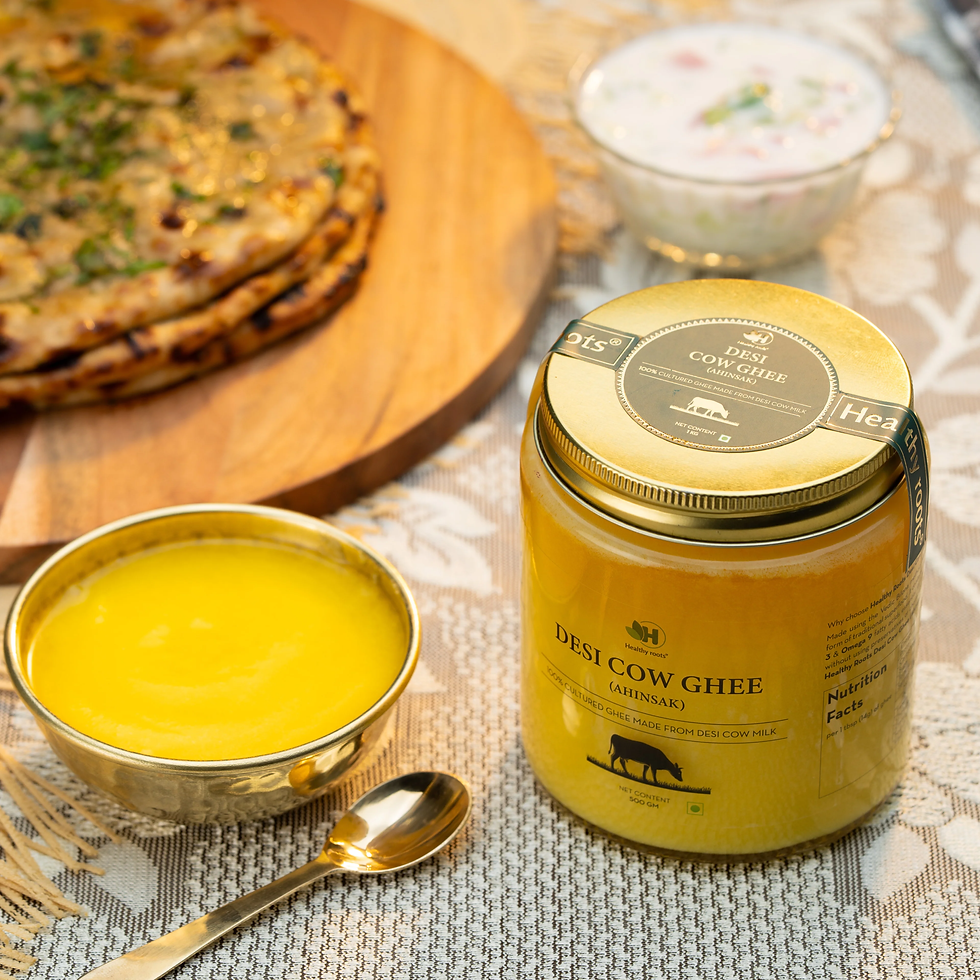
How to Identify Authentic A2 Bilona Ghee
As demand increases, consumers should know how to recognize genuine products.
Look for:
Indigenous Cow Milk
The source should be native Indian cow breeds.
Bilona Preparation
The label should mention curd-churning rather than direct cream separation.
Grainy Texture
Authentic Bilona ghee often develops natural granules.
Rich Aroma
Pure ghee possesses a pleasant, nutty fragrance.
Transparent Sourcing
Trustworthy producers clearly explain their production methods.
Common Myths About A2 Bilona Ghee
Myth 1: Ghee Causes Weight Gain
Excess calories from any food can contribute to weight gain. Moderate consumption of ghee can fit within a balanced diet.
Myth 2: All Ghee is the Same
Milk source and preparation methods significantly influence quality and nutrition.
Myth 3: Bilona is Just a Marketing Term
Authentic Bilona refers to a centuries-old preparation process with distinct steps.
Myth 4: Ghee is Unhealthy
Current nutrition science recognizes that healthy fats play important roles in overall health.
Frequently Asked Questions
Is A2 Bilona Ghee suitable for daily consumption?
Yes, moderate consumption can be part of a balanced diet for most healthy individuals.
Why is A2 Bilona Ghee expensive?
The traditional process requires large quantities of milk, natural fermentation, manual churning, and longer production times.
Can children consume A2 Bilona Ghee?
It is commonly included in traditional Indian diets for children, though dietary needs vary by individual.
Does Bilona Ghee contain preservatives?
Authentic Bilona ghee should not contain artificial preservatives.
Which is better: regular ghee or A2 Bilona Ghee?
Many consumers prefer A2 Bilona Ghee because of its indigenous milk source and traditional preparation method.
Conclusion
A2 Bilona Ghee represents a unique combination of ancient wisdom, traditional craftsmanship, and nutritional richness. Unlike ordinary ghee, it is made from the milk of indigenous Indian cows and prepared through the time-honored Bilona method that has been cherished for generations.
As modern consumers increasingly seek natural, minimally processed foods, A2 Bilona Ghee stands out as a symbol of India's dairy heritage. Whether valued for its Ayurvedic significance, digestive benefits, rich flavor, or traditional authenticity, it continues to earn its place in healthy kitchens around the world.
Choosing genuine A2 Bilona Ghee is not just about selecting a food product—it is about embracing a tradition that has nourished generations for centuries.


Comments