33 Koti Devas in Hinduism: Real Meaning According to Vedas & Bhagavad Gita
- Chinmayi Devi Dasi

- May 9
- 6 min read
Discover the real meaning of 33 Koti Devas in Hinduism through Vedas, Upanishads, and Bhagavad Gita. Learn why Sanatan Dharma speaks of one Supreme Brahman.

One of the most common misunderstandings about Sanatan Dharma is the statement that Hindus worship “33 crore gods.” Many people hear this and imagine Hinduism as a religion with millions of separate gods competing with one another. But when we go deep into the Vedas, Upanishads, and the teachings of Bhagavad Gita, a completely different truth appears.
The ancient scriptures never intended to teach that there are literally 330 million independent gods. The real concept is spiritual, symbolic, and deeply connected to the idea that Ishwar is One.
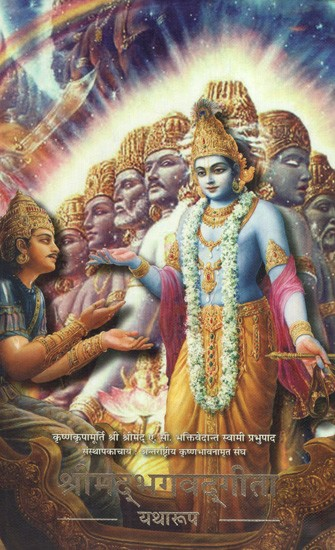
In Sanatan Dharma, all divine forms emerge from the same Supreme Reality — the Para Brahman. That Supreme Brahman is beautifully revealed in the form of Krishna in the Bhagavad Gita. The devas are not separate from Him; they are manifestations of His divine energies working throughout creation.
The concept of “33 Koti Devas” is therefore not about counting gods. It is about understanding how the One Supreme Consciousness expresses itself through many cosmic powers.
What Does “33 Koti” Actually Mean
The entire confusion began because of the Sanskrit word “Koti.”
Today, in common Indian languages, koti often means “crore” or ten million. Because of this, people translated “33 Koti Devas” as “330 million gods.” But in ancient Sanskrit, koti also means:
Category
Type
Class
Supreme point
Divine grouping
So when ancient scriptures referred to “33 Koti Devas,” the deeper meaning was:
“33 divine categories or supreme classes of devas.”
This completely changes the understanding of the phrase.
The Vedic sages were not teaching polytheistic confusion. They were describing the various divine forces through which the One Supreme Reality governs the universe.

The Vedas Mention 33 Devas, Not 330 Million Gods
Ancient scriptures like the Śatapatha Brāhmaṇa and Bṛhadāraṇyaka Upaniṣad clearly describe thirty-three devas.
These devas are traditionally divided into:
8 Vasus
11 Rudras
12 Adityas
2 additional divine powers
This sacred structure represents cosmic balance.
The Vasus symbolize natural elements and material existence. The Rudras represent transformation and spiritual force. The Adityas symbolize cosmic law, light, and dharma. Together they form the divine system through which the universe operates.
But the most important thing to understand is this:
None of these devas are independent of the Supreme Brahman.
They are all expressions of the same Divine Source.
Bhagavad Gita Explains That All Devas Exist Within the Supreme Lord
The clearest answer to this topic comes from Bhagavad Gita itself.
In the Gita, Lord Krishna repeatedly explains that all forms of worship ultimately reach Him because He alone is the Supreme Reality behind all existence.
One of the most powerful verses is:
अहं सर्वस्य प्रभवो मत्तः सर्वं प्रवर्तते ।इति मत्वा भजन्ते मां बुधा भावसमन्विताः ॥(Bhagavad Gita 10.8)
“I am the source of all spiritual and material worlds. Everything emanates from Me. The wise who know this worship Me with devotion.”
This verse completely transforms the understanding of devas.
Krishna does not say that many supreme gods exist independently. He declares that everything originates from Him.
The devas are therefore divine administrators and manifestations of His cosmic energy, not separate supreme beings equal to Para Brahman.
The 33 Devas Represent Divine Energies of One Ishwar
Sanatan Dharma teaches unity behind diversity.
Just as one sun gives light through many rays, one Supreme Ishwar works through many divine powers.
The devas represent those powers.
Fire represents purification.
Wind represents movement and life.
Sun represents illumination and consciousness.
Rudra represents transformation.
Varuna represents cosmic order.
But behind all these energies stands one eternal truth — Para Brahman.
This is why Hinduism allows worship in many forms while still maintaining spiritual unity.
A devotee may worship:
Shiva
Vishnu
Durga
Ganesha
Yet the deeper philosophy teaches that all divine energies ultimately arise from the same Supreme Consciousness.
Krishna Reveals Himself as Para Brahman in the Bhagavad Gita
The Bhagavad Gita does not merely describe Krishna as a deity among many. It presents Him as the Supreme Absolute Truth.
Arjuna himself declares:
परं ब्रह्म परं धाम पवित्रं परमं भवान् ।(Bhagavad Gita 10.12)
Translation:
“You are the Supreme Brahman, the ultimate abode, the supreme purifier.”
This verse is extremely important in understanding the 33 devas.
The devas exist within creation, but Krishna is described as the source of creation itself.
The devas are dependent. Para Brahman is independent.
The devas function through divine authority. Para Brahman is the origin of all authority.
This is why many Vaishnava traditions explain that the devas are servants or manifestations of the Supreme Lord’s universal administration.

Why Did Ancient Rishis Worship Many Devas?
This question confuses many people today. If God is One, then why did the Vedic sages worship many devas? The answer lies in spiritual understanding.
The sages saw the Divine everywhere.
They experienced:
Agni as divine fire
Surya as divine light
Vayu as divine breath
Indra as divine power
For them, the universe was alive with consciousness. But they never forgot the ultimate truth behind these manifestations.
The Rigveda itself says:
“Ekam Sat Vipra Bahudha Vadanti”
Meaning:
“Truth is One; sages call it by many names.”
This is one of the deepest spiritual statements ever spoken.
It means diversity does not destroy unity. Many names can point toward the same eternal reality.
The Upanishads Gradually Reduce Many Gods into One Supreme Truth
The बृहदारण्यक उपनिषद contains a beautiful philosophical dialogue where the number of gods is gradually reduced. First thousands are mentioned. Then hundreds. Then thirty-three. Then fewer and fewer until finally only One remains.
This teaching reveals the heart of Vedic spirituality. The many devas are expressions of cosmic functions, but the ultimate truth is non-dual.
Behind all divine forms stands one eternal consciousness — Brahman.
And in the Bhagavad Gita, Krishna reveals Himself as that Supreme Reality.
The “330 Million Gods” Idea Became Popular Due to Translation Confusion
The idea of “330 million gods” became widespread mainly because later generations misunderstood the word koti.
Some later Purāṇic texts used poetic expressions involving “33 koti devas” in grand celestial scenes. Over time, people interpreted koti only numerically instead of spiritually.
Colonial writers and critics of Hinduism repeated the phrase without understanding Sanskrit philosophy deeply. Slowly the misconception spread globally.
But when we return to the Vedas, Upanishads, and Bhagavad Gita, the original meaning becomes clear:
Hinduism does not teach 330 million separate supreme gods.
It teaches one Supreme Reality appearing through many divine manifestations.
Sanatan Dharma Sees the Entire Universe as the Body of God
One of the most beautiful teachings of Sanatan Dharma is that creation itself is sacred. Nothing is truly separate from Ishwar.
In the Bhagavad Gita, Krishna says:
मया ततमिदं सर्वं जगदव्यक्तमूर्तिना ।(Bhagavad Gita 9.4)
“By Me, in My unmanifested form, this entire universe is pervaded.”
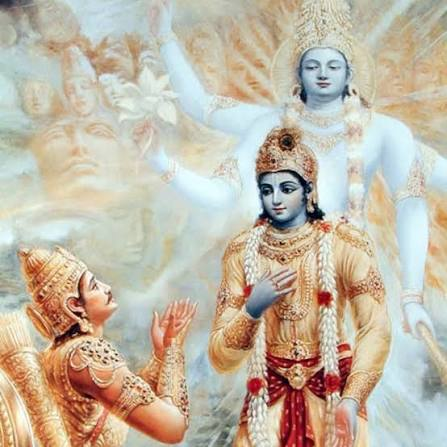
This means the Divine is present everywhere. The devas are not competing gods. They are expressions of the universal presence of the Supreme Lord.
This spiritual vision creates reverence toward:
Nature
Life
Cosmic order
Dharma
Consciousness
This is why Sanatan Dharma developed such a deep ecological and spiritual relationship with existence itself.
The Real Meaning of 33 Koti Devas According to Sanatangyan
From the Sanatangyan perspective, the concept of 33 Koti Devas is not about numbers but realization.
The Vedic sages wanted humanity to understand that:
The universe is filled with divine intelligence.
Nature operates through sacred cosmic principles.
All energies emerge from one eternal source.
Para Brahman alone is supreme.
The devas are like rays of sunlight, but the sun itself is one.
That Supreme Sun of consciousness is Para Brahman — revealed through Lord Krishna in the Bhagavad Gita.
When devotees worship different deities with true understanding, they are ultimately moving toward the same Divine Truth.
As Krishna says:
ये यथा मां प्रपद्यन्ते तांस्तथैव भजाम्यहम् ।(Bhagavad Gita 4.11)
“As people approach Me, I reciprocate accordingly.”
This verse beautifully explains the spiritual inclusiveness of Sanatan Dharma.
Conclusion: 33 Koti Devas in Hinduism
The idea of “33 crore gods” is one of the biggest misunderstandings about Hinduism.
The ancient scriptures spoke of 33 divine categories — symbolic cosmic powers that sustain creation.
But beyond all devas, beyond all forms, beyond all names, Sanatan Dharma ultimately points toward One Supreme Reality.
That Supreme Truth is Para Brahman. And in the Bhagavad Gita, Lord Krishna declares Himself as that eternal source from whom everything arises.
The devas are not separate competitors to God. They are manifestations of His infinite energies.
The deeper one studies Sanatan Dharma, the clearer it becomes:

Comments