11 Sacred Foods to Offer on Shivling: The Spiritual Meaning Behind Offering


Sawan (Shravan) is not just another month in the Hindu calendar—it's a sacred period when devotees immerse themselves in the worship of Lord Shiva. Temples echo with the chants of "Om Namah Shivaya," devotees observe fasts, perform Jalabhishek, and offer sacred items to the Shivling with unwavering faith.
But have you ever wondered why specific foods are offered to Lord Shiva?
In Sanatan Dharma, every offering carries a deeper spiritual meaning. It is not about pleasing God with expensive items; it is about expressing devotion, surrender, purity, and gratitude. According to traditions followed in Shiva worship and references found across Shaivite practices, certain offerings are believed to symbolize peace, prosperity, wisdom, and liberation.
Why Are Food Offerings Made to Lord Shiva During Sawan?
Unlike many deities who are worshipped with elaborate rituals, Lord Shiva is known as Bholenath—the compassionate one who is pleased even by a simple offering made with a pure heart.
The month of Sawan is believed to be especially dear to Lord Shiva because it commemorates the period associated with the Samudra Manthan, when Shiva consumed the deadly Halahal poison to protect creation. Devotees perform Abhishek and offer sacred foods as symbols of gratitude, devotion, and prayer for divine blessings.
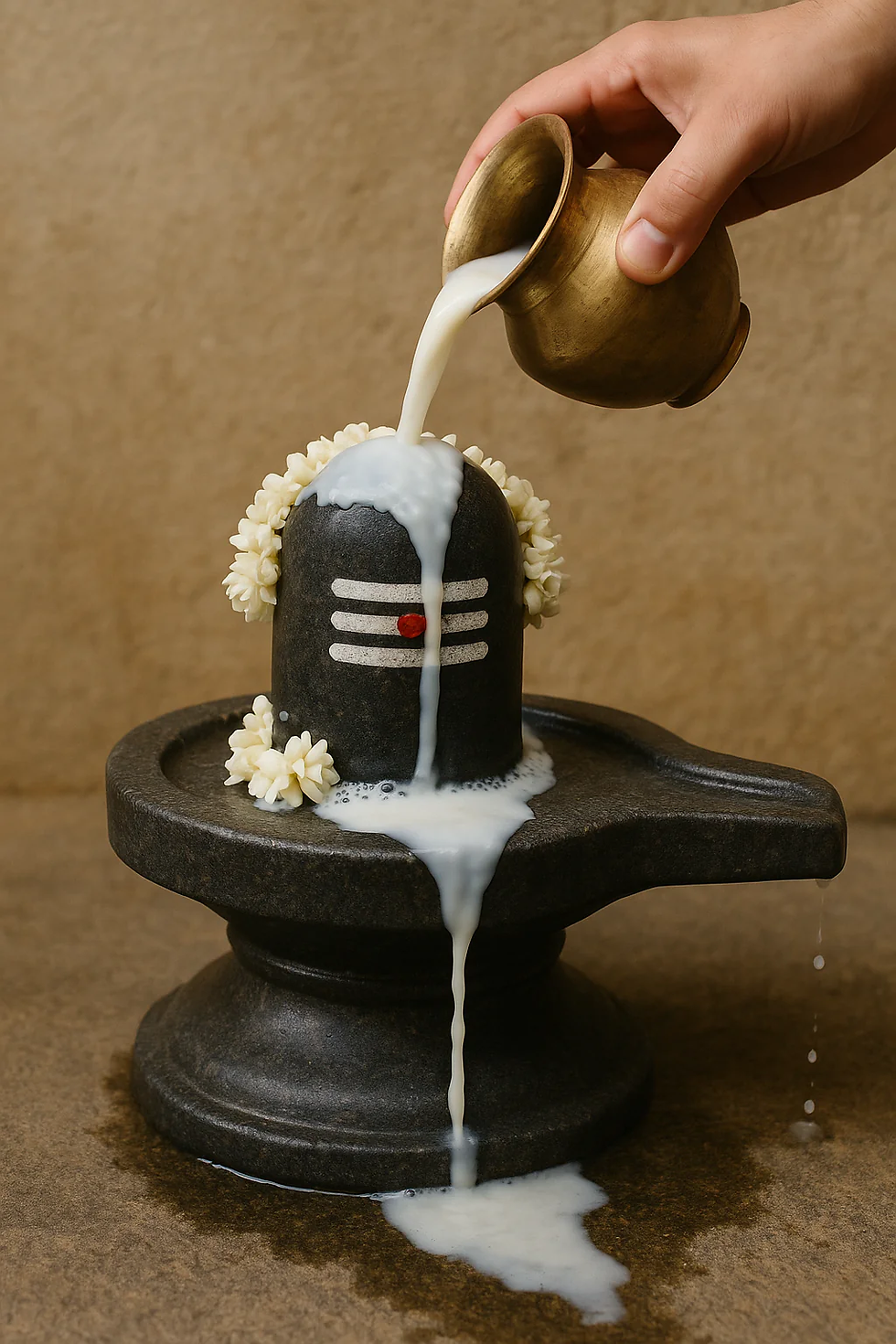
1. Milk (Doodh) – A Symbol of Peace and Purity
Milk is one of the most sacred offerings during Shivling Abhishek.
Spiritually, milk represents purity, calmness, and compassion. Offering milk is believed to cool Lord Shiva's divine energy and symbolizes the devotee's desire to purify the mind from anger, ego, and negativity.
Many devotees pray for emotional stability, family harmony, and inner peace while offering milk during Sawan.
2. Curd (Dahi) – Seeking Good Health and Stability
Curd signifies nourishment, strength, and stability in life.
When offered to Lord Shiva, it symbolizes a prayer for physical well-being, emotional balance, and a stable family life. It also forms an important ingredient of Panchamrit used during Abhishek.
Spiritually, curd reminds devotees that true prosperity begins with a healthy body and peaceful mind.
3. Honey (Madhu) – Inviting Sweetness into Life
Honey represents sweetness in speech, relationships, and destiny.
Offering honey to the Shivling is considered a symbolic prayer that bitterness, conflicts, and misunderstandings may disappear from one's life.
Just as honey naturally spreads sweetness, devotees seek Lord Shiva's blessings for harmony, love, and positive relationships.
4. Ghee – The Light of Divine Wisdom
Ghee has always been associated with sacred yajnas, lamps, and spiritual purification.
Offering ghee to Lord Shiva symbolizes removing ignorance and illuminating one's life with wisdom and higher consciousness.
It also represents surrendering one's ego into the divine light.

5. Sugar (Mishri) – Happiness and Contentment
Sugar symbolizes joy, satisfaction, and contentment.
By offering Mishri or sugar to Lord Shiva, devotees pray for a life filled with happiness, positive experiences, and freedom from unnecessary suffering.
Spiritually, it teaches that the sweetest blessings come through devotion rather than material possessions.
6. Panchamrit – The Divine Nectar of Devotion
Panchamrit is a sacred mixture traditionally prepared using:
Milk
Curd
Honey
Ghee
Sugar
Each ingredient represents a divine quality, and together they symbolize completeness, abundance, and spiritual nourishment. Panchamrit is widely used during Shivling Abhishek and later distributed as Prasad.
Offering Panchamrit reflects the devotee's wish to purify every aspect of life—body, mind, intellect, emotions, and soul.
7. Seasonal Fruits – Gratitude for Nature's Blessings
Fruits symbolize the rewards of good karma.
Offering fresh fruits to Lord Shiva expresses gratitude for nature's abundance while praying for prosperity, success, and fulfillment.
Spiritually, fruits remind devotees that every action eventually bears fruit, encouraging righteous living and selfless actions.
8. Coconut – Complete Surrender to the Divine
The coconut is considered one of the purest offerings in Hindu worship.
Its hard outer shell represents the human ego, while the pure white interior symbolizes the soul.
Offering coconut to Lord Shiva signifies surrendering pride, selfishness, and attachment while seeking spiritual awakening.

9. Sugarcane Juice – A Prayer for Prosperity
In many Shiva temples, devotees offer sugarcane juice during Abhishek.
It symbolizes sweetness, abundance, and financial stability.
Spiritually, it represents the prayer that life's struggles become easier and one's efforts bear fruitful results.
10. Dry Fruits – Offering the Best to the Divine
Dry fruits are often offered as symbols of abundance and gratitude.
They represent strength, nourishment, and prosperity.
Rather than their monetary value, the offering reflects the devotee's willingness to dedicate their finest possessions to Lord Shiva with humility.
11. Bael Fruit – One of Lord Shiva's Most Sacred Offerings
While Bilva leaves are the most well-known offering to Lord Shiva, the Bael fruit also holds immense spiritual significance.
The fruit symbolizes longevity, purity, and spiritual merit.
Offering Bael fruit is considered an act of deep devotion and is believed to attract Lord Shiva's blessings for health, protection, and spiritual growth. Bilva, in particular, occupies a special place in Shaivite traditions and scriptures.

The Most Important Offering Is Devotion
Many people believe that expensive rituals impress God.
Lord Shiva teaches exactly the opposite.
He is called Ashutosh because He is easily pleased by sincere devotion. Even offering a pot of clean water with complete faith is considered spiritually meaningful. Scriptures and traditional practices consistently emphasize that bhava (devotional intent) matters more than material value.
When your heart is filled with humility, gratitude, and faith, every offering becomes sacred.
The sacred foods offered to Lord Shiva during Sawan are not merely ritualistic traditions—they are symbols of timeless spiritual values.
Ultimately, the greatest offering is a heart free from ego and filled with unwavering devotion. Lord Shiva has never measured offerings by their cost—only by the sincerity behind them.
May Bholenath bless you with peace, wisdom, good health, prosperity, and spiritual awakening.
Har Har Mahadev! 🙏


Comments